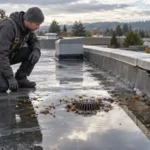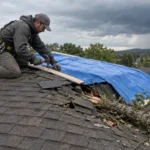


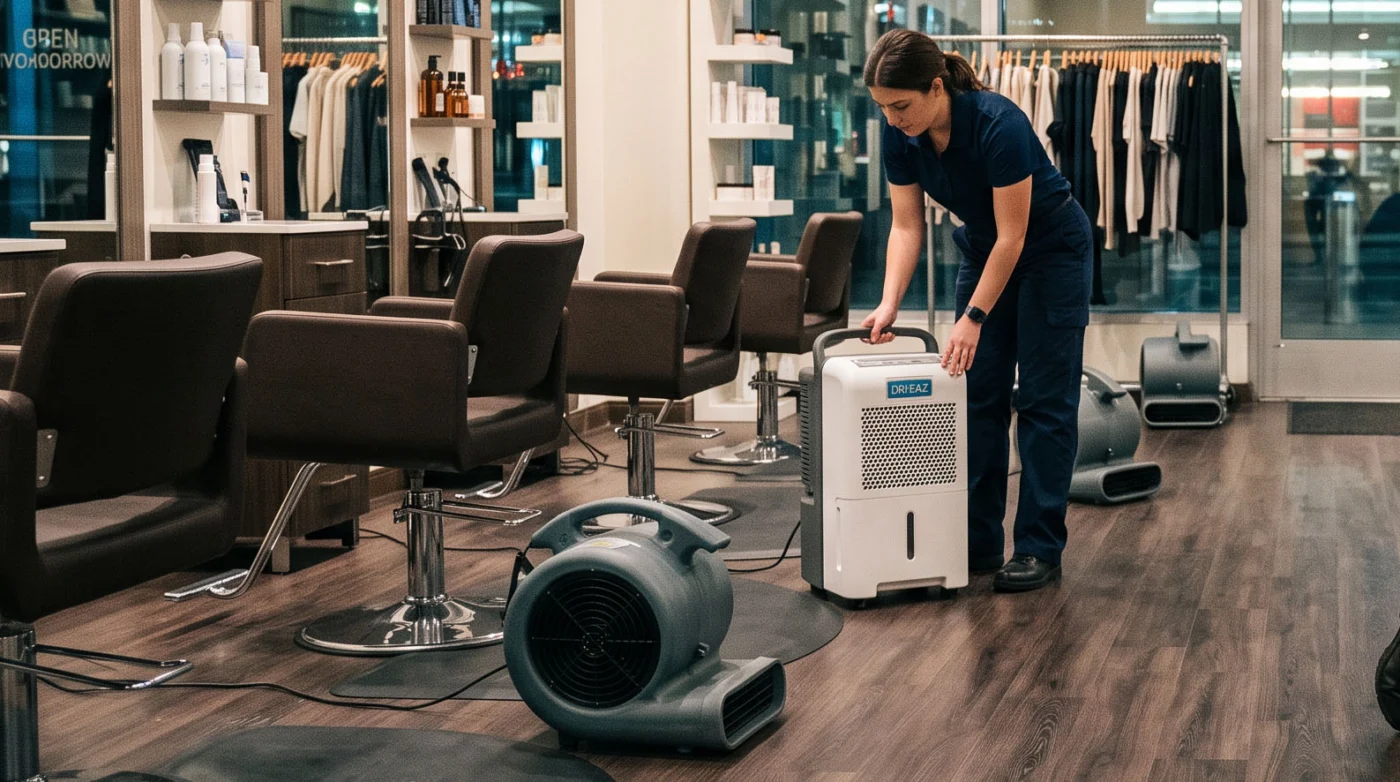
In Milwaukee-area neighborhoods, water problems rarely choose a convenient hour. A storm can push water through a back entry. A frozen pipe can burst above a salon treatment room. A roof leak can drip into a retail checkout area after wind or hail. The region sees 30 to 40 thunderstorm days per year, so sudden water intrusion is part of the seasonal risk cycle for restaurants, salons, retail shops, mixed-use corridors, and first-ring commercial spaces.
Sometimes yes, at least for part of the space. Sometimes the safer answer is no. The decision depends on the water source, spread, affected materials, and whether people and inventory can be protected.
Why Overnight Emergency Drying Is Different
Late-night commercial water damage is both a cleanup problem and an operations decision.
A restaurant, salon, or shop has more at stake than wet flooring. You may be looking at missed reservations, canceled appointments, damaged stock, staff scheduling issues, and customer confidence. Overnight emergency drying focuses on fast stabilization so you can make a better opening decision the next morning.
First, stop the source if it is safe, keep people away from unsafe areas, remove standing water, and start controlled drying. If water is near outlets, equipment, ceiling fixtures, or a breaker panel, avoid contact and bring in qualified help. If the water may involve sewage, floodwater, or other contamination, do not treat it like a normal spill.
The First Opening Decision: Safe, Partial, or Closed
The goal is not to force a reopening. The goal is to know what can be used safely.
A next-day opening may be realistic when water is clean, limited, discovered quickly, and kept away from critical systems, stock, seating, treatment areas, and customer paths. A partial opening may work when one zone can be isolated while another area remains dry and usable.
Closure is more likely when water came from a sewer backup, neighborhood flooding, a roof breach, soaked wall cavities, wet electrical zones, or a source that is still active. Food-service areas, salon sanitation spaces, and retail stockrooms carry added risk because water can contact porous goods, packaging, supplies, and equipment bases.
A floor can look dry while water remains under vinyl plank, behind baseboards, inside drywall, or below cabinets. That is why Water Extraction and Drying Services matter for commercial spaces where a rushed decision can lead to odor, swelling, or repairs.
What Happens During an Overnight Drying Push
Fast drying works best when the sequence is controlled from the start.
Source Control and Damage Mapping
Stop more water from entering if it can be done safely. Then map the affected area because water can run under walls, into neighboring suites, below shelving, and toward floor drains. Hidden movement can reach cabinets, stockrooms, checkout fixtures, equipment bases, and shared walls.
Extraction Before Drying
Standing water has to be removed before drying can work well. Extraction reduces the moisture feeding the loss, which helps dehumidification and airflow work more effectively. Our guide on what to do in the first 48 hours explains why early action matters before secondary damage spreads.
Airflow, Dehumidification, and Moisture Checks
Once water is removed, drying focuses on air movement, humidity control, and moisture monitoring. The layout, materials, contamination level, and hidden spread influence the drying plan. Water-damaged areas and items should be dried within 24 to 48 hours to help prevent mold growth, which makes overnight action especially important when the next business day is on the line.
Why “Looks Dry” Is Not Enough for a Business
Surface dryness can hide the kind of moisture that disrupts operations days later.
Wet trim, damp drywall, soaked underlayment, or moisture behind built-ins can create problems after the doors open. Odor may appear. Floors may lift. Paint may bubble. Cabinets may swell. Mold concerns may increase when wet materials sit too long. Our guide on how long drying can take explains why timelines depend on materials and response speed.
Commercial Spaces Have Their Own Moisture Traps
Business properties often contain hidden pathways that move water beyond the first puddle.
Restaurants
Water can move under kitchen equipment, into wall bases, below tile, behind service counters, and toward dining areas. If water contacts food storage, prep areas, or electrical equipment, do not guess about reopening.
Salons
Salons often have plumbing near wash stations, restrooms, laundry areas, and treatment rooms. A small leak can soak cabinets, product storage, baseboards, flooring, and towels.
Retail Shops
Retail water damage can spread through stockrooms, display zones, fitting rooms, checkout areas, and shared walls in mixed-use buildings. Protect inventory only when it is safe.
For a practical look at drying tools and moisture tracking, review our guide to equipment used to dry water-damaged areas.
Seasonal Risks That Can Create Overnight Emergencies
Storms, freeze cycles, and building type shape the drying decision.
Warm-season storms can bring heavy rain, flash flooding, roof leaks, broken windows, hail damage, and debris intrusion. That 30-to-40-thunderstorm-day range is a useful reminder that commercial spaces need a plan for sudden water entry, not just plumbing failures.
Winter creates another pressure point. Frozen pipes, burst pipes, ice dams, and wind-driven snow can lead to water damage after closing or before the morning shift. Lake-adjacent communities may also face wind-driven water intrusion. Older housing stock, basement-heavy homes, mixed-use buildings, and first-floor shops can all experience water migration.
What to Do Before You Try to Open
Use the morning inspection to make a calm decision, not a hopeful one.
Walk the space carefully only if it is safe. Do not step into water near electrical equipment. Keep employees and customers out of wet, contaminated, sagging, or unstable areas. Check for ceiling stains, soft drywall, musty odor, lifted flooring, wet baseboards, and damp stock.
Ask practical questions. Is the source stopped? Is the water clean or potentially contaminated? Did it reach walls, flooring, inventory, or electrical systems? Can customers access the space without crossing affected areas? Our overview of water damage restoration process details can help you understand how cleanup, drying, assessment, and restoration decisions connect.
Call for Drying Help Before the Night Gets Away
The earlier the response begins, the more options you may have in the morning.
Overnight drying cannot promise a next-day opening, and it should never replace safety judgment. It can reduce standing water, slow moisture spread, support better documentation, and help you decide whether full, partial, or delayed reopening is the right call. It also supports the same 24-to-48-hour drying window used in mold-prevention guidance.
Frequently Asked Questions
1. Can a restaurant open the next day after overnight water drying?
Possibly, but only if the affected areas can be used safely. The water source, contamination level, electrical exposure, flooring condition, and moisture spread all matter. A partial opening may be more realistic than using the entire space.
2. What should a salon do if a pipe leaks after closing?
Shut off the water source if it is safe, keep people away from wet electrical areas, and move dry products away from the affected zone. Wet cabinets, towels, flooring, and wall bases can hold moisture. Professional drying helps determine what needs attention before appointments resume.
3. Is visible water removal enough for a retail shop?
No. Visible water is only part of the problem. Moisture can move under flooring, behind fixtures, into stockrooms, and along shared walls. A dry-looking floor may still hide damp materials that cause odor, swelling, or later repair needs.
4. How does basement flooding affect commercial tenants?
Basement flooding can disrupt storage, mechanical areas, lower-level entrances, and mixed-use building operations. If the water may contain stormwater or sewage, avoid contact and keep tenants out of affected areas. Cleanup decisions should account for contamination and hidden moisture.
5. When does sewer backup cleanup become necessary?
Sewer backups require more caution than clean-water leaks. Contaminated water can affect floors, walls, stored items, and air quality concerns. We offer Sewage Backup Cleanup Services when that service is relevant to the damage and the affected property conditions.
6. Can frozen pipe damage happen overnight?
Yes. Winter freeze conditions can lead to frozen pipes and burst-pipe water losses after closing or before opening. Water can spread through ceilings, walls, floors, and lower levels before anyone sees it. Fast water extraction and drying can help limit secondary damage.
7. When should mold be a concern after a business water loss?
Mold concerns rise when wet materials remain damp, especially behind baseboards, cabinets, walls, and flooring. Delayed drying, repeated leaks, and hidden moisture make the risk worse. We offer Mold Removal Services when mold conditions require that service.
8. What if a storm wind or hail lets rain into the shop?
Wind, hail, broken windows, roof exposure, and debris intrusion can turn storm damage into interior water damage. Keep people away from unsafe openings and wet electrical areas. Storm & Wind Restoration Services, Board-Up & Tarp-Over Services, and drying may all be relevant depending on the loss.
9. What if a fallen tree damages the roof overnight?
A fallen tree can create roof exposure, broken windows, debris, and interior water intrusion. Avoid unstable areas and do not try to move heavy debris without qualified help. Fallen Tree Removal Services, Debris Removal Services, and emergency protective work may be needed.
10. Can lake-adjacent properties face different water risks?
Yes. Lake-adjacent communities can face wind-driven rain, shoreline storm exposure, and water intrusion during severe weather. These risks do not affect every property the same way. Exterior openings, roof condition, lower levels, and building age all influence the damage pattern.
11. What happens after drying if materials were removed?
Drying and cleanup may reveal repair needs. Flooring, trim, drywall, cabinets, ceilings, or other finishes may need follow-up work after mitigation or material removal. Restoration planning should focus on safe use, moisture control, and practical repair sequencing.
12. Should a shop reopen if there is odor after drying?
Odor can mean moisture remains, materials are contaminated, or wet contents were missed. Do not rely only on appearance. If odor persists after a water loss, the space should be checked for damp materials, affected contents, and cleanup needs before normal customer traffic resumes.
Related posts:
![Storm Damage Restoration Why Flat Roof Leaks Show Up Late]()
Storm Damage Restoration: Why Flat Roof Leaks Show Up Late
![When-Does-Hurricane-Season-Start-and-End-300x205-1]()
When Does Hurricane Season Start and End?
![Emergency Roof Tarping Stop The Next Storm From Expanding Damage]()
Emergency Roof Tarping: Stop the Next Storm From Expanding Damage
![What to Photograph Before the Spring Storm Adjuster Arrives]()
What to Photograph Before the Spring Storm Adjuster Arrives
![What Happens After A Tree Punches Through The Building Envelope During A July Storm]()
When a July Tree Strike Turns a Roof Into a Water Path
![How-to-fix-wind-damaged-Shingles]()
How to Fix Wind-Damaged Shingles: A Step-by-Step Guide
![Why Townhomes And Side By Side Units Need A Moisture Plan Before Summer Storms]()
Why Side-by-Side Homes Need a Summer Moisture Plan