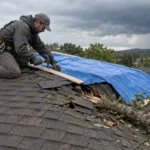
Hail damage can include impact dents, cracked materials, broken glass, or damaged roof shingles, but the signs vary with the material and event. Not every spot or loose granule proves hail caused it. If you are asking what hail damage looks like, use visible observations to guide an assessment rather than to make a final diagnosis from the yard. A qualified inspection can distinguish storm effects from aging, installation issues, and other damage.
Wait until the storm and immediate hazards have passed
Stay sheltered during hail and avoid windows when they could be struck. Afterward, keep away from broken glass, damaged lines, and unstable tree limbs. The National Weather Service hail guidance is a useful safety reference. Do not climb onto a wet roof to photograph the damage or inspect high siding from an improvised platform.
Ground-level observations can provide useful starting information. Take overall photos of the house and accessible affected materials from safe locations. Record the storm date and approximate time. Roofing professionals can document areas the household cannot reach safely, so there is no need to risk a fall to create a complete photo collection.
Possible roof signs need professional interpretation
Asphalt shingles
Hail can create impact-related damage to shingles, including fractures or punctures. Granule displacement may accompany an impact, but granule loss alone does not establish a complete damage diagnosis. Aging, foot traffic, manufacturing conditions, and other causes can create marks that resemble storm effects.
Haag Engineering's research on hail damage to asphalt shingles explains why differentiating these conditions matters. An inspector should evaluate the actual material and pattern, not label every round mark as hail. Ask for findings and photographs that explain the conclusion.
Metal components and roof accessories
Dents in accessible metal gutters, downspouts, or other components can indicate impact exposure. They do not automatically prove the condition of every shingle nearby. Roofing performance, openings, and other components need their own assessment. A cosmetic mark and damage that affects water protection may lead to different repair and insurance questions.
|
Area |
Possible observation |
Important limit |
|
Asphalt shingles |
Impact marks, fractures, or displaced granules |
Other conditions can look similar |
|
Metal gutters or trim |
Dents or distorted sections |
Dents alone do not diagnose the whole roof |
|
Siding |
Cracks, chips, or impact dents |
Material and prior condition matter |
|
Windows |
Broken glass, damaged screens, or trim |
Frame and weather protection need review |
|
Interior ceiling |
New stains after the storm |
The water pathway must be investigated |
Siding damage depends on the material
Vinyl siding may show cracks or holes, while metal siding may show dents. Other cladding can chip or develop impact-related defects. These observations are starting points, not permission to remove panels or conclude that every elevation needs replacement. The damage pattern, material, access, and weather protection all deserve assessment.
Photograph accessible damage with both a wider view and a closer safe view. Avoid pressing on cracked areas or peeling away material to expose what is underneath. Ask whether the inspection includes trim, joints, and openings around windows and doors. Those details can matter when deciding how a repair restores the building's weather protection.
Windows and nearby materials need separate attention
Broken glass creates an immediate handling concern. Keep people and pets away, and arrange safe temporary protection through appropriate professionals. Screens, frames, seals, and nearby trim may also need examination. A screen dent does not automatically mean the glass or frame is damaged, while intact glass does not establish that the whole opening is unaffected.
If rain entered through a broken window or other opening, record the affected interior areas. Flooring, wall bases, and stored belongings may need moisture assessment. Repairing the exterior opening addresses the source, but it does not by itself dry materials already affected inside.
- Photograph accessible siding, trim, and window damage.
- Record any new leaks or indoor stains.
- Keep people away from glass and unstable materials.
- Arrange qualified inspection of inaccessible areas.
- Save findings and temporary protection receipts.
Ask for an evidence-based scope
RemoveWater's hail damage cleanup and restoration services can help assess property recovery needs. Ask which materials were affected, what supports the findings, and which tasks require a roofing or other specialist trade. The scope should distinguish temporary protection, exterior repairs, interior moisture recovery, and finishes.
Do not accept an unsupported promise that every hailstorm requires a complete roof replacement. Likewise, do not dismiss new leaks because there is little visible damage from the ground. The useful decision comes from the condition of the actual building and the requirements for an appropriate repair.
Insurance review needs the same clear documentation
Notify the insurer about the event and ask which policy provisions apply. The Wisconsin insurance claims guide provides general consumer guidance. Coverage, cosmetic-damage provisions, limits, and deductibles vary. A contractor's inspection and an insurer's decision serve related but different purposes.
- Keep the storm timeline with your photos.
- Request a written inspection explanation.
- Compare repair proposals using matching scopes.
- Record approved changes and discovered water damage.
- Ask for written clarification of disputed coverage.
For cleanup and restoration planning, contact RemoveWater at (414) 571-9977. Describe accessible exterior damage and whether any water reached the home's interior.
Frequently Asked Questions
What is hail damage?
It is damage caused by hail impacts, which can affect different materials differently. A property assessment should distinguish impact effects from unrelated conditions.
What does hail damage look like on shingles?
Possible signs include impact-related fractures, punctures, or granule displacement. Appearance alone needs careful interpretation because other shingle conditions can resemble hail effects.
Does granule loss prove hail damaged my roof?
No. Granules can be displaced for several reasons. A qualified assessment should consider material condition, patterns, and supporting evidence.
Should I climb onto the roof to inspect?
Avoid unsafe roof access, especially after a storm. Ground-level photos can guide a professional inspection without exposing the homeowner to fall hazards.
Can hail crack vinyl siding?
It can cause impact-related cracks or holes. The material, storm exposure, and existing condition influence what damage is present and how it is repaired.
Do gutter dents mean the whole roof needs replacement?
No. They can indicate impact exposure but do not establish every roofing component's condition. Ask for a material-specific inspection and repair explanation.
What if a window broke?
Keep people away from glass and arrange safe temporary protection and repair. Document any water that entered and affected interior materials.
Can damage appear as an indoor ceiling stain?
A new stain may indicate water intrusion, but the pathway needs investigation. Do not assume the exact exterior defect from the stain alone.
Will homeowners insurance pay for all repairs?
The policy and event determine coverage. Ask about limits, deductibles, relevant exclusions, and documentation rather than assuming a universal claim outcome.
Who can assess hail-related property recovery?
Call (414) 571-9977 with the storm details, accessible damage observations, and any interior water exposure for a restoration discussion.
Related posts:
![2.-Is-Damage-Restoration-the-Same-as-Repair]()
Is Damage Restoration the Same as Repair?
![Emergency Roof Tarping Stop The Next Storm From Expanding Damage]()
Emergency Roof Tarping: Stop the Next Storm From Expanding Damage
![5.-What-is-included-in-restoration]()
What’s Included in Restoration? A Complete Guide for Property Owners
![How An Insurance Restoration Contractor Manages A Multi Room Loss]()
How an Insurance Restoration Contractor Manages a Multi-Room Loss
![Emergency Water Removal For Sump Line Backups Importance]()
Emergency Water Removal for Sump Line Backups: Importance
![Learn All About Our Deep Cleaning, Coronavirus Services]()
Learn All About Our Deep Cleaning, Coronavirus Services
![What Shared Buildings Should Inspect Before Summer Programs]()
What Shared Buildings Should Inspect Before Summer Programs