

In Milwaukee-area neighborhoods and first-ring suburbs, water damage rarely starts the same way twice. One loss begins with basement water after heavy rain. Another starts with a roof leak after a thunderstorm. Another shows up after a frozen pipe opens inside a wall during a hard cold snap.
That local pattern matters because flooding remains Wisconsin’s most common and most costly disaster, and once moisture moves into drywall, insulation, trim, or subfloors, surface cleanup is no longer enough. The reason drying equipment matters so much is simple: the EPA’s 24 to 48-hour mold-prevention window is short, and hidden moisture keeps spreading while a room merely “looks dry.”
If you own, manage, rent, or operate a property, the goal is not to fill the room with random machines. The goal is to match the right equipment to the source of water, the materials affected, the amount of standing water, the humidity load, and whether contamination is part of the loss.
That is why a real dry-out usually combines extraction, airflow, dehumidification, and moisture tracking instead of relying on one machine alone.
The first piece of equipment is for water removal, not drying
Before materials can dry efficiently, bulk water has to leave the structure.
Pumps and extraction units
When water is standing on the floor, the first equipment usually includes submersible pumps, truck-mounted or portable extraction units, and industrial wet/dry vacuums. These tools remove the heaviest water load first, which shortens the rest of the drying cycle and reduces how much moisture keeps migrating into drywall, carpet, baseboards, cabinetry, and lower wall cavities.
That first step matters whether you are dealing with a flooded basement, a burst pipe, or water spreading through a commercial suite.
For a broader look at the full process, see water damage restoration.
Why extraction changes the whole job
People often think drying starts when fans arrive. In reality, drying starts when standing water stops feeding the loss. If water is left sitting, evaporation slows, humidity spikes, and more materials absorb moisture. That is especially important in basement-heavy homes and mixed-use buildings, where water can move sideways into storage areas, tenant spaces, and finish materials before the damage looks dramatic.
If the source may be storm runoff or sewage, treat the area cautiously and keep people out until the water source is understood.
Air movers and dehumidifiers do different jobs
Airflow and humidity control work together, but they solve different parts of the problem.
Air movers speed evaporation
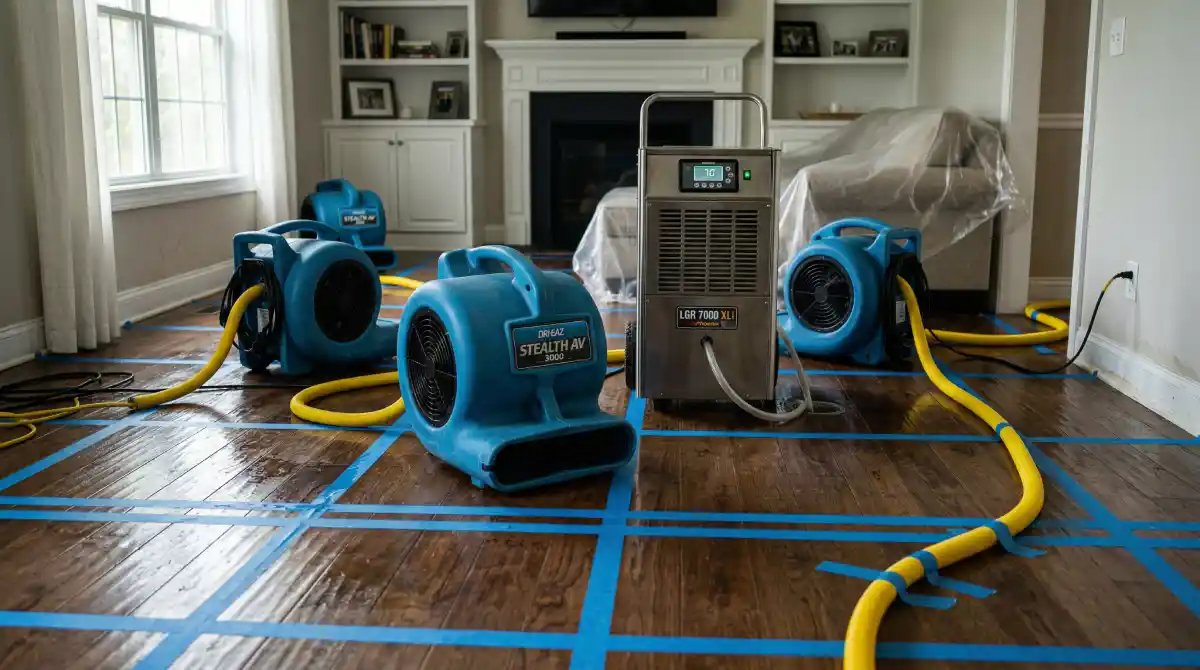
Air movers create fast, directed airflow across wet surfaces so trapped moisture can leave carpet, drywall faces, framing, and exposed flooring faster. They are not ordinary household box fans. Placement matters because the goal is to move damp surface air away from materials and keep evaporation active across the wettest zones. In a room-by-room loss, that often means building a drying pattern instead of just pointing air at the middle of the room.
Dehumidifiers pull moisture out of the air
As wet materials release water vapor, dehumidifiers remove that moisture from the air so the room does not become too humid to keep drying. This is the step that helps prevent swollen trim, soft drywall, cupped floors, lingering damp odors, and other secondary problems.
If you want a closer look at how humidity control fits into the process, review the role of dehumidifiers in water damage restoration.
Why these machines are used together
Air movers without dehumidification can keep moisture circulating inside the building. Dehumidifiers without enough airflow can leave wet materials releasing moisture too slowly. Used together, they create the drying loop that matters most: move moisture out of materials, then remove it from the air before it condenses or stalls the process. That is why structural drying is about balance, not brute force.
Detection tools decide where drying equipment goes
Drying equipment works better when you know exactly where the moisture is hiding.
Moisture meters and hygrometers
Moisture meters help confirm how wet a material is, while hygrometers track air conditions such as relative humidity. Together, they guide where equipment should be placed, how aggressive the dry-out needs to be, and when the job is actually done.
This matters because a room can feel better to you long before structural materials are truly dry.
Infrared cameras help find hidden water
Infrared and thermal imaging tools help identify suspicious moisture patterns behind walls, above ceilings, and under floor assemblies. They do not replace direct measurement, but they help narrow down where the wettest zones may be hiding.
That becomes especially important after roof leaks, window intrusion, burst pipes behind finishes, or repeated dampness in older housing stock.
Some areas need specialty drying setups
Not every material dries the same way, and some assemblies hide moisture for longer than expected.
Walls, ceilings, cabinets, and subfloors
Water inside wall cavities, wet insulation, under-sink bases, and ceiling assemblies usually need more targeted drying than an open floor area. In some situations, sections may need to be opened so trapped moisture can escape and equipment can actually reach the affected space.
If you want room-specific guidance, see how to dry a wall after water damage and how to dry out a house after water damage.
Dense materials can stay wet longer than they look
Concrete, subfloors, and other dense materials often mislead people because the surface may test or feel drier before deeper moisture finishes moving out. That is one reason a quick visual check is not enough, especially when flooring replacement or repairs are next. If deeper moisture remains, the surface can seem fine and then re-wet surrounding materials later.
Contaminated losses change the decision tree
Not every wet material should be dried in place. If the loss involves sewage, drain backup, or floodwater of uncertain quality, the issue is not just drying speed. It is also about contamination, porous material exposure, and whether some contents or finishes should be discarded instead of saved. In those cases, keep the response safety-led and cautious.
What drying equipment cannot do on its own
Machines matter, but they cannot replace source control, verification, or safe judgment.
It cannot fix the source of the water
No drying setup will solve a recurring roof opening, a leaking appliance line, a foundation entry point, or a frozen pipe that is still vulnerable. Drying only works when the water source has been stopped or controlled. Otherwise, you are trying to dry a structure while the loss is still active.
It cannot prove dryness by appearance alone
A dry-looking room is not the same as a dry structure. Moisture can remain behind baseboards, inside wall cavities, beneath floor coverings, and deeper in slab or wood assemblies, even after surfaces stop feeling damp. That is why verification matters.
A practical next read is this final inspection checklist after water damage restoration.
It cannot replace safe decision-making
Drying equipment is part of recovery, not a substitute for caution. If the loss involves live electricity, heavy contamination, structural instability, fire, lightning damage, or a ceiling that is sagging under water weight, treat the scene as a hazard first and a drying project second. The same EPA’s 24 to 48 hour mold-prevention window still matters, but safe access comes first.
The short answer is that no single machine dries water-damaged areas on its own. Effective drying usually combines extraction equipment, air movers, dehumidifiers, and moisture-detection tools, then adjusts that setup to the materials, contamination level, and hidden spread of the loss.
If you focus on fast water removal, controlled airflow, humidity reduction, and verified dryness instead of surface appearance, you make better decisions about what can be saved, what needs repair, and what should not be left to “air dry” on its own.
Frequently Asked Questions
1. What equipment is usually used first after basement flooding?
The first equipment is usually for water removal, not finishing. That often means pumps, extraction units, or industrial wet vacs to remove standing water before airflow and humidity control begin. In a lower level after heavy rain, that first phase matters because water keeps spreading into trim, drywall, stored contents, and flooring while it sits.
2. Are household fans enough to dry water damage?
Sometimes they help with a very small, clean-water spill caught immediately, but they are often not enough once water reaches wall cavities, insulation, subfloors, or larger surface areas. Household fans move air, but they do not remove bulk water, and they do not control humidity the way a structured drying setup does.
3. Why are dehumidifiers used if the floor already looks dry?
Visible dryness does not mean the building is dry. Wet materials keep releasing moisture into the air after the surface starts to improve, and that humidity can slow drying or create secondary damage. Dehumidifiers help keep the room moving toward actual structural drying instead of just feeling less damp.
4. How do professionals find hidden moisture behind walls or ceilings?
They typically combine visual inspection with moisture meters, hygrometers, and thermal imaging. The camera helps locate suspicious zones, and the meter helps confirm whether those materials are actually wet. That matters after roof leaks, burst pipes, window intrusion, and repeated dampness that spreads beyond the visible stain.
5. Does a sewer backup change the drying equipment plan?
Yes. A sewer or drain backup is not just a moisture problem. It can also be a contamination event, which affects what should be dried in place, what should be discarded, and how carefully access should be managed. If the water source is uncertain or unsanitary, treat it cautiously and avoid casual DIY cleanup.
6. Why can drying take longer in older homes and basement-heavy properties?
Older assemblies often have more cavities, layered materials, and hidden pathways for water to travel. Basement-heavy homes can also hold moisture in lower walls, stored contents, and floor transitions that are easy to overlook. In those properties, good drying depends as much on detection and verification as on machine count.
7. What equipment is common after a burst pipe in winter?
A burst-pipe loss often starts with extraction if water pools, then shifts quickly to air movers, dehumidifiers, and moisture-tracking tools. The challenge is that pressurized plumbing losses can wet insulation, framing edges, ceilings, and wall cavities before the full spread becomes visible, so hidden moisture checks are especially important.
8. What changes after storm-driven roof leaks or hail-related openings?
The main difference is source control and hidden spread. Water may enter through the roof or exterior openings and travel far from the entry point before you notice it indoors. That means the dry-out often depends on inspecting ceilings, upper walls, insulation paths, and flooring near exterior walls, not just treating the drip location.
9. Can commercial or mixed-use buildings use the same drying approach as a house?
The core equipment is similar, but the plan usually gets more complex. Larger air volume, tenant or staff disruption, shared walls, stocked rooms, and longer moisture pathways can all change where equipment goes and how drying progresses. The right setup has to match occupancy, materials, and how far the loss spreads.
10. When should you stop DIY drying and call a qualified professional?
Stop once the loss is large, the water may be contaminated, the area involves electricity or sagging ceilings, or the moisture has likely reached hidden spaces. Those are the situations where surface cleanup stops being enough and verified extraction, drying, and material evaluation become much more important.
11. Can concrete or subfloors stay wet after the surface looks dry?
Yes. Dense materials often dry more slowly below the surface than people expect. That is why a slab, subfloor, or framing layer can still hold enough moisture to affect finishes or nearby materials after the top layer seems improved. Monitoring matters because appearance alone can be misleading.
Related posts:
![How To Determine If Your Home's Water Damage Is Recent Or From The Past]()
How To Determine If Your Home's Water Damage Is Recent Or From The Past
![can-i-dry-hardwood-floor-after-water-damage]()
How to Dry Out Hardwood Floors After Water Damage
![When Hidden Lower-Level Spaces Need a Late-Summer Check]()
When Hidden Lower-Level Spaces Need a Late-Summer Check
![What Are The 5 Most Common Locations Of Water Damage?]()
What Are The 5 Most Common Locations Of Water Damage?
![Toilet Overflow Moisture Mapping: Set the Cleanup Boundary]()
Toilet Overflow Moisture Mapping: Set the Cleanup Boundary
![Why Should You Protect Your Home from Basement Flooding ?]()
Why Should You Protect Your Home from Basement Flooding ?
![Does-Renters-Insurance-Cover-water-damage]()
Does Renters Insurance Cover Water Damage? What Every Renter Should Know