


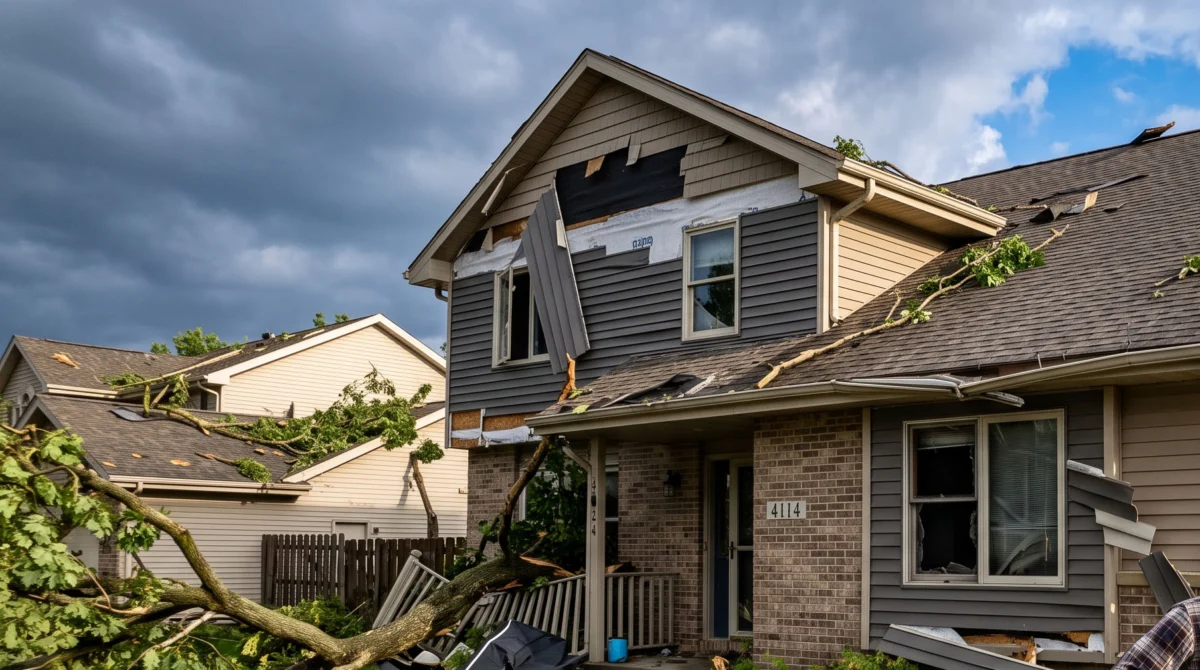
Milwaukee-area summer storms can move from noisy to destructive in minutes. A microburst may cover a small footprint, but microbursts can produce winds over 100 mph when a thunderstorm downdraft slams into the ground and spreads outward. In dense neighborhoods, first-ring suburbs, mixed-use corridors, basement-heavy homes, and lake-adjacent communities, that wind does not stop at the roof edge.
It can peel siding, drive rain through window gaps, shove debris into walls, lift gutters, snap trees, and leave openings that let water travel into ceilings, wall cavities, basements, retail spaces, offices, and tenant areas. That is why a roof-only check can miss the loss that creates the most disruption: hidden moisture.
What Microbursts and Straight-Line Winds Really Do
These winds hit fast, spread outward, and push damage through the whole property envelope.
Why the wind pushes sideways after it drops
A microburst starts with sinking air inside a thunderstorm. When that air reaches the ground, it spreads outward. Straight-line wind describes thunderstorm wind that is not tied to rotation. It can still flatten trees, push debris in one direction, and damage exterior building materials.
That outward push matters. A tornado often draws attention because of rotation, but straight-line winds can create broad property damage without the same visual signature. A summer microburst can exceed 100 mph, and the damage may look like a hard shove against one side of the building.
Why roof-only inspections miss water paths
Roof shingles may show obvious lifting or loss. But wind damage restoration decisions should also include siding, soffits, fascia, gutters, windows, doors, vents, roof-wall intersections, and exterior penetrations.
Once wind opens any of those areas, rain can enter behind finished surfaces. A ceiling stain may appear far from the entry point. Water can run along framing, insulation, ducts, or electrical chases before it becomes visible.
The Damage Path From Exterior Breach to Interior Moisture
Wind creates openings, rain exploits them, and hidden materials keep absorbing water after the storm ends.
Siding, windows, fascia, and soffits
Straight-line winds can loosen siding panels, bend flashing, tear fascia, and force water behind exterior cladding. Flying branches or loose outdoor items can break glass or damage frames. A cracked window seal may not look urgent, but repeated rain can wet trim, wall cavities, and flooring.
When the property needs temporary protection, debris cleanup, water removal, and repair planning, storm and wind restoration services may fit the loss better than a simple roof repair.
Basements, drains, and hidden lower-level water
A windstorm often arrives with heavy rain. Lower levels may take on water through window wells, foundation gaps, overwhelmed drains, or stairwell entries. In older housing stock and basement-heavy homes, water can spread under flooring and into stored contents quickly.
The source matters. Clean rainwater from an opening, stormwater entering a lower level, and drain or sewer backup concerns call for different cleanup decisions. If you are unsure whether the damage has moved beyond basic cleanup, review when water damage needs restoration, not just cleanup before you make salvage decisions.
If standing water or hidden dampness remains, water extraction and drying services may be part of the recovery sequence.
Immediate Priorities After the Storm Passes
A calm, safety-first response reduces risk and helps you make better recovery decisions.
Stay away from structural and electrical hazards
Do not walk around the property in the dark after a severe wind event. Avoid downed lines, leaning trees, hanging limbs, sagging ceilings, broken glass, and wet areas near electrical panels or outlets. Leave roof climbing to qualified workers, especially when shingles, decking, ladders, and gutters are wet.
If a tree has struck the building, do not cut it yourself. Weight shifts can worsen structural damage. Start with distance, photos, and safe access control. For more context, read about professional fallen tree removal before touching storm debris.
Photograph, protect, and dry
Photograph exterior damage, interior stains, wet contents, broken windows, fallen limbs, and water paths before moving items. Keep notes on when you found the damage and where water appeared.
If it is safe, move dry belongings away from wet areas. Do not use household fans if the water may be contaminated. Do not enter standing water when electrical hazards may exist. The EPA advises that you dry water-damaged areas and items within 24 to 48 hours to help prevent mold growth, so drying decisions should not wait for visible mold.
If you need a broader view of the sequence, how water damage restoration is performed explains why stabilization, extraction, drying, cleaning, evaluation, and repair decisions work together.
If a summer microburst or straight-line wind event leaves broken windows, roof exposure, fallen tree damage, interior water, or basement moisture, call (414) 571-9977 for storm and water-damage guidance before hidden moisture spreads further.
Why Summer Wind Damage Can Become a Restoration Problem
The visible break is only the start when rain, humidity, and trapped moisture enter the building.
Mold and odor risks
Summer storms create a difficult moisture environment. Warm air, wet materials, and closed cavities can keep surfaces damp after the floor looks dry. The 24 to 48 hour drying window matters again here, because drywall paper, carpet pad, trim, insulation, and contents can hold moisture out of sight.
Delayed drying can also lead to musty odors. Odor does not prove the full extent of damage, but it does warn you to look for moisture sources. The first 48 hours of water removal are especially important when storm-driven rain reaches porous materials.
Commercial and mixed-use disruption
Storm damage in a commercial or mixed-use space affects more than materials. Water in a storefront, office, stock room, tenant corridor, or lower-level mechanical area can interrupt staff, customers, deliveries, and tenant access.
Facility managers should check doors, windows, roof edges, floor drains, exterior walls, and shared utility areas. A small roof leak above one unit can travel into another. A broken window in a corridor can create water exposure for several spaces.
Prevention Checks Before the Next Summer Storm
Preventive maintenance will not stop every microburst, but it can reduce easy failure points.
Exterior maintenance
Trim weak branches away from roofs and service lines. Secure patio furniture, signs, grills, planters, dumpsters, and loose commercial items before storms. Clean gutters and downspouts so heavy rain can move away from the structure.
Check shingles, flashing, siding, caulk, window seals, door sweeps, vents, and exterior penetrations. Pay special attention to lake-adjacent exposure, older homes, and buildings with repeated wind-driven rain issues.
Interior readiness and response planning
Know where shutoffs are located. Keep floor drains clear. Store valuable items off basement floors. Use shelving in storage rooms and lower-level commercial areas. Keep a camera-ready documentation routine for property managers and facility teams.
After any severe wind event, walk the property only when conditions are safe. Look low as well as high. The damage may start at the roofline, but the recovery problem often begins where wind-driven water settles.
Frequently Asked Questions
1. What is the difference between a microburst and straight-line wind?
A microburst is a concentrated downburst from a thunderstorm that spreads outward near the ground.
Straight-line wind is the broader term for thunderstorm wind that does not rotate like a tornado.
Both can push debris, damage exteriors, and open paths for rainwater.
2. Why can wind damage cause basement flooding?
Wind damage often happens with intense rain.
If gutters fail, window wells fill, drains back up, or water enters through openings, lower levels can take on water.
Basement-heavy homes and older buildings may show interior moisture before roof damage becomes obvious.
3. Should I only inspect the roof after a summer windstorm?
No. The roof matters, but it is only one part of the building envelope.
Check siding, windows, doors, soffits, fascia, vents, gutters, basement entries, and interior ceilings.
Hidden moisture can start far from the visible exterior damage.
4. What should I avoid after straight-line wind damage?
Avoid walking near downed lines, climbing onto wet roofs, cutting fallen trees, or entering standing water near electrical sources.
Do not assume water is clean if it entered through drains or flooded lower levels.
Keep people away from unstable areas until hazards are reviewed.
5. How does storm-driven water become a mold concern?
Moisture can stay trapped behind drywall, under flooring, inside insulation, or around trim.
Warm summer conditions can make delayed drying more difficult.
Drying decisions should focus on hidden materials, not just visible puddles.
6. Can a broken window create major water damage?
Yes. Wind-driven rain can enter quickly through broken glass, damaged frames, or failed seals.
Water may soak flooring, wall bases, trim, contents, and nearby cavities.
Board-up, drying, and repair decisions depend on how far the water traveled.
7. What should commercial property managers check first?
Start with safe access, exterior openings, roof edges, storefront glass, tenant corridors, floor drains, and lower-level spaces.
Document damage before moving materials when possible.
Check adjacent spaces because water can travel across shared ceilings, walls, and utility areas.
8. Are fallen trees only an exterior problem?
No. A tree impact can damage roof framing, break windows, crack ceilings, and create water entry points.
It can also involve hidden tension, unstable limbs, and electrical hazards.
Keep distance from the tree and document damage from a safe location.
9. How can lake-adjacent properties face added storm exposure?
Lake-adjacent properties may see stronger wind-driven rain, exterior wear, and moisture exposure during storms.
That does not mean every lake-area property has the same risk.
Buildings with repeated leaks, older exterior materials, or exposed elevations need closer post-storm checks.
10. When does storm cleanup become restoration work?
Cleanup removes visible debris and surface water.
Restoration becomes more likely when water affects walls, floors, ceilings, insulation, contents, or safe use of the space.
Storm damage may also require drying, odor control, debris removal, board-up, tarping, or repair coordination.
11. Can sewer or drain backups happen after severe summer storms?
Yes, heavy rain can stress drainage systems and create backup concerns in some properties.
Water from a drain or sewer source should not be treated like clean rainwater.
Limit contact, restrict access, and make cleanup decisions based on the source and contamination concern.
12. How can I prepare before the next severe wind event?
Secure outdoor items, trim weak branches, clean gutters, and check seals around windows and doors.
Store important items off basement floors and know where shutoffs are located.
For commercial spaces, create a simple documentation and access plan before storm season.
Related posts:
![Protect Your Midwest Home from Storm Damage]()
Protect Your Midwest Home from Storm Damage
![When A Restaurant, Salon, Or Retail Shop Needs Overnight Emergency Drying To Open The Next Day]()
When Overnight Drying Keeps Business Doors Open
![What Happens After A Tree Punches Through The Building Envelope During A July Storm]()
When a July Tree Strike Turns a Roof Into a Water Path
![After The Storm: What to Do When Your Home is Hit by a Storm]()
After The Storm: What to Do When Your Home is Hit by a Storm
![Emergency Roof Tarping Stop The Next Storm From Expanding Damage]()
Emergency Roof Tarping: Stop the Next Storm From Expanding Damage
![Storm Damage Restoration Why Flat Roof Leaks Show Up Late]()
Storm Damage Restoration: Why Flat Roof Leaks Show Up Late
![What to Photograph Before the Spring Storm Adjuster Arrives]()
What to Photograph Before the Spring Storm Adjuster Arrives