

Why a July Tree Strike Is a Building Envelope Emergency
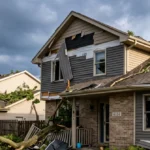
When wind drops a tree into a roof, wall, or window line, the first issue is the opening that lets rain, debris, and humid air move inside.
July storms can hit exposed buildings hard. Heavy rain and leaf-heavy trees can combine fast. In Milwaukee-area neighborhoods, first-ring suburbs, mixed-use corridors, and older housing stock, one fallen limb can affect a roof cavity, upper unit, storefront, or basement before rain stops.
Wisconsin sees 30 to 40 thunderstorm days per year, so tree impact damage belongs in the same risk family as roof leaks, broken windows, basement water, sewer backup concerns, and debris intrusion.
The impact does more than make a hole
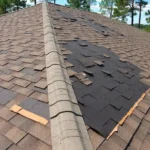
The building envelope includes the roof, exterior walls, windows, doors, siding, flashing, and other parts that separate indoor space from weather. A tree can puncture that envelope, shift framing, split siding, loosen gutters, and push water under materials that look attached.
Rain now has a path inside
Once the envelope opens, water can travel through insulation, ceiling cavities, wall bays, flooring, and shared chases.
The EPA recommends that water-damaged areas and items be dried within 24 to 48 hours to help prevent mold growth. That window matters because hidden moisture may keep spreading.
First Decisions After the Tree Hits
The first response should protect people, prevent new exposure, and avoid actions that make structural damage worse.
Protect people before property
Keep everyone away from the impact area. Leave rooms with sagging ceilings, cracked walls, shifting rooflines, broken glass, exposed wiring, gas odors, or water near electrical fixtures. If a tree contacts a power line or utility equipment, stay clear and involve emergency services or the utility provider.
Document damage from a safe distance
Photos and notes can help you track what happened, but do not climb onto the roof or walk under a lodged limb. Take wide shots safely. Add closer shots only where you can stand safely. Include water entry points, damaged contents, and debris locations.
Do not move the tree yourself
A tree that has punched into a roof or wall may be carrying load in a dangerous way. Cutting one branch can shift weight into framing, windows, masonry, or parked vehicles. When a large tree or limb rests on a structure, professional fallen tree removal is often safer than a rushed DIY attempt.
Water, Debris, and Hidden Moisture Come Next
After the immediate hazard is controlled, recovery moves from impact damage to water movement, debris, and drying decisions.
Remove standing water before it spreads
Rain may enter through the roof opening, broken windows, wall gaps, or damaged doorways. In basement-heavy homes and commercial lower levels, that water may combine with seepage or backup conditions after intense rainfall. Drying decisions should account for where the water started, where it traveled, and what materials it touched.
Dry hidden assemblies, not only floors
A wet floor may be only the visible part of the loss. Ceiling insulation, drywall seams, subfloors, trim, and wall cavities can hold moisture after the room looks cleaner. The 24 to 48 hour drying window matters most when water reaches hidden spaces. For a broader explanation, how water damage restoration is performed explains the difference between surface cleanup and restoration planning.
Watch contamination pathways
A July storm can create more than clean rainwater intrusion. Wind can drive dirty debris indoors. Flooded streets can push water toward lower openings. Overwhelmed drains may add backup concerns. Treat unknown water carefully, and keep people out of affected areas until the source and exposure level are understood.
What Property Owners Should Not Do
The wrong first-day choices can turn a contained storm loss into a wider water, mold, or repair problem.
Do not climb, patch, or cut under load
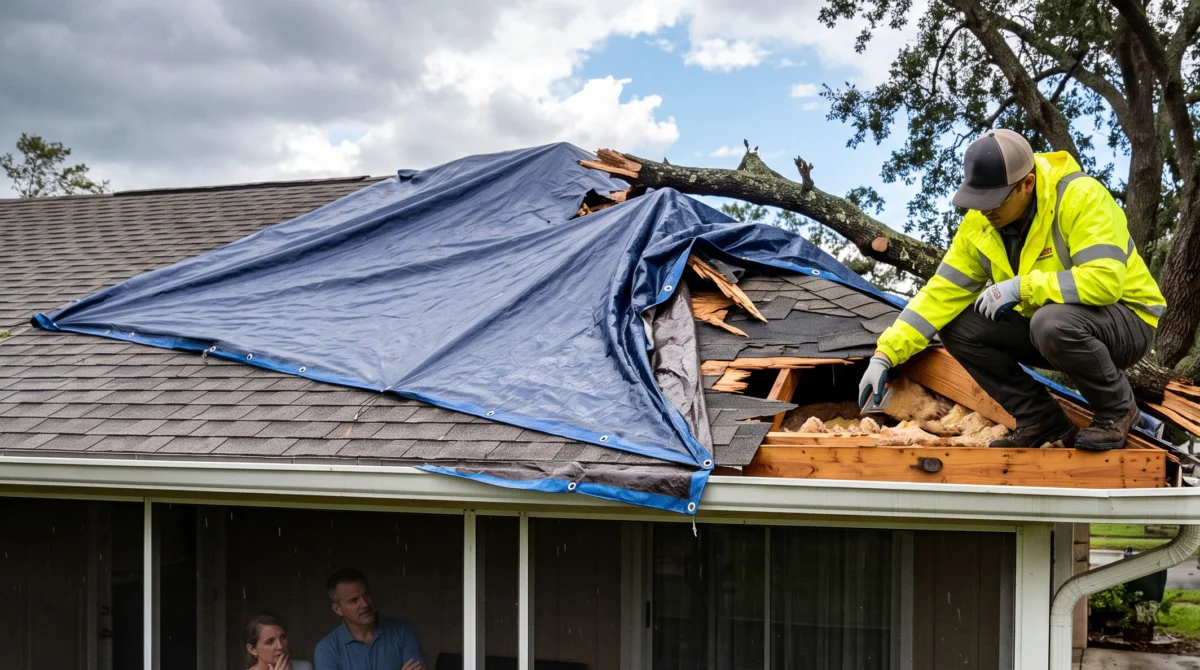
A tarp does not help if the person placing it is standing on a weakened roof. Avoid ladders, wet shingles, broken skylights, loose gutters, and tree limbs under tension. Temporary protection matters, but it should not create a new injury risk.
Do not wait for permanent repairs
Roof repair, window replacement, siding work, and structural evaluation may take coordination. The building still needs temporary protection while those decisions happen. A tarp or board-up can reduce rain entry and debris movement while permanent repair steps are planned. Also, do not trust surface dryness alone. Staining, musty odor, swelling trim, bubbling paint, and recurring dampness can point to moisture that stayed behind.
Commercial and Multi-Unit Buildings Need Sequencing
Tree impact damage can disrupt access, tenants, staff, customers, storage areas, and shared mechanical spaces in one event.
Separate usable areas from unsafe areas
A mixed-use building may have an apartment above a storefront, a shared hallway, and a basement with utilities. Do not treat the property as one simple room. Separate safe paths from damaged zones, and keep occupants away from debris, wet electrical areas, and unstable ceilings.
Plan cleanup around business function
Commercial recovery has to consider inventory, records, tenant access, deliveries, customer entry, and staff safety. A broken rear door or roof opening can affect operations even if the front room looks usable. In duplexes and mixed-use buildings, same-day emergency board-up can connect temporary protection with water control and repair planning.
Prevention Before the Next July Storm
You cannot control severe weather, but you can reduce weak points before wind and rain test the property again.
Because Wisconsin sees 30 to 40 thunderstorm days per year, tree and roof maintenance should be part of a seasonal routine. Look for dead limbs, leaning trees, clogged gutters, loose flashing, damaged shingles, and weak window seals. Use qualified professionals for hazards you cannot safely evaluate safely.
Keep downspouts extended, clear drains, test sump pumps where present, and move vulnerable storage off basement floors before peak storm periods. Save photos of the property exterior, roofline, trees, finished rooms, mechanical areas, and valuable contents before storm season. For wider seasonal planning, review seasonal water damage repair tips before storm and freeze risks overlap later in the year.
The Recovery Decision: Cleanup, Drying, or Repair?
The right scope depends on the source of the damage, the amount of water that entered, and the materials affected.
Tree impact recovery usually moves in phases: life safety, temporary protection, debris control, water removal, drying, and repair decisions for roofing, siding, framing, drywall, insulation, flooring, and finishes. Do not judge the scope only by the size of the hole. Good restoration decision-making looks at the full path of damage, not only the dramatic entry point.
Frequently Asked Questions
1. What should you do first after a tree hits your roof during a storm?
Move people away from the damaged area first.
Stay out of rooms with sagging ceilings, broken glass, water near electricity, or visible structural movement.
Document damage only from safe areas, and avoid climbing onto the roof or touching the tree.
2. Why is a tree through the roof also a water damage problem?
A roof puncture gives rain a direct path into attic spaces, ceilings, walls, insulation, and floors.
The visible hole may be smaller than the actual moisture path.
Water extraction and drying may be needed when moisture spreads beyond the entry point.
3. Can you cut and remove the tree yourself?
Avoid cutting a tree that is resting on a roof, wall, vehicle, utility line, or shared structure.
The tree may be under tension or supporting part of the damaged assembly.
A wrong cut can shift the load and worsen the building damage.
4. When does board-up or roof tarping matter after tree damage?
Temporary protection matters when a roof, window, door, or wall opening lets weather enter.
Board-up and tarp-over work can reduce additional rain, debris, and unsecured access while repair decisions are planned.
It is a temporary protective step, not the same as permanent repair.
5. What signs suggest hidden moisture after a tree strike?
Look for staining, soft drywall, swelling trim, bubbling paint, musty odor, and recurring dampness.
Water may travel through cavities before it becomes visible in the occupied space.
Hidden moisture is especially likely when rain entered through the roof or upper wall.
6. How can a July storm create basement flooding at the same time?
The same storm that knocks down a tree may also overwhelm gutters, drains, yards, and lower-level entry points.
Basement-heavy homes and mixed-use buildings can face roof intrusion and lower-level water at once.
That makes the response more complex than simple debris cleanup.
7. What if the water looks dirty or smells bad?
Treat unknown water as a potential contamination concern.
Storm runoff, drain backup, debris, and materials from the building can change the cleanup approach.
Keep people away from affected areas until the source and exposure level are understood.
8. Can mold grow after a tree opens the roof?
Mold risk increases when wet materials stay damp or hidden moisture remains in cavities.
The main prevention goal is moisture control and timely drying.
Mold removal may become relevant if growth appears after delayed drying, repeated dampness, or concealed water damage.
9. How should commercial properties handle tree impact damage?
Start by separating safe areas from damaged areas.
Think about staff access, customer paths, inventory, records, tenant spaces, and utility rooms.
Temporary protection, debris removal, water extraction, drying, and repair planning may need careful sequencing.
10. What should renters do after a tree damages the building?
Move away from the damaged area and report the issue to the property owner or manager.
Do not move the tree, enter unsafe rooms, or handle electrical hazards.
Document personal property damage from a safe location and follow building access instructions.
11. How can property owners reduce tree-related storm damage risk?
Inspect trees, roof edges, gutters, downspouts, window seals, and lower-level openings before peak storm periods.
Move vulnerable storage off basement floors and keep key contacts accessible during power outages.
Use qualified professionals for tree, roof, or structural concerns that cannot be evaluated safely from the ground.
Related posts:
![After The Storm: What to Do When Your Home is Hit by a Storm]()
After The Storm: What to Do When Your Home is Hit by a Storm
![Summer Microbursts And Straight Line Winds: Why The Damage Isn’t Limited To The Roof]()
Why Summer Wind Damage Goes Far Beyond the Roof
![Storm Damage Restoration Why Flat Roof Leaks Show Up Late]()
Storm Damage Restoration: Why Flat Roof Leaks Show Up Late
![How-to-Inspect-a-Roof-for-Wind-Damage]()
How to Inspect a Roof for Wind Damage
![Protect Your Midwest Home from Storm Damage]()
Protect Your Midwest Home from Storm Damage
![What to Photograph Before the Spring Storm Adjuster Arrives]()
What to Photograph Before the Spring Storm Adjuster Arrives
![Emergency Roof Tarping Stop The Next Storm From Expanding Damage]()
Emergency Roof Tarping: Stop the Next Storm From Expanding Damage