

Seasonal water damage is not one problem. It is a cycle. Heavy rain can push water into basements and lower levels in older housing stock and first-ring suburbs, severe thunderstorms can open roofs and walls to interior moisture, and winter cold can turn a hidden plumbing weakness into a burst-pipe emergency.
Flooding is a common and costly Wisconsin hazard, and recent southeast Wisconsin flooding has shown how quickly basement-heavy homes, mixed-use corridors, and commercial properties can be disrupted by fast-rising water.
Why seasonal water damage needs a different response
Each season creates a different mix of water source, contamination risk, and repair urgency.
A summer storm loss is different from a winter pipe break, and both are different from a sewer backup after a major rain event. The smartest response starts with the source of the water, the materials affected, and how long the moisture has been sitting.
That is why seasonal planning matters as much as emergency cleanup. If you understand what each season tends to damage, you can make better decisions about safety, drying, demolition, and repair.
Spring and storm-season water risks
Warm-weather losses often begin outside the building envelope and then move inward fast.
Heavy rain and basement flooding
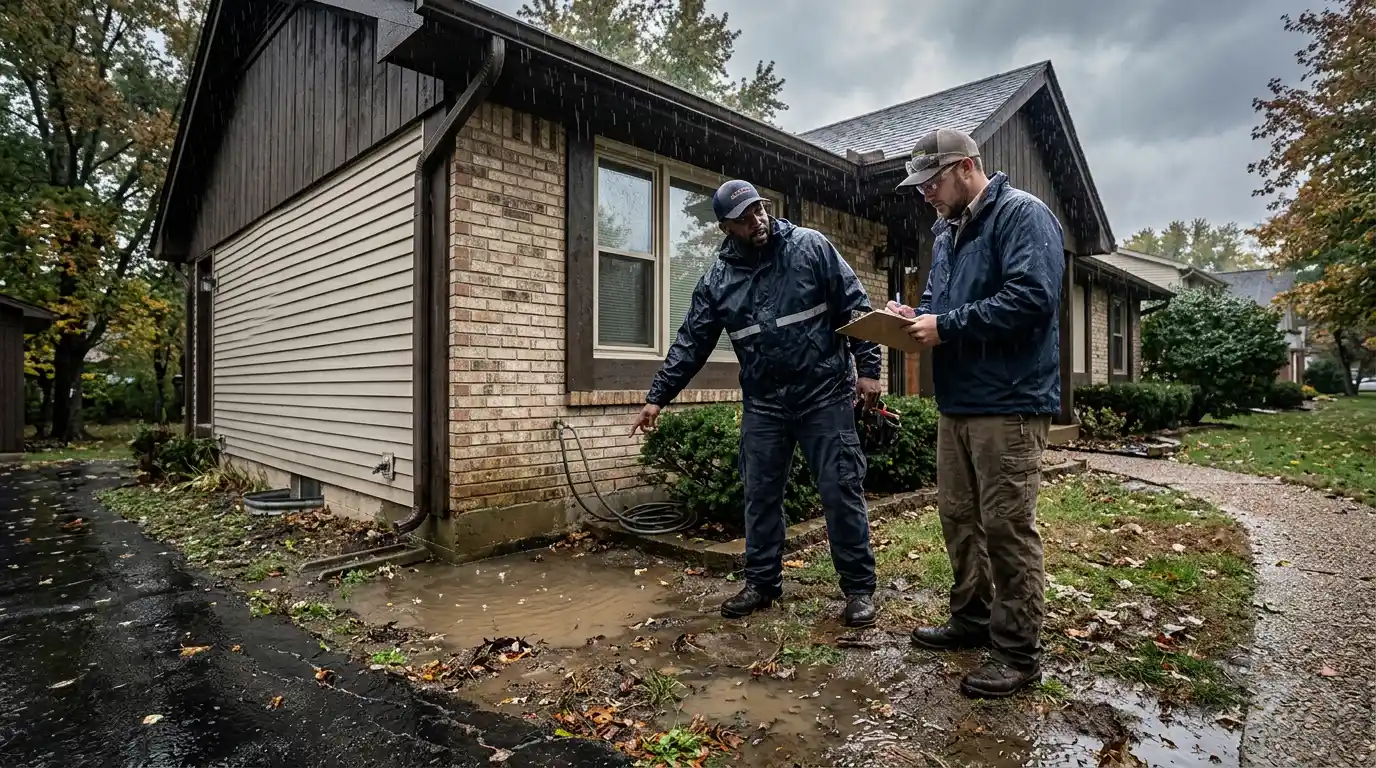
When heavy rain hits dense neighborhoods and basement-heavy housing stock, water can enter through foundation weaknesses, overwhelmed drainage paths, or lower-level openings. In this region, official sources document both repeated flood risk and real flash-flood impacts across communities in the service footprint, including flooded basements, closed streets, and submerged vehicles.
Your first priority is to determine whether the water is still entering, whether the area is electrically safe, and whether stored contents can be moved to a dry level. After that, fast extraction and drying matter more than cosmetic cleanup.
For a deeper look at what early response should cover, see what to do in the first 60 minutes after water damage and water damage restoration services.
Sewer backups and contaminated water
Not all basement water is the same. During major rain events, overloaded systems can increase the risk of backups and contaminated lower-level flooding. That changes the decision tree immediately. If water may contain sewage or drain waste, the job is no longer just about drying carpet and wiping surfaces. It becomes a contamination event that can affect porous materials, contents, and indoor conditions.
That is also why delayed cleanup creates bigger repair decisions later. Preventing secondary water damage after initial cleanup is often the difference between a contained loss and a wider tear-out.
Summer thunderstorm damage can turn into water damage
Wind and hail losses often become moisture losses once the structure is opened to rain.
Roof exposure, broken openings, and hidden leaks
Warm-season thunderstorms in Wisconsin can bring damaging wind, hail, lightning, and flash flooding. Even when the first visible problem is exterior damage, the real restoration issue may be what happens next: rain intrusion through lifted shingles, compromised siding, broken windows, or punctured roof areas.
Severe thunderstorms can produce damaging winds, hail, lightning, flash flooding, and tornadoes, which is why post-storm water checks matter even when standing water is not obvious.
After any severe storm, check ceilings, upper-floor wall intersections, attic access points, and flooring near exterior walls. Water often shows up far from the actual opening. If a room smells damp, paint begins to bubble, or trim swells, assume hidden moisture is possible until proven otherwise.
Debris and fallen tree impact
Storm debris creates a second layer of damage. A fallen limb, cracked branch, or broken opening can keep feeding water into the structure long after the rain stops. That is especially disruptive in commercial properties, shared buildings, and mixed-use spaces where one opening can affect tenants, customers, stock, or equipment on multiple levels. The repair question is not only what got wet, but what was left exposed.
If you are dealing with seasonal freeze-related failures as well, frozen pipes water damage services show the other major seasonal pathway by which interior water damage starts.
Seasonal water damage can spread fast. If it has reached walls, ceilings, floors, or lower levels, do not rely on patchwork fixes. Document the source. Stop active water if it is safe. Get professional help for extraction, drying, and repair.
Call (414) 571-9977.
Winter damage often starts inside the walls
Cold-weather losses can begin quietly and then spread fast once a line opens.
Frozen pipes and burst-pipe flooding
Cold snaps create a very different kind of emergency because the water source is often pressurized plumbing. Sustained cold and single-digit temperatures raise the risk of frozen pipes and meters. In practical terms, that means the damage may not appear until thawing begins or pressure forces a crack open behind a wall, above a ceiling, or inside a utility area.
If you suspect a frozen line, focus on shutoff access, temperature stabilization, and signs of active leakage. Do not assume the event is over when water stops visibly dripping. Burst-pipe losses often soak insulation, subfloors, framing edges, and drywall cavities before the full extent becomes visible.
Ice-related leaks and repeated moisture
Winter water damage also comes from roof-edge ice, snowmelt pathways, and repeated small leaks that stay hidden until staining appears indoors. These losses may look minor at first, but repeated moisture is what turns seasonal nuisance leaks into repair and mold decisions.
That is why determining whether water-damaged drywall can be saved or should be replaced is such an important repair question after a freeze event. Salvage depends on water type, exposure time, and whether the material stayed structurally sound.
The first decisions shape the repair bill
What you do in the first hours often determines how much of the building can be saved.
Start with safety and source control
If there is active water flow, shut off the nearest safe valve or the main if necessary. If water is near outlets, appliances, or a service panel, stay out until the area is evaluated. If ceilings are sagging, doors bind, or framing appears displaced, treat the area as potentially unstable.
Drying speed matters
The EPA’s mold guidance says water-damaged areas and items should be dried within 24 to 48 hours to help prevent mold growth. That window matters in every season, whether the source was a storm leak, a basement flood, or a burst pipe. Later in the process, the same 24-to-48-hour drying window in EPA guidance helps explain why delay turns a water loss into a moisture-and-materials problem.
Cleanup is not the same as repair
Visible water removal is only the first phase. Repair decisions come next: what can dry in place, what should be opened for inspection, and what may need replacement because of contamination, swelling, delamination, or persistent moisture. A practical checkpoint is the final inspection checklist after water damage restoration, which helps you think beyond surface dryness.
A year-round routine that reduces seasonal losses
Simple preventive habits help limit both emergency cleanup and later reconstruction.
Clean gutters before heavy rain periods. Extend downspouts away from the foundation. Test sump pumps before storm season. Watch for damp storage areas, musty odors, and repeated staining in lower levels. Before winter, insulate vulnerable plumbing, seal drafts near pipe runs, and keep interior temperatures stable.
After every major storm, inspect roof edges, upper ceilings, and window perimeters before hidden moisture spreads.
Seasonal water damage is easier to manage when you treat it as a property-risk pattern, not a one-time event. The better you match the response to the season, the faster you can move from emergency control to smart repair decisions.
Frequently Asked Questions
1. What should you do first after seasonal water damage?
Start with life safety. Stop active water if you can do so safely, avoid wet areas near electricity, and keep people out of any space with sagging ceilings, structural movement, or contaminated water. Once the immediate hazard is controlled, document the damage and begin drying decisions quickly.
2. When is basement flooding more than a simple cleanup job?
It becomes more than simple cleanup when water may be contaminated, when it soaks drywall or insulation, or when it sits long enough to spread into hidden cavities. Basement flooding after heavy rain can also point to recurring drainage or foundation issues, not just one isolated incident.
3. Can you stay in the property during water damage cleanup?
Sometimes, but not always. It depends on the water source, electrical safety, structural condition, and whether the work area can be isolated. Sewage backups, widespread storm intrusion, and severe burst-pipe losses often require a more cautious approach and outside evaluation.
4. How do you know whether water is clean, gray, or contaminated?
The source gives you the first clue. A broken supply line is very different from storm runoff, a floor drain backup, or wastewater from a sewer event. If the source is uncertain or if the water has traveled through dirty building materials, treat it cautiously until a professional can assess it.
5. How fast can mold become part of the problem?
Mold risk rises quickly when materials stay wet. The concern is not just what you can see on a wall or baseboard, but what remains trapped behind finishes and under flooring. That is why fast drying and moisture verification matter even after standing water is gone.
6. Should water-damaged drywall always be replaced?
No. Some drywall can be saved if the water was clean, the exposure was limited, and drying began early. But if the material has sagged, softened, separated, or been exposed to contaminated water, replacement may be the more reliable repair choice.
7. Why do frozen pipes cause so much damage?
They often fail under pressure, which means water can be released quickly and continue flowing until the source is shut off. Because many vulnerable lines run through walls, ceilings, basements, and utility spaces, the damage may spread into materials you cannot inspect at a glance.
8. What makes storm damage turn into interior water damage?
Openings in the building envelope. Wind can lift roofing, hail can damage protective surfaces, and debris can break windows or doors. Once the structure is exposed, rainwater can travel into insulation, framing, drywall, and flooring long before obvious staining appears.
9. How should commercial or mixed-use properties handle seasonal water damage?
Prioritize occupant safety, building access, and source control first. Then separate operational concerns such as tenant disruption, customer access, inventory exposure, and common-area damage from the repair scope. Early documentation is especially important when multiple spaces or occupants are affected.
10. Is sewer backup cleanup different from ordinary flood cleanup?
Yes. Sewer backup introduces contamination concerns that change how materials, contents, and lower-level finishes should be handled. What might be salvageable in a clean-water event may need different treatment or removal when wastewater is involved.
Related posts:
![how-to-dry-ceiling-water-damage]()
How to Dry a Ceiling After Water Damage (Without Making Things Worse)
![Why Spring Winds Leave Garages With Hidden Water Damage]()
Why Spring Winds Leave Garages With Hidden Water Damage
![What To Verify Before Sewage Damaged Materials Are Removed]()
What to Verify Before Sewage-Damaged Materials Are Removed
![5 Ways Water Gets Into Your Basement]()
5 Ways Water Gets Into Your Basement
![4 Things To Look For In A Water Damage Restoration Company]()
4 Things To Look For In A Water Damage Restoration Company
![How-Fast-Does-Mold-Grow-After-Water-Damage]()
How Fast Does Mold Grow After Water Damage?
![3.-What-Equipment-is-Used-to-Dry-Water-Damaged-Areas]()
What Equipment Dries Water-Damaged Areas After a Loss