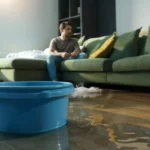
During the heavy-rain season, an overflowing basement toilet may signal a drainage problem extending beyond one bathroom. In rental buildings and mixed-use properties, the disruption can reach adjoining rooms before anyone notices water crossing the threshold.
The visible puddle is only part of the assessment. Water may enter flooring seams, collect beneath a vanity, or reach the ceiling below. Contamination also needs separate attention, especially when wastewater backs up through the bowl.
Moisture mapping services help locate and document wet materials. They do not independently identify sewage contamination. A useful cleanup boundary combines moisture findings with the water source, observed flow paths, and material exposure.
Start With the Source, Not the Puddle
Understanding what escaped determines how the affected area should be assessed.
Supply Water and Bowl Overflow Differ
A leaking supply connection and an overflowing toilet bowl are different incidents. Water that escapes before entering the fixture has a different exposure history from water carrying waste or backing up through the drain.
Clear-looking water does not establish cleanliness. Describe what happened, whether the toilet was used, and whether other fixtures backed up. Leave contamination classification to qualified restoration professionals.
Moisture Boundaries and Contamination Boundaries Differ
Moisture detection services identify elevated moisture in accessible materials. They cannot measure bacteria or prove that a dry surface is sanitary.
A previously wet surface may retain contamination after drying. Footwear or moved contents can also transfer residue beyond the original puddle. Conversely, unrelated dampness may come from an older leak. The inspection should distinguish these possibilities instead of treating every elevated reading as proof of sewage exposure.
Protect Access Before Cleanup Begins
Early precautions help limit contact and preserve useful information without delaying necessary emergency work. Stop using the affected toilet. If its supply valve is safely accessible from a dry position, close it. This can stop incoming supply water, but it will not resolve a sewer backup. Arrange plumbing help for the underlying problem.
Until the situation is assessed:
- Keep children, pets, customers, and unnecessary foot traffic away.
- Avoid contact with suspected wastewater.
- Do not enter water near electrical equipment or wiring.
- Photograph visible damage from a dry, accessible position.
- Avoid carrying contaminated contents through unaffected rooms.
- Notify your property manager promptly if you rent.
For suspected sewage contamination, ordinary mopping is not an adequate assessment.
Request a damage assessment: At ERS Remove Water, we assess water damage and locate hidden moisture. Call (414) 571-9977 and describe the overflow source, affected rooms, and any downstairs leakage. Keep the affected area restricted while you arrange help.
Follow the Water Beyond the Bathroom
Effective moisture inspection services examine connected materials, not just the floor around the toilet.
Check Flooring and Wall Edges
Water can move beneath finish flooring and enter gaps around trim, cabinets, and plumbing penetrations. Inspection may need to include adjoining carpet, wall bases, vanity components, and the subfloor.
The tile that looks intact does not establish that the assembly beneath it stayed dry. Material access and construction details affect what can be checked without opening finishes.
Check Lower Levels and Shared Spaces
An upstairs overflow can affect insulation or ceiling materials below. In connected buildings, the inspection may also need to extend into neighboring rooms or units.
The same principle behind moisture planning for shared-wall properties applies here: building connections matter more than room labels. Arrange access through property management when adjoining spaces need assessment.
Record Findings and Unchecked Areas
A useful map connects readings to specific locations and materials. Photos, sketches, and notes should distinguish observed water paths from areas that remain inaccessible.
Hidden moisture detection supports targeted investigation. It does not eliminate every uncertainty, especially behind layered finishes or enclosed assemblies.
Understand What Inspection Tools Can Establish
Different tools answer different questions, so findings need interpretation.
Thermal imaging displays surface temperature differences that can guide further investigation. It does not directly show bacteria, and a temperature pattern alone does not confirm moisture. Suspect areas need moisture measurement and contextual assessment.
Moisture meters provide readings that depend on the instrument, material, and measurement method. A reading on wood should not automatically be interpreted like a reading on tile or drywall.
Ask how readings compare with an appropriate reference for the material. Also ask which surfaces were accessible and whether concealed layers need further investigation.
Moisture mapping services should produce an understandable picture of affected materials, remaining uncertainties, and the next assessment steps.
Let Exposure and Material Condition Guide Removal
Removal decisions should explain both the contamination concern and the practical limits of cleaning or drying.
Materials That May Need Removal
Absorbent materials exposed to sewage may require removal when contamination cannot be adequately addressed. Carpet padding, drywall, and insulation warrant particular attention.
The decision should reflect actual exposure, absorption, deterioration, and access. Avoid assuming that everything in the bathroom must go, or that every dry-looking material can stay.
Materials That Need Further Evaluation
Some durable surfaces may be suitable for cleaning and disinfection. However, the condition of the visible finish does not settle what happened underneath.
Before approving work, clarify what to verify before sewage-damaged materials are removed:
- Which materials had direct wastewater contact?
- What evidence supports each removal decision?
- Which concealed areas remain uncertain?
- What cleaning, drying, and repair work follows?
An initial scope may change when opening an assembly reveals additional damage. Ask how those changes will be explained and documented.
Coordinate Cleanup, Drying, and Property Use
Recovery requires separate decisions about contamination, remaining moisture, and access.
Removing standing water does not complete decontamination. Drying does not replace cleaning. Applying disinfectant over residue does not substitute for removing that residue.
In occupied commercial spaces, the difference between janitorial cleaning and incident disinfection matters. Routine restroom care should not become an improvised sewage response.
Our Sewage Backup Cleanup Services include contaminated-water extraction, removal of unsalvageable porous materials, disinfection, and structural drying.
For rental and commercial properties, clarify who coordinates plumbing repairs, adjoining-space access, and occupant updates. Reopening decisions should reflect the work completed and remaining hazards, not just the disappearance of the puddle.
Confirm Readiness Before Rebuilding
The repair plan should follow the cleanup findings and drying results.
Ask for an explanation of remaining moisture, materials removed, and areas still requiring attention. New flooring or wall finishes should not conceal unresolved contamination or damp assemblies.
Persistent moisture can support mold growth after water damage. If visible growth or unexplained musty odor develops, arrange a qualified assessment instead of covering the area with paint or flooring.
At ERS Remove Water, we provide water damage assessment, moisture mapping, extraction, drying, and necessary restoration work. These steps help connect the initial findings with practical recovery decisions.
Request help before approving removal or repairs: Call (414) 571-9977 to discuss your toilet overflow and request an assessment. Tell our team whether wastewater reached porous materials, neighboring rooms, or the level below. We can assess the damage and discuss the cleanup and restoration needs.
Frequently Asked Questions
Can moisture mapping tell whether toilet water contains sewage?
Moisture mapping locates and documents moisture; it does not identify bacteria or sewage.
Contamination assessment also considers where the water originated and what it contacted.
A low moisture reading cannot establish that an exposed surface is sanitary.
Does every toilet-related leak require sewage cleanup?
A supply-line leak differs from wastewater overflowing from the bowl or drain. The source, contents, exposure history, and surrounding conditions affect cleanup decisions. Avoid classifying the incident by water clarity or smell alone.
Should moisture mapping happen before any water is removed?
Initial inspection and documentation should begin promptly when access is appropriate. However, emergency source control and extraction should not wait for an exhaustive map.
Mapping can continue as access improves and concealed conditions become clearer.
Why inspect the ceiling beneath an upstairs toilet overflow?
Water can pass through floor openings and reach materials below the bathroom. The ceiling surface may not reveal everything occurring above it. Keep away from sagging areas and have qualified professionals assess the affected assembly.
Can dry-looking bathroom tiles conceal water damage?
Yes. The exposed tile surface may dry while moisture remains beneath or beside it. Inspection should consider seams, perimeter gaps, the subfloor, and adjoining materials. Whether finishes need opening depends on findings and available access.
Does a thermal image prove that a wall is wet?
No. Thermal imaging shows temperature patterns that may suggest moisture. Other conditions can also create temperature differences. Moisture measurements and inspection help determine what a suspicious pattern represents.
Can carpet exposed to toilet wastewater simply be dried?
Drying alone does not address contamination absorbed into carpet or padding. The water source and degree of exposure affect whether materials can remain. Have contaminated absorbent materials evaluated before attempting cleaning or reuse.
What changes when a basement toilet overflows during heavy rain?
The event may involve a drainage or sewer backup rather than an isolated fixture problem.
Other low drains and connected basement spaces may also need inspection. Do not assume closing the toilet supply valve will stop wastewater entering through the drain.
What should renters or facility managers document?
-Record when the overflow was discovered, which rooms appear affected, and any continuing leakage.
-Take photographs only from accessible areas without contacting contaminated water.
-Report lower-level damage, neighboring-space concerns, and previous leaks to the person coordinating recovery.
When can flooring and drywall repairs begin?
-Repairs should follow source correction, necessary contamination cleanup, and appropriate drying.
-Ask what findings support closing concealed spaces or installing replacement materials.
-Unresolved moisture, contamination, or damaged components need attention before finishes cover them.
Related posts:
![How-to-repair-water-damaged-wood]()
How to Repair Water-Damaged Wood (and When to Call the Pros)
![Can Walls Be Saved From Water Damage?]()
Can Walls Be Saved From Water Damage?
![how-to-dry-ceiling-water-damage]()
How to Dry a Ceiling After Water Damage (Without Making Things Worse)
![How-to-fix-water-damaged-ceiling]()
How to Fix Water Damaged Ceiling
![Why-Every-Minute-Counts-After-Water-Damage]()
Why Every Minute Counts After Water Damage
![How-to-get-water-out-of-Flooded-Carpets]()
How to Get Water Out of Flooded Carpets: A Step-by-Step Guide
![Why Late-Summer Leaks Can Become Bigger September Claims]()
Why Late-Summer Leaks Can Become Bigger September Claims