

Heavy rain can overload lower-level drains, winter freezes can turn pipe failures into large interior losses, and severe storms can expose commercial buildings to water and debris. In those situations, the first instinct is often to call the janitorial crew.
That works for ordinary dirt and routine maintenance. It stops making sense when sewage, blood, bodily fluids, sharps, or other biological contamination enters the picture.
Commercial disinfection services are not simply a stronger version of routine cleaning. They become relevant when the incident changes the contamination type, affected materials, or risk of spreading residue through occupied areas.
Why Routine Janitorial Cleaning Has a Limit
Routine cleaning supports day-to-day building hygiene, but incident cleanup starts with a different question: what contaminated the space?
Routine cleaning is designed for routine soil
A sewage backup or biohazard incident may involve contaminated water, biological material, hidden absorption, or materials that cannot simply be wiped and returned to use. That is a different problem from routine restroom care, trash removal, or ordinary surface cleaning.
Cleaning and disinfection are separate steps
Cleaning removes dirt and organic material. Disinfection targets remaining germs after cleaning. CDC facility guidance recommends cleaning surfaces before disinfecting because dirt and impurities can interfere with disinfection.
After a sewage or biohazard loss, applying disinfectant over visible residue or contaminated material is not a substitute for removing the contamination first.
When Routine Janitorial Cleaning Must Stop
Pause routine cleaning when conditions move beyond normal custodial work and require a contamination-focused scope.
Sewage or contaminated water reaches occupied areas
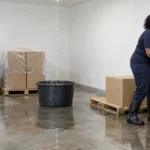
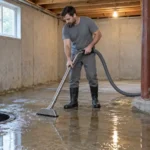
A floor-drain backup, overflowing fixture, or contaminated basement flood can affect flooring, baseboards, storage, contents, and adjoining spaces. Mopping visible water does not answer whether porous materials absorbed contamination or whether water traveled under finishes.
Blood, bodily fluids, or sharps are present
Visible blood, bodily fluids, used needles, or similar biohazards should change the response. OSHA requires contaminated work surfaces to be decontaminated after contact with blood or other potentially infectious materials when the Bloodborne Pathogens standard applies.
If discarded sharps are part of the scene, review our guidance on handling biohazard needles rather than treating the area as ordinary litter cleanup.
Contamination reaches porous materials
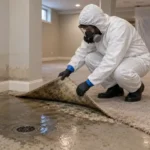
Carpet, padding, drywall, insulation, unfinished wood, and stored goods can absorb liquids. Once contamination moves below the visible surface, a mop-and-disinfect approach may leave part of the problem untouched.
What Commercial Disinfection Services Need to Address
A useful scope should match the source, affected materials, and how the property is used.
Define the source and affected area
Before disinfection becomes the main task, the cause of the incident needs attention. For commercial spaces, also consider shared halls, stock rooms, lower levels, tenant boundaries, and customer routes.
Clean before disinfection
Visible waste, debris, and soil need to be addressed before disinfection. This keeps the work focused on actual contamination instead of appearance alone.
Our commercial disinfection services can support homes and commercial facilities when specialized sanitization is appropriate after a biohazard, sewage, or infectious-disease concern.
Coordinate drying, odor, and repair needs
Disinfection may be one part of a larger recovery plan. A sewage backup can also require water extraction and drying, odor removal, material evaluation, and restoration work. New flooring, drywall, trim, or paint should not cover unresolved moisture or contaminated materials.
Why Commercial Incidents Can Spread Beyond One Room
Commercial properties add shared access, neighboring occupants, and operating pressure to the cleanup decision.
Basement and floor-drain events
Heavy rain can affect lower levels, utility areas, storage rooms, or basement corridors. When porous materials contact contaminated water, surface appearance may not reveal the full scope. Our guide to sewer-backup cleanup and material removal explains why exposure and absorption matter.
Shared corridors and tenant spaces
In apartments, offices, and mixed-use corridors, wet contents, footwear, carts, or cleanup tools can move residue into cleaner spaces. Persistent odor can also signal incomplete source control. Our tenant move-out odor guide explains why sewage odor should be treated as a contamination issue first.
Seasonal damage can change the scope
A winter pipe failure may begin as a water loss, while a storm opening may introduce rain and debris. If sewage or biological material becomes part of the same event, the cleanup plan can change. Reassess the source instead of assuming the original janitorial plan still fits.
Infectious Disease Cleanup Requires a Different Decision
Infectious disease cleanup should reflect the actual situation, facility type, and applicable public-health guidance rather than fear or routine broad-area treatment.
For ordinary community facilities, routine cleaning is often enough for day-to-day hygiene. Additional disinfection becomes more relevant where people have obviously been ill, or an outbreak creates a specific need.
The same principle applies to commercial disinfection services. Match the response to the contamination rather than treating every illness report as a full biohazard event.
What Property Managers Should Do Before Cleanup Begins
Simple decisions at the start can reduce confusion and preserve a clearer picture of what was affected.
- Restrict access to visibly contaminated rooms or routes.
- Stop the source only when it can be done without entering a hazardous area.
- Do not move wet or contaminated contents through clean spaces unnecessarily.
- Document affected rooms, materials, shared areas, and visible water paths.
- Pause routine mopping, vacuuming, or finish work where biological contamination is suspected.
- Do not start repairs until the cleanup and material-removal scope is understood.
Plan Repairs Around the Contamination Scope
Cleanup and repair decisions should follow what actually happened to the materials, not a preset package.
Some hard surfaces may be cleanable. Some porous materials may require closer evaluation or removal after direct contamination. If water remains, drying also becomes part of the plan.
Cost can vary because a small hard-surface incident differs from contamination affecting flooring, wall materials, contents, or multiple rooms. Our guide to biohazard cleanup cost factors explains why source, size, affected materials, and restoration needs can change the scope.
We can connect disinfection with verified services such as sewage backup cleanup, water extraction and drying, odor removal, and restoration services when those needs are part of the same property loss.
Get the Cleanup Scope Right Before Normal Operations Resume
A clean-looking floor is not the same thing as a completed contamination response. Returning an area to normal use should follow the actual cleanup scope and conditions found at the property.
Frequently Asked Questions
When should a janitorial crew stop cleaning after a sewer backup?
- Routine cleaning should stop when sewage or visibly contaminated water has entered occupied or finished areas.
- The issue may extend below flooring, into porous materials, or into adjoining spaces.
- Limit access and have the contamination scope evaluated before ordinary custodial work resumes.
Are commercial disinfection services the same as janitorial cleaning?
No. Janitorial cleaning manages ordinary soil, trash, and routine surface maintenance. Commercial disinfection services become relevant when biological contamination or an infectious-disease concern changes the cleanup requirements. Cleaning and disinfection may also need to occur in a specific sequence.
What should I do after contaminated basement flooding following heavy rain?
- Keep people away from contaminated water and avoid moving affected contents through clean parts of the property.
- Document where the water traveled and which materials became wet.
- Sewage cleanup, extraction, drying, disinfection, odor removal, or material evaluation may all become relevant depending on the source.
Does a frozen pipe automatically require disinfection?
Not necessarily. A frozen pipe is primarily a water-damage event unless contamination becomes part of the loss. The response depends on the water source, where it traveled, what materials became wet, and whether another contamination source was involved.
When is infectious disease cleanup appropriate in a workplace?
It depends on the circumstances, facility type, affected areas, and applicable public-health guidance. Ordinary facilities often rely on routine cleaning for normal day-to-day conditions. More targeted disinfection may be appropriate after obvious illness contamination or during specific outbreak situations.
Can sewage-contaminated carpet simply be disinfected?
Porous materials can absorb contaminated water beneath the visible surface. Carpet, padding, drywall, insulation, and unfinished materials therefore need closer evaluation after direct sewage exposure. A surface treatment alone may not address contamination held deeper within the material.
What if sewage odor remains after routine cleaning?
Persistent sewage odor can indicate that the source, contaminated material, or affected area has not been fully addressed. Air fresheners and fragrance do not remove the underlying contamination. Reassess drains, porous materials, concealed areas, and any spaces touched by the original water.
Can storm or fallen-tree damage create a later need for disinfection?
Storm damage can open roofs, windows, or exterior assemblies and allow water and debris indoors. Disinfection becomes relevant if the resulting loss also involves contaminated water or biological material. Water removal, drying, debris cleanup, and repairs may be separate parts of the recovery.
Does lightning-related fire damage require commercial disinfection services?
Not every fire loss requires the same cleaning scope. Fire damage may involve soot, smoke odor, damaged materials, water from suppression efforts, or other debris. Disinfection should be included only when the conditions found at the property make it relevant.
Can mold develop after a sewage or contaminated-water incident?
Moisture that remains after a water loss can create additional property concerns, including mold growth. The first priorities are understanding the water source, addressing contamination, and drying affected materials as appropriate. Mold concerns should be evaluated separately if visible growth or persistent moisture develops.
Should repairs begin immediately after biohazard cleanup starts?
Repairs should follow the actual cleanup and material evaluation rather than cover affected areas prematurely. Flooring, drywall, trim, and paint should not conceal unresolved moisture or contaminated materials. The repair scope should reflect what was removed, cleaned, dried, or otherwise addressed.
How should a facility manager handle shared hallways after a biohazard incident?
- Start by limiting unnecessary traffic through areas that may have been affected.
- Document whether people, carts, wet contents, or cleanup materials moved through the corridor after the incident.
- Shared areas should be included in the evaluation when there is a reasonable pathway for contamination.
Related posts:
![Roof Drain Overflow Protecting Commercial Inventory Below]()
Roof-Drain Overflow: Protecting Commercial Inventory Below
![Emergency Water Removal For Sump Line Backups Importance]()
Emergency Water Removal for Sump Line Backups: Importance
![When Is Biohazard Cleanup Necessary and What Are the Steps?]()
When Is Biohazard Cleanup Necessary and What Are the Steps?
![What To Verify Before Sewage Damaged Materials Are Removed]()
What to Verify Before Sewage-Damaged Materials Are Removed
![How Structural Drying Services Help Masonry Basements Dry Properly]()
How Structural Drying Services Help Masonry Basements Dry Properly
![How to Prevent Sewage from Entering Your Home]()
How to Prevent Sewage from Entering Your Home
![A Sewage Backup Carries More Risk Than A Stink]()
A Sewage Backup Carries More Risk Than A Stink