


Heavy rain can fill a sump pit fast. Winter freeze can block an exterior discharge route just when snowmelt or groundwater starts moving again.
In basement-heavy homes, older housing stock, first-ring suburbs, mixed-use corridors, and commercial properties, a discharge backup can turn a drainage problem into sudden interior flooding.
When water returns to the pit or spills across the floor, emergency water removal becomes the priority. The discharge problem needs plumbing repair, but the basement may also need extraction, drying, cleanup, and repair.
A safe response separates those needs while protecting occupants, electrical systems, contents, and building materials.
Why a Sump Pump Discharge Backup Becomes a Basement Emergency
The pump may still run even though it is no longer moving water safely away.
The discharge path can fail
A sump pump collects water in a basin and sends it outside through a discharge line. A clog, frozen section, damaged connection, obstructed outlet, or failed check valve can interrupt that path or allow backflow. Reviewing how a basement sump pump works explains why the pump, line, outlet, and drainage path all matter.
Warning signs include a rising pit, a pump that runs without lowering the water, unusual cycling, water near the lid, or little visible discharge outside. Do not touch the pump while standing on a wet floor.
The puddle is only the starting point
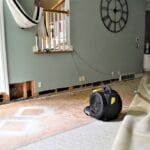
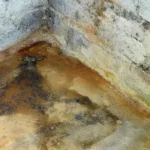
Water can move under carpet, padding, flooring, baseboards, cabinets, and stored materials. It can wick into drywall or reach wall cavities and insulation. Concrete may look dry while nearby porous materials remain wet.
That spread is why water removal services must look beyond the puddle. Emergency water damage restoration should address both standing water and hidden moisture.
What to Do Before Emergency Water Removal Begins
The first decisions should reduce electrical, contamination, and injury risks.
Keep electricity and standing water separate
- Stay out if water is near outlets, appliances, wiring, the service panel, or powered equipment.
- Do not unplug the pump or operate a wet vacuum while standing in water.
- Shut off the affected circuit only from a dry location and only when safe.
Otherwise, wait for a qualified professional.
Stop the inflow only when safe
Closing the main water valve may not stop groundwater or stormwater from entering the pit. Do not dismantle the pump or open a pressurized connection in a flooded area. A plumber should diagnose a blocked, frozen, disconnected, or backflowing discharge system.
Protect people, records, and contents
- Keep children, tenants, employees, customers, and pets away.
- Photograph the water depth and damage from a safe position.
- Move dry, reachable items higher only when the path is stable and free of electrical hazards.
The checklist in five emergency water removal steps can help you organize the response without treating a flooded basement as a routine cleaning job.
What Professional Emergency Water Removal Should Address
Recovery should move from source control to extraction, drying, cleanup, and repair.
Extract water and trace hidden moisture
The first phase removes accessible water and determines where moisture spread. Carpet, padding, baseboards, drywall edges, subfloors, utility areas, storage rooms, and adjoining spaces may need evaluation.
Water extraction and drying should not stop when the floor looks clear. Moisture checks guide drying and show whether materials are stabilizing or whether selective removal and water damage repair may be necessary.
Dry materials, then plan repair
Air movement and dehumidification support drying after bulk water removal. The approach depends on the water source, materials, temperature, humidity, and exposure. Persistent dampness also supports mold growth.
Practical mold and moisture guidance reinforces the need to correct the water problem and dry affected areas.
Later decisions may include cleaning, odor control, material removal, and water damage repair services. A guide to drying a house after water damage explains why surface dryness is not the final checkpoint.
Separate plumbing correction from restoration
A qualified plumber should repair the discharge line, outlet, connection, check valve, or pump problem. A water removal company should handle interior extraction, drying, water damage cleanup, and restoration.
Both tracks matter. Removing water without correcting the failure invites another loss. Repairing the line without drying the basement leaves hidden moisture behind.
What Changes the Water Damage Cleanup Plan
Water source, materials, and property use determine the response.
Water source and contamination
Water returning from a sump basin may contain soil, sediment, and debris. If it mixes with a floor-drain backup, sewage, chemicals, or unknown runoff, avoid contact. Floodwater and standing water safety matters when the source cannot be confirmed.
Contaminated water changes flood damage cleanup decisions. Porous materials may require a different response than after a clean supply-line leak.
Materials and exposure
An unfinished concrete area has different water mitigation and restoration needs than a finished lower level with carpet, drywall, insulation, cabinetry, or stored paper. Repeated backups matter because moisture may already exist behind finishes.
Use basement flooding cleanup and repair guidance to evaluate source control, safety, water removal, drying, and repair as connected steps.
Property use and occupancy
In a rental, office, retail space, mixed-use building, or facility, emergency water cleanup must also account for access, tenant disruption, inventory, customer routes, shared walls, and lower-level mechanical or storage areas. Restrict access until electrical, contamination, and slip hazards are addressed.
Early documentation and a room-by-room water damage cleanup plan help owners, facility managers, and property managers make clearer decisions.
Preventing Another Discharge-Line Backup
Prevention starts when the failed drainage path can be evaluated.
Schedule a plumbing review
Ask a qualified plumber to inspect the discharge line, outlet, connections, pump operation, and check valve. The review should identify freezing, clogging, damage, poor drainage away from the building, or another condition that could send water back.
Do not assume the line is fixed because the level drops. A partial obstruction can return during the next heavy rain or freeze-thaw cycle.
Prepare for seasonal pressure
Before storm periods, confirm that the exterior outlet is visible and unobstructed. Before winter and during thaws, watch for ice or snow around the discharge route. A qualified professional can advise whether backup power, a high-water alarm, or discharge modifications fit the property.
-Keep important contents off basement floors.
-Inspect lower levels after major rain, power interruptions, severe wind, hail, or nearby tree damage.
These events can combine drainage problems with leaks, broken openings, debris intrusion, or drying delays.
Get Help Before Basement Water Spreads
Safety-led action creates a clearer path from emergency control to repair.
A backed-up sump discharge line needs more than a plumbing fix if water entered the basement. You may need home water removal, emergency water cleanup services, structural drying, flood cleanup, and water damage restoration services based on the source and materials affected.
At Emergency Restoration Specialists, we help you move from water removal to drying, cleanup, and repair. Call (414) 571-9977 or get emergency restoration help before moisture spreads into floors, walls, contents, or adjoining spaces.
Frequently Asked Questions
What should you do first when sump water reaches the basement floor?
-Keep everyone out of the affected area and check for electrical hazards from a dry location.
-Do not touch the pump, cords, appliances, or outlets while standing on a wet surface.
-Call for plumbing correction and emergency water removal, then document visible damage if you can do so safely.
Should you shut off the sump pump when the discharge line is blocked?
Do not touch or unplug the pump while standing in water. If the correct breaker is safely accessible from a dry area, de-energizing the circuit may prevent the pump from continuing to work against a blockage. A qualified electrician or plumber should guide the next step when electrical conditions are uncertain.
Can you use a wet vacuum for basement water removal?
A wet-rated vacuum may help with a very small, clean-water spill when the area is electrically safe. Do not use a household vacuum, and do not operate any corded equipment in standing water. Larger losses, hidden moisture, or uncertain water sources call for professional water removal services.
Who repairs the discharge line, and who handles the water damage?
A plumber typically diagnoses the pump, check valve, discharge pipe, outlet, and drainage route. We can address the interior water extraction and drying, cleanup, and restoration needs created by the backup. Coordinating both scopes helps prevent a repaired pipe from leaving wet materials behind.
Is water from a backed-up sump pit contaminated?
Sump water may carry soil, sediment, debris, or contaminants picked up before or after entering the basin. Risk increases if the water mixes with a floor-drain backup, sewage, chemicals, or outdoor floodwater. Avoid direct contact when the source is unclear, or the water has an unusual color or odor.
How do you know whether moisture spreads behind walls or flooring?
Look for swollen trim, lifting flooring, soft drywall edges, staining, damp odors, or moisture in adjoining rooms. Visible signs do not show the full boundary because water can travel under finishes and through cavities. Professional moisture checks help define the drying and water damage repair scope.
Can a sump pump discharge line freeze during winter?
Yes. Water left in an exposed or poorly draining section can freeze and block the outlet path. The pump may run while the pit continues to rise because the water has nowhere to go. A plumber should inspect the line and recommend a correction suited to the property and local winter conditions.
What if heavy rain causes both a sump backup and a sewer backup?
-Treat the event as a contamination concern and keep people away from the lower level.
-Do not assume all standing water came from the sump pit, especially when floor drains, toilets, or plumbing fixtures are affected.
Professional sewage backup cleanup and emergency water damage cleanup may require different material decisions than clean-water extraction.
When does mold become a concern after a sump backup?
Mold becomes a concern whenever drywall, carpet, insulation, wood, or stored contents remain damp. Removing the puddle alone does not resolve moisture trapped under flooring or behind finishes. Prompt drying, moisture verification, and correction of the discharge problem reduce the chance of a recurring moisture issue.
Can wind, hail, lightning, or fallen trees make the loss worse?
Yes. Severe weather can interrupt power, damage roofing or windows, block exterior drainage, or introduce more water and debris. A sump backup may then occur alongside roof leaks, broken openings, fire-related water, or storm debris cleanup needs. Inspect the entire property, not only the basement, once conditions are safe.
What should property managers do after a sump discharge backup?
-Restrict access, identify affected units or rooms, and protect tenant, employee, and customer routes.
-Document water movement, damaged contents, shared walls, storage areas, and mechanical spaces.
-Coordinate source repair, water extraction, drying, and repair planning so occupancy decisions reflect the full scope.
Does cleanup include rebuilding damaged basement materials?
Water damage cleanup comes first, followed by drying and an evaluation of what can remain.
Saturated, contaminated, swollen, or structurally weakened materials may need removal and water damage repair. The repair plan should follow moisture stabilization rather than covering wet materials with new finishes.
Related posts:
![How To Mitigate Property Damage From Floods]()
How To Mitigate Property Damage From Floods
![4.-Do-I-need-to-replace-drywall-if-it-gets-wet]()
Do I Need to Replace Drywall If It Gets Wet?
![5.-How-is-water-damage-restoration-performed]()
How Water Damage Restoration Is Performed, Step by Step
![Ice Maker Leak Water Damage Assessment Guide]()
Ice-Maker Leak Water Damage Assessment Guide
![Information About Water Damage and Restoration]()
Information About Water Damage and Restoration
![What Shared Buildings Should Inspect Before Summer Programs]()
What Shared Buildings Should Inspect Before Summer Programs
![5 Ways Water Gets Into Your Basement]()
5 Ways Water Gets Into Your Basement