

Water damage restoration can feel expensive when you are staring at wet flooring, a flooded basement, a stained ceiling, or a shut-down commercial space. But the better question is not whether restoration is expensive in the abstract.
It is what kind of water loss you have, how far it has spread, and whether the problem is still growing while you decide what to do next. In Milwaukee-area neighborhoods, first-ring suburbs, lake-adjacent communities, and older housing stock, that decision often happens after heavy rain, basement intrusion, roof leaks, appliance failures, or a winter pipe break.
Water damage restoration gets expensive when the loss keeps moving
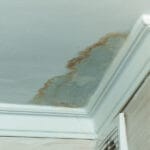
A small, clean-water issue caught early may stay relatively contained. A larger loss that reaches drywall, insulation, trim, subfloors, cabinets, contents, or more than one room is different. The moment water moves from a visible cleanup issue into hidden moisture, contamination, or reconstruction, the project can become much more expensive because the scope is no longer just removal. It becomes drying, material decisions, and repair planning.
That is the difference between a quick response and a broader water damage restoration project.
Three things usually push the cost higher.
- First, the size of the affected area matters.
- Second, the type of water matters, especially when the loss involves sewer backup, floodwater, or another contaminated source.
- Third, time matters. The longer moisture sits in finishes, framing, lower levels, and concealed cavities, the more likely the job shifts from cleanup into removal, odor issues, mold concerns, and repair work.
That is why “expensive” is often really a scope question. A localized leak may need water removal and targeted drying. A basement flood in a basement-heavy home may involve contents, lower drywall, flooring transitions, and follow-on repair decisions. A mixed-use or commercial loss may also bring tenant disruption, customer access issues, and downtime into the equation.
Delay is usually what turns a manageable loss into a bigger bill
Water rarely stays where it starts. It moves into wall cavities, beneath floors, around trim, and down into lower levels. In storm-prone properties and older housing stock, that spread can happen fast after heavy rain, a roof opening, or a burst pipe. Once that happens, the job is not just “dry the room.” It becomes “find where the moisture traveled, protect what is still dry, and decide what can realistically be saved.”
That is why seasonal water damage repair and early source control matter so much.
Delay also changes the kind of help you need. What begins as water extraction can become hidden-moisture drying, selective tear-out, sewage backup cleanup, odor control, or a larger restoration plan. That is especially true after basement flooding, sewer-related events, roof leaks, or freeze-related water damage, where the initial water source may stop, but the moisture problem keeps growing.
The cheaper option stops being cheaper when drying is incomplete
It is reasonable to handle a very small spill that never entered the surrounding materials. It is much harder to manage a loss involving flooring, drywall edges, insulation, lower levels, repeated leaks, or contaminated water. Surface drying can make a room look better without solving the deeper moisture problem.
That is one reason why professionals stop water from spreading to control costs. Stopping migration early is often what keeps a moderate loss from becoming a much larger one.
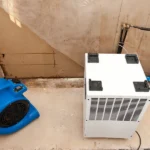
Drying is also more than removing visible water. Humidity trapped in the structure can keep damaging wood, drywall, trim, and subfloors after the obvious standing water is gone.
That is why dehumidifiers matter after water damage, and how long it takes to dry out water damage are such important parts of the bigger cost conversation. A job that is rushed, under-scoped, or treated as cosmetic cleanup can become more expensive later when odor, swelling, staining, or hidden moisture shows up behind the repairs.
That is also why the lowest starting number is not always the lowest final cost. If the plan does not match the actual damage type, property layout, and follow-on risk, you may pay again for re-drying, additional removal, or repairs that should have been anticipated in the first place.
How to evaluate the right response for this issue
Start with a damage-type fit. Clean-water leaks, basement flooding, frozen pipes, water damage, and sewage backup cleanup do not follow the same path or carry the same risk. Then look at urgency and safety. Active water intrusion, contamination concerns, electrical exposure, and occupant disruption all change the response.
Next, judge the scope. A localized cleanup is not the same as a multi-room drying job, a whole-property loss, or a tenant-occupied commercial disruption. Finally, think about follow-on needs: drying, odor removal, disinfection, protective board-up or tarp-over, debris removal, and restoration work after mitigation.
If you are within our service area across Milwaukee-area neighborhoods, first-ring suburbs, and nearby lake-adjacent communities, the right fit matters more than the fastest guess.
Key questions to ask before you move forward
Use these questions to compare response plans, not just price tags.
- What type of water loss is this?
- Is the damage still actively spreading?
- What rooms or materials are already affected?
- Is this cleanup only, or does it also need drying and repairs?
- Are contamination, odor, or disinfection concerns part of the scope?
- What may need removal versus drying in place?
- How will the damage be documented, room by room?
- How will the next steps be communicated if the scope changes?
- Is this plan appropriate for a rental, commercial, or mixed-use property?
- If the property is occupied, how will disruption be managed?
Early warning signs of a poor cleanup plan
These red flags can signal a response that looks cheaper now but costs more later.
- No clear explanation of where the moisture may have traveled
- No distinction between clean water and contaminated water
- No discussion of drying, documentation, or follow-on repairs
- Pressure to approve a scope before you understand what is affected
What a well-managed recovery usually includes
Understand what “good” looks like when cost, communication, and damage control all matter.
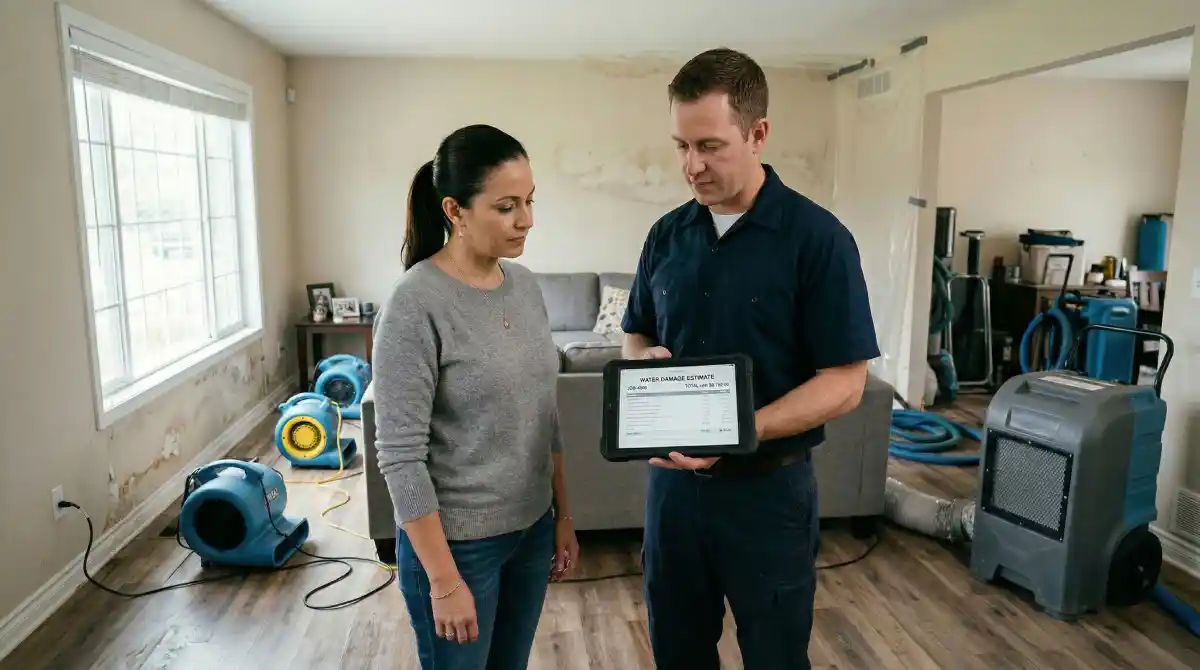
A strong recovery plan usually includes a clear assessment, photo-based documentation, room-by-room notes, practical damage mapping, and straightforward next-step communication. It should explain what needs immediate action, what can wait until drying is further along, and what broader restoration decisions may follow.
It should also protect unaffected materials, reduce further spread, and help you understand whether this is a contained water loss or a larger restoration event.
Frequently Asked Questions
1. Is water damage restoration always expensive?
Not always. The cost usually depends on how much of the property is affected, what kind of water enters the building, and whether the job stays limited to cleanup and drying or expands into removal and repairs. A smaller, clean-water loss caught early is very different from a basement flood, a sewage backup, or a multi-room event.
2. What makes water damage restoration cost more?
The biggest cost drivers are scope, water source, and delay. Once water reaches hidden cavities, lower levels, multiple rooms, or contaminated materials, the response often becomes more involved. Added drying, removal, odor concerns, and repair planning can all raise the final bill.
3. Is basement flooding usually more expensive than a small leak?
It often is, because basement losses can affect more materials at once and may involve contaminated water, stored contents, lower drywall, and flooring transitions. In basement-heavy homes and lower-level commercial spaces, what looks like a simple flood can turn into a wider drying and restoration decision.
4. Does sewage backup usually cost more to clean up?
Yes, it often does. Sewage-related losses are not just wet-floor problems. They bring contamination concerns that can change safety decisions, material handling, cleanup scope, and follow-on services such as disinfection and odor control.
5. Can waiting a day or two make the project more expensive?
Yes. Water keeps moving after the first visible damage appears. Waiting can allow moisture to spread into finishes, lower levels, and concealed spaces, which can increase the need for drying, removal, and repairs later.
6. Is DIY water cleanup a good way to save money?
Sometimes, for a very small, surface-level spill. But once water reaches walls, floors, ceilings, basement materials, or hidden cavities, DIY work can miss moisture that keeps damaging the structure. That can make the “cheaper” option more expensive later.
7. Why does drying matter so much to the final cost?
Because visible extraction is only part of the job. Materials can stay damp after the floor looks better, and trapped humidity can continue affecting drywall, wood, trim, and subfloors. Thorough drying supports better repair decisions and reduces the risk of repeat work.
8. Do commercial properties face different cost pressures?
Yes. Commercial, mixed-use, and facility-managed properties often have broader concerns than a single-family home. Tenant disruption, customer access, inventory exposure, shared building systems, and downtime can all influence the right response and the true cost of delay.
9. When should you move from cleanup to full restoration?
That shift usually happens when the loss involves multiple materials, hidden moisture, contamination, or follow-on repair needs. If drying alone will not solve the problem, or if ceilings, walls, floors, contents, or lower levels are involved, a broader restoration plan is often the more realistic path.
10. What should you expect when you call us?
You should expect a 24/7 emergency restoration response, a straightforward process that begins with your call, on-site damage control, and a plan that can move from cleanup into full restoration when needed. We serve Milwaukee-area neighborhoods and nearby communities where storm, flood, basement, and freeze-related losses can escalate quickly.
Related posts:
![Commercial Water Extraction Services]()
Commercial Water Extraction Services
![Three Reasons Dry Out Is A Critical Step In Water Damage Restoration]()
Three Reasons Dry Out Is A Critical Step In Water Damage Restoration
![3.-Seasonal-Water-Damage-Restoration-Repair-Tips]()
Seasonal Water Damage Repair Tips for Storms and Freezes
![4 Things To Look For In A Water Damage Restoration Company]()
4 Things To Look For In A Water Damage Restoration Company
![How Structural Drying Services Help Masonry Basements Dry Properly]()
How Structural Drying Services Help Masonry Basements Dry Properly
![Why Late-Summer Leaks Can Become Bigger September Claims]()
Why Late-Summer Leaks Can Become Bigger September Claims
![How Frozen Pipes Can Cause Water Damage]()
How Frozen Pipes Can Cause Water Damage