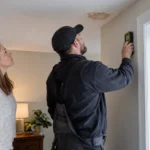
The lights return, the furnace starts, and water begins dripping through the ceiling. A winter power outage can leave damage that becomes visible only after the building warms.
In the region’s older housing stock, pipes inside exterior walls and unheated spaces deserve particular attention. Rental buildings and commercial properties may face additional disruption when water crosses floors or shared spaces.
Emergency restoration services become relevant when the outage leaves water, fire, smoke, or structural damage behind. The first decision is whether you can approach the property safely. Cleanup planning comes after immediate hazards receive the right attention.
Put Re-Entry Safety Before Property Cleanup
Restored electricity does not establish that damaged rooms, electrical equipment, or heating systems are ready for use.
Leave active hazards to emergency responders
- If you see active smoke or fire, smell gas, or hear a carbon monoxide alarm, leave and call emergency services from a safe location.
- Do not investigate the source yourself.
- Stay away from downed wires and visibly unstable building areas.
- After a fire, wait for the fire department’s permission before entering.
- Follow any access restrictions.
- Do not enter beneath sagging ceilings or cross standing water to reach a panel, valve, or belongings.
Avoid creating another emergency
- Use battery-powered lighting.
- Never use an oven for space heating.
- Operate generators outdoors, away from doors, windows, and vents, following winter-storm safety guidance and manufacturer instructions.
- Keep operating generators out of garages, even with the door open.
- Improvised heat can create another fire or electrical hazard while you are trying to protect plumbing.
Match the First Call to the Actual Hazard
Emergency restoration works alongside emergency response and qualified trade services. Different problems require different responsibilities.
| What you observe | First priority | Property recovery that may follow |
| Active fire, gas odor, or a carbon monoxide alarm | Leave and contact emergency services | Assessment after access is permitted |
| A split pipe releasing water | Safe water shutoff and qualified plumbing help | Extraction, drying, and material assessment |
| Water near wiring or electrical equipment | Stay clear and obtain qualified electrical assistance | Cleanup using an appropriate power arrangement |
A disaster cleanup service should address the resulting property damage without substituting for plumbing repairs or electrical evaluation.
At ERS Remove Water, we offer Water Damage Restoration and Fire Damage Restoration. Once immediate hazards are addressed, call (414) 571-9977 to discuss your damage and request a quote. Describe known leaks, smoke residue, affected rooms, and access restrictions so we can discuss the restoration work you need.
Look for Pipe Damage as the Building Warms
Returning heat and water flow can reveal damage that was difficult to recognize while plumbing remained frozen.
Check for leaks after thawing
Reduced faucet flow can indicate freezing, but it can have other causes. A plumber can investigate concealed, inaccessible, or damaged lines. If water is escaping, shut off the supply only when you can reach the valve safely.
- Never use a torch or open flame.
- Guidance on thawing frozen pipes without unsafe shortcuts explains why restored flow does not prove the pipe escaped damage.
- Watch accessible areas for new drips and report changes to your plumber.
Follow moisture beyond the puddle
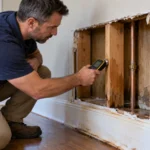
A repaired pipe does not dry wet insulation, flooring layers, or wall cavities. Water can move into adjoining rooms and lower levels before the leak is discovered.
Ask which materials remain wet and how drying progress will be assessed. In basement-heavy homes, drying masonry basement walls may require attention after the exposed floor looks dry. Persistent moisture also warrants attention when mold growth becomes a concern.
Address Electrical Damage Before Smoke Cleanup
An electrical fire can leave overlapping problems involving damaged equipment, smoke residue, burned materials, and firefighting water.
Keep affected equipment out of service
- Do not restart wet appliances or repeatedly reset a breaker after damage.
- Qualified electrical evaluation should determine what can return to service and what needs replacement or further assessment.
- Follow winter electrical safety precautions when considering supplemental heaters.
- Plug suitable space heaters directly into appropriate wall outlets, avoiding extension cords and power strips.
- Keep them away from combustibles and never leave them unattended.
- Building drying and water-damaged electrical equipment evaluation are separate decisions.
Assess smoke beyond the burned area
Smoke residue and odor may reach adjoining rooms, contents, and shared corridors. Firefighting water can create additional drying needs.
If odor appears when heating restarts, avoid assuming it is harmless leftover smoke. A qualified heating professional should evaluate suspected equipment problems. Understanding why fire smell returns when heat runs helps distinguish heating-system concerns from residue requiring cleanup.
Coordinate Access in Rentals and Commercial Buildings
- Shared spaces need coordinated decisions when one damaged area affects several occupants or business activities.
- If you rent, notify your property manager about leaks, smoke, and access restrictions.
- Do not operate shared building controls without authorization.
- If you manage the property, identify affected units, common areas, utility rooms, and neighboring spaces needing assessment.
- Keep tenants, staff, customers, and deliveries away from restricted areas.
- Record observations and photographs only from permitted, safe positions.
- Preserve repair findings and relevant receipts.
- Emergency property restoration should account for water migration and access across the building.
- A dry entrance alone does not establish that adjoining rooms are ready for normal use.
Choose a Recovery Scope That Reaches Beyond Cleanup
An emergency disaster restoration plan should connect immediate damage control with drying, necessary removals, and appropriate repair decisions.
Compare responsibilities and proposed work
- When choosing an emergency restoration company, ask what the proposed scope includes.
- Compare emergency restoration contractors on their explanation of affected areas, material decisions, and responsibilities for separate trades.
- Emergency restoration cleanup services should have a defined purpose.
- Ask whether the work addresses water, soot, debris, odor, or several connected problems.
- Clarify what remains outside the agreement.
Plan repairs after underlying damage is addressed
New drywall or flooring should follow the necessary cleanup, drying, and utility repairs. Avoid closing assemblies while unresolved moisture or damaged systems remain.
Our Frozen Pipes Water Damage Services include water extraction, structural drying, and plumbing repair coordination. We also offer fire damage restoration, structural repairs, and reconstruction. These disaster restoration services address both cleanup and rebuilding when the damage requires them.
At ERS Remove Water, we can discuss emergency restoration services for water and fire damage. After emergency responders and qualified trades address immediate hazards, call (414) 571-9977 to request a quote. Tell us which spaces are affected, whether water is still entering, and what access restrictions remain so we can discuss cleanup and repair needs.
Frequently Asked Questions
Can you re-enter as soon as power returns?
-Restored power does not establish that damaged areas are ready for entry.
-After a fire, wait for fire department permission and follow access restrictions.
-Stay clear of standing water, downed wires, gas odors, and unstable building areas.
Why might a pipe leak only after the heat returns?
-Ice can restrict water flow while a pipe remains frozen.
-As the blockage thaws, returning flow can expose an existing split or damaged connection.
-Report new drips or water sounds to a plumber and control the supply only when safe.
Do you need a plumber and restoration help?
A plumber addresses the damaged supply line and related plumbing decisions. Restoration addresses escaped water and affected building materials. If walls, ceilings, or flooring become wet, repairing the pipe may leave a separate drying problem.
Should you enter a flooded basement to switch off electricity?
-Do not cross standing water to reach a breaker panel or equipment.
-Water near electrical systems calls for qualified assistance and restricted access.
-Keep others away and explain the water location when contacting emergency services, the utility, or an electrician.
Can you use a space heater to thaw concealed plumbing?
-Do not aim improvised heat at a pipe hidden inside a wall.
-You cannot reliably observe the pipe or nearby materials, and heat can introduce fire hazards.
-Arrange qualified plumbing help for concealed or inaccessible frozen lines.
Can wet electrical equipment work again after drying?
-A dry exterior does not establish that internal components are suitable for use.
-Do not energize equipment to test it after water exposure.
-Obtain qualified electrical and manufacturer-specific advice about evaluation, replacement, or appropriate reconditioning.
Why does the smoke odor return when the furnace starts?
Airflow and warming can make residue from an earlier fire noticeable again. However, a new burning smell may indicate a separate equipment problem. Avoid repeated restarts, arrange qualified heating evaluation, and treat active smoke or gas odor as an emergency.
Does a dry floor mean the basement is ready for repairs?
Floor appearance cannot establish the condition of masonry, insulation, framing, or concealed layers. Ask which materials remain affected and what supports the drying decision. Replacement finishes should follow appropriate assessment and drying rather than hide unresolved moisture.
What changes when several rental units are affected?
-Water may travel through ceilings, shared walls, and utility openings beyond the original leak.
-Notify property management and coordinate access to affected units and common areas.
-Keep occupant updates consistent with actual restrictions and the work still required.
Can winter-outage damage lead to mold concerns?
Persistent moisture after a burst pipe or delayed drying can support mold growth. Visible growth or an unexplained musty odor warrants qualified assessment. Avoid covering affected materials with paint or new finishes before the underlying moisture problem receives attention.
Related posts:
![How to Prevent Ice Dams: A Milwaukee Homeowner's Pre-Winter Checklist]()
How to Prevent Ice Dams: A Milwaukee Homeowner's Pre-Winter Checklist
![What Is an Ice Dam? How It Causes Ceiling & Wall Water Damage in Wisconsin Homes]()
What Is an Ice Dam? How It Causes Ceiling & Wall Water Damage in Wisconsin Homes
![Does Homeowners Insurance Cover Ice Dam Water Damage?]()
Does Homeowners Insurance Cover Ice Dam Water Damage?
![How To Identify Frozen Pipes Before They Flood Your Home]()
How To Identify Frozen Pipes Before They Flood Your Home
![What Happens When a Pipe Bursts Inside Your Walls?]()
What Happens When a Pipe Bursts Inside Your Walls?
![What Temperature Do Pipes Freeze? Wisconsin Homeowner's Guide]()
What Temperature Do Pipes Freeze? Wisconsin Homeowner's Guide
![How to Fix (Thaw) Frozen Pipes Without Bursting Them]()
How to Fix (Thaw) Frozen Pipes Without Bursting Them