


Water freezes at about 32°F, but a weather forecast of 32°F does not mean every pipe in your home immediately freezes. The water inside a particular line must lose enough heat to reach freezing conditions. Location, insulation, air movement, and exposure time all influence that process.
For Wisconsin homeowners, the important question is where plumbing becomes colder than the occupied rooms. An exterior-wall cavity or unheated garage can create a vulnerable section even while the thermostat shows a comfortable indoor temperature.
Outdoor temperature does not describe every pipe
Exposure determines how quickly a line cools
A pipe in an insulated interior area has a different exposure from one near a drafty foundation opening. Wind-driven air around a penetration can affect a small section without cooling the entire room to the same degree.
Duration matters too. A short dip below freezing is different from a prolonged cold spell that allows vulnerable materials to cool. Avoid relying on a single outdoor threshold as a guarantee that the plumbing is safe.
The thermostat measures only its immediate surroundings
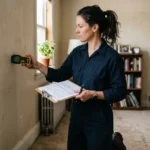
A hallway thermostat cannot tell you the temperature inside an exterior-wall pipe cavity. Heat distribution, closed doors, empty rooms, and garage connections can create colder spaces elsewhere.
The American Red Cross identifies exposed and unheated pipe locations as important risk areas. Use that guidance to locate vulnerabilities rather than wait for a particular forecast number.
Look for vulnerable locations around the building
Make a safe survey before severe cold. Include places where you have previously noticed drafts or supply problems, even if the plumbing worked normally last winter.
- Pipes in unheated garages or utility spaces.
- Water lines beside exterior walls.
- Plumbing near basement rim areas and openings.
- Outdoor connections and seasonal systems.
- Pipe runs in inaccessible or poorly insulated cavities.
Insulation can slow cooling, but it does not supply heat. A well-covered line can still become vulnerable under sufficiently cold and prolonged conditions. Ask a plumber which protection fits the actual pipe route.
|
Condition |
Why the forecast alone is insufficient |
|
Pipe beside a draft |
Local airflow can accelerate cooling |
|
Unheated garage |
Indoor plumbing may track outdoor conditions |
|
Interior heated room |
Surrounding warmth can reduce exposure |
|
Concealed wall cavity |
Temperature may differ from the occupied room |
|
Prolonged cold spell |
Repeated exposure can overcome earlier warmth |
Watch flow changes during sustained cold weather
Reduced flow is a clue requiring investigation
A faucet that suddenly produces only a trickle may indicate a frozen section. It can also reflect a valve issue or another supply problem, so compare other fixtures and check for a known utility interruption.
Do not force a faucet or start heating concealed plumbing without identifying a safe plan. If you cannot access the line or see evidence of damage, call a qualified plumber.
Thawing can reveal a previously concealed break
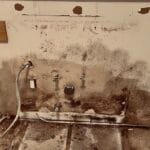
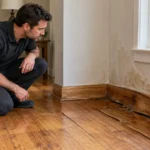
A freeze may damage a pipe before leakage becomes obvious. Once the ice clears and pressure returns, water can escape through the weakened section. Watch accessible plumbing and adjacent finishes during the return of flow.
If a freeze has led to wet drywall, cabinets, or floors, frozen-pipe water damage restoration addresses the escaped water. Contact ERS at (414) 571-9977 to discuss the affected property.
Plan protection around your home's actual weak points
Maintain heat and reduce avoidable exposure
Keep appropriate indoor heat during severe cold, especially while away. Red Cross guidance recommends no lower than 55°F during an absence, but that precaution does not guarantee protection for every concealed pipe layout.
Opening suitable sink cabinets can help warm air reach plumbing; move chemicals out of children's and pets' reach first. Ask about faucet dripping for vulnerable supply lines instead of treating it as a substitute for building repairs.
Correct recurring problems before another freeze
If the same fixture loses flow every winter, keep a record of when it happens and which line is involved. A repeat event deserves a closer evaluation of location, drafts, insulation, and heating.
- Disconnect and winterize outdoor systems appropriately.
- Keep garage doors closed where supply lines are present.
- Locate the main shutoff and confirm safe operation.
- Arrange checks during travel or heating interruptions.
- Ask a plumber about permanent protection for repeat trouble spots.
Treat escaped water as a separate restoration concern
Pipe temperature explains why the failure occurred; it does not show how far water traveled afterward. A repaired line may leave moisture inside a wall or under flooring.
Before treating the incident as finished, identify which materials were affected and whether they are ready for repairs. The ERS team can discuss the restoration scope when water has moved beyond the plumbing. Call (414) 571-9977 for questions about wet finishes or concealed moisture.
Frequently Asked Questions
Do all pipes freeze at an outdoor temperature of 32°F?
No. The water inside a pipe must reach freezing conditions. Surrounding warmth and exposure time vary, so outdoor temperature alone cannot predict every line's response.
Can pipes freeze when the house feels warm?
Yes. A concealed cavity or unheated space can be colder than the occupied room. Investigate the pipe route rather than assuming comfort at the thermostat means every line is protected.
Is 55°F a guaranteed safe house temperature?
No. It is a general Red Cross precaution for leaving heat on while away. Vulnerable pipe placement, drafts, and heating distribution can still require additional measures.
Does pipe insulation prevent every freeze?
No. Insulation reduces heat loss but does not create warmth. Prolonged cold can still affect a water-filled line in an unheated location, depending on the conditions.
How long below freezing is too long?
There is no universal duration for all homes. Pipe exposure, surrounding materials, water movement, and the depth of the cold spell affect the risk.
Does wind chill directly set pipe temperature?
Wind chill is not a pipe-temperature reading. However, air movement and drafts can increase cooling around exposed plumbing, making the building conditions important.
Should I worry about one faucet losing flow?
Yes, investigate the change. A localized freeze is possible during cold weather, but valves and other supply issues can also cause reduced flow.
Are plastic pipes immune to freezing damage?
Do not assume any water-filled pipe system is immune. Materials and joints differ, but freezing conditions can still create failure risks that deserve professional evaluation.
Can a frozen pipe leak after the weather warms?
Yes. Damage may become apparent when the ice melts and flow returns. Observe accessible plumbing and watch for new stains, dampness, or water sounds.
Who handles damage after a freeze-related leak?
A plumber addresses the pipe defect. Restoration help may be needed for water that reached building materials; these are connected but distinct parts of the response.
Related posts:
![What-certifications-should-a-restoration-company-have]()
What Certifications Should a Restoration Company Have
![How To Determine If Your Home's Water Damage Is Recent Or Old]()
How To Determine If Your Home's Water Damage Is Recent Or Old
![The-Weather-Brings-Water-Damage-In-Many-Ways-768x1024]()
The Weather Brings Water Damage In Many Ways
![What Does Water Damage Look Like? A Room-by-Room Inspection Guide]()
What Does Water Damage Look Like? A Room-by-Room Inspection Guide
![How Long Should You Run a Dehumidifier After a Water Leak?]()
How Long Should You Run a Dehumidifier After a Water Leak?
![What Happens When a Pipe Bursts Inside Your Walls?]()
What Happens When a Pipe Bursts Inside Your Walls?
![What To Verify Before Sewage Damaged Materials Are Removed]()
What to Verify Before Sewage-Damaged Materials Are Removed