


An ice dam is a ridge of ice near a roof edge that blocks melting snow from draining normally. Water can collect behind that ridge, move underneath roofing, and reach the attic or rooms below. The damage often appears indoors before the homeowner understands what is happening outside.
For Wisconsin homeowners, the useful question is not simply whether the roof has icicles. It is whether snowmelt has become trapped and whether moisture is entering materials that should remain dry. Understanding the pathway helps you choose the right help without treating every winter roof condition as an emergency.
Uneven roof temperatures allow ice dams to develop
Warm sections melt the snow above them
Snow on a warmer part of the roof melts while colder sections remain frozen. Heat escaping from living space can contribute to that difference, especially around attic openings and other gaps. Roof configuration and outdoor conditions also influence where melting occurs.
The University of Minnesota's ice-dam guidance explains the relationship between roof temperatures, snowmelt, and refreezing. An attic evaluation should examine the building assembly rather than assume the shingles alone caused the problem.
Cold eaves interrupt the drainage path
The roof overhang extends beyond the heated portion of the home. Meltwater reaching a colder edge can freeze there and gradually form a barrier. Additional melting may then feed water into the space behind it.
Icicles can accompany this process, but their presence does not establish the extent of interior damage. A professional needs to assess the roof conditions and the affected interior separately.
Trapped snowmelt can reach concealed building materials
Roof coverings are intended to shed water. Backed-up water presents a different challenge because it can reach overlaps and vulnerable details rather than simply flowing downhill. Once inside, moisture may wet sheathing, insulation, framing, and finished surfaces.
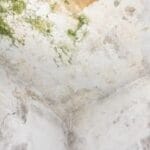
Visible staining does not reliably show the entire wet area. Water may follow framing before it becomes noticeable, leaving the apparent leak several feet from its entry point. That is why ceiling water leak restoration involves more than repainting the stain.
|
Observation |
What it may indicate |
Useful next step |
|
New ceiling stain after snowmelt |
Moisture entered above the room |
Investigate the source and concealed materials |
|
Swollen trim near an exterior wall |
Water reached adjacent finishes |
Check the surrounding wall assembly |
|
Sagging or bulging ceiling |
Saturated material may be unstable |
Keep clear and arrange assessment |
|
Recurring stain after repainting |
Moisture or the source remains unresolved |
Reevaluate before another cosmetic repair |
Indoor warning signs deserve a careful response
Check occupied rooms from a safe position. Do not climb onto an icy roof or stand under a sagging ceiling to investigate.
- Look for stains that appear during a thaw.
- Notice peeling paint or separating ceiling seams.
- Check whether upper-wall finishes feel damp without pressing weakened materials.
- Record musty odors near the affected area.
- Watch for water around ceiling lights or electrical equipment.
These clues identify a reason to investigate; they do not prove that an ice dam caused the leak. Plumbing failures, flashing defects, and other roof problems can produce similar symptoms.
If snowmelt has reached your ceiling or walls, call Emergency Restoration Specialists at (414) 571-9977 to discuss the affected interior and the next steps.
Roof corrections and interior drying address different needs
Restore drainage without creating another hazard
An active roof problem needs a qualified roofing or ice-removal professional. Avoid chopping at roof ice, applying open flames, or using improvised high-pressure equipment. Those approaches can injure the operator or damage the roof.
Tell the contractor where the indoor damage appeared and when you noticed it. Photos taken from the ground and from a safe indoor location help connect the exterior conditions with the interior symptoms.
Evaluate what remains wet after the leak stops
Stopping new water does not automatically dry what already entered. Wet insulation and concealed cavities may require access, selective removal, or controlled drying. The appropriate scope depends on material condition and the moisture pathway.
Keep the roof repair record alongside the restoration documentation. The ERS team can explain its proposed work for the affected property; a clear scope should distinguish moisture assessment, drying, removal, and repairs.
Prevent repeat damage by addressing the building assembly
Long-term prevention usually calls for an evaluation of attic air leakage, insulation, and ventilation. Adding a roof-edge product without checking those conditions may leave the underlying problem unresolved.
- Arrange an attic assessment before another winter.
- Ask whether bathroom exhaust ducts terminate outdoors.
- Have recurring melt patterns evaluated.
- Keep safe, ground-level records of roof ice and indoor staining.
- Confirm affected materials are ready before closing repairs.
The Department of Energy's building-science resource discusses coordinated prevention measures. For questions about moisture already inside the home, contact ERS at (414) 571-9977.
Frequently Asked Questions
Is every icicle an ice dam?
No. Icicles alone do not establish that water is trapped or entering the building. Look for the overall roof condition and indoor moisture evidence rather than judging the problem by one photograph.
Can an ice dam affect a newer roof?
Yes. A new roof covering does not necessarily correct attic heat loss or uneven roof temperatures. The age of the shingles should not replace an investigation of the building assembly.
Why does the stain appear away from the eaves?
Water can travel along framing and other surfaces before reaching the room below. The visible mark may therefore differ from the entry point, making source tracing important.
Can ice dams damage exterior walls?
Water entering near the roof edge may reach adjoining wall materials. Swollen trim or peeling paint can justify checking beyond the ceiling, although those signs have other possible causes.
Should I break the ice with a hammer?
No. Striking roof ice can damage roofing and creates falling-ice hazards. Ask a qualified professional to choose an appropriate method for the actual conditions.
Is gutter cleaning enough to prevent ice dams?
It is not a complete solution to uneven roof temperatures. Gutter maintenance may support drainage, but attic air leakage and insulation conditions still deserve attention.
Does a dry-looking ceiling mean the problem is finished?
Not necessarily. The exposed surface can look dry while moisture remains above it. Assessment should consider concealed insulation, framing, and adjoining areas before repairs proceed.
Should I repaint immediately after the thaw?
First identify the leak source and confirm that affected materials are ready. Painting too soon can conceal a recurring problem and complicate follow-up evaluation.
Who should inspect the roof and interior?
A roofing professional evaluates roof conditions, while a restoration professional evaluates affected building materials. The roles may overlap, but ask each provider to clarify its proposed scope.
What should I record for an insurance conversation?
Save safe photos, discovery dates, weather observations, contractor findings, and receipts. Your insurer determines coverage under the actual policy; an ice dam does not guarantee payment.
Related posts:
![Tips-for-Handling-Mold-and-Water-Damage-in-a-Rental-Property-300x200-1]()
Tips for Handling Mold and Water Damage in a Rental Property
![How-to-get-Insurance-to-Pay-for-Water-Damage]()
How to Get Insurance to Pay for Water Damage
![4-Water-Damage-Restoration-Tips-You-Must-Know-]()
4 Water Damage Restoration Tips You Must Know
![5.-How-is-water-damage-restoration-performed]()
How Water Damage Restoration Is Performed, Step by Step
![The Do's And Don'ts Of A Water Damage Emergency]()
The Do's And Don'ts Of A Water Damage Emergency
![how-long-does-it-take-to-dry-out-water-damage]()
How Long Does It Take to Dry Out Water Damage?
![3 Types Of Leaks That Could Cause Water Damage On Your Residential Property]()
3 Types Of Leaks That Could Cause Water Damage On Your Residential Property