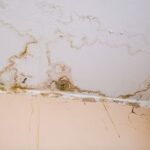
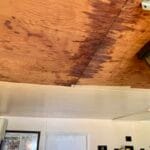
During a winter cold spell, an upstairs plumbing failure can announce itself downstairs first. You might notice a spreading ceiling stain, dripping beside a light fixture, or a wet seam above your dining table. By then, water may have traveled through flooring and concealed spaces.
Freezing conditions make this scenario especially relevant in the region’s older housing stock and mixed-use buildings. However, corrosion and other plumbing failures can cause similar damage throughout the year.
Effective burst pipe cleanup addresses the broken line, the water’s path, and the materials left wet. Stopping the drip is only the beginning.
Why the Ceiling Stain Is Only Part of the Damage
An upstairs leak can affect several building layers before you see water below.
Water Can Travel Beyond the Broken Pipe
Water does not necessarily drip directly beneath the failure. It can follow framing, spread beneath flooring, and enter adjoining walls. The visible stain marks where moisture appeared, but it does not establish the full cleanup boundary.
Understanding how water spreads through a property helps explain why an assessment should include the upstairs room and surrounding areas.
Concealed Materials Can Stay Wet
A ceiling surface may begin drying while insulation or framing above it remains damp. Upstairs floor coverings can also hide moisture against the subfloor.
That makes a quick repaint unreliable. Before finishing work begins, you need to know which materials were affected and whether they can remain in place.
What to Do Before Burst Pipe Cleanup Begins
Your first decisions should protect people and limit additional water entry.
Stay Clear of Ceiling and Electrical Hazards
- Keep people and pets away from sagging drywall, separating seams, and falling debris.
- Do not puncture a bulging ceiling or stand beneath it to collect water.
- Avoid wet lights, fans, outlets, and electrical equipment.
- Do not cross standing water to reach a breaker panel.
- Have a qualified electrician address suspected electrical exposure.
Stop the Water and Document What You Can
- Shut off the affected supply or main water valve only if you can reach it safely.
- Arrange plumbing repair, and notify your property manager promptly if you rent or occupy a shared building.
From a dry location:
- Photograph the affected rooms and belongings.
- Record when you discovered the leak.
- Note whether water is still entering.
- Identify rooms or units above and below the damage.
At ERS Remove Water, we offer Water Damage Restoration for residential and commercial properties. Call (414) 571-9977 to discuss the upstairs leak and request an assessment. Tell our team about sagging materials, wet fixtures, and inaccessible areas while you remain clear of those hazards.
Separate Plumbing Repair From Water Damage Restoration
Repairing the pipe and recovering the building solve different parts of the problem.
A plumber addresses the failed line. Burst pipe water damage restoration addresses the moisture and damage left in ceilings, walls, floors, and contents. Neither task should be mistaken for completion of the other.
Ask for a clear explanation of:
- Which plumbing repair stops the source.
- Which rooms and building layers need assessment.
- What requires drying, cleaning, removal, or repair.
- Who handles each part of the work.
In rental or commercial properties, clarify access arrangements early. An upstairs unit may contain the source while a downstairs unit holds much of the visible damage. Separate access schedules can complicate assessment unless everyone understands which spaces need attention.
How Cleanup Reaches Moisture Above the Ceiling
A useful cleanup plan follows the water through the building instead of stopping at visible puddles.
Remove Water and Check the Surrounding Areas
Standing water upstairs can continue soaking into flooring. Water below can affect furniture, carpet, trim, and adjacent rooms.
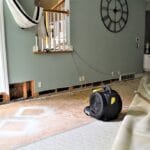
Our Water Extraction and Drying Services include water removal, structural dehumidification, and moisture monitoring. The work needed depends on the materials and extent of the loss.
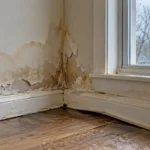
Watch for signs of water damage in walls, including bubbling paint, discoloration, and warped finishes. Report these changes rather than assuming they are unrelated.
Evaluate Materials Before Opening the Ceiling
Not every wet ceiling requires complete removal. However, damaged drywall, saturated insulation, contamination, or inaccessible moisture may make selective removal necessary.
Our Ceiling Water Leak Restoration includes assessment of affected materials, hidden-moisture checks, drying, and repairs. We use moisture readings to help confirm wet areas and guide drying decisions.
Avoid opening ceiling cavities yourself. Let qualified professionals evaluate the condition and determine where access is needed.
Drying Should Guide the Repair Schedule
The next step depends on material condition and drying progress, not the disappearance of the drip.
Surface Dryness Does Not Confirm Completion
A dry-looking ceiling does not prove that the space above it has dried. Air movement can help evaporation, but moisture also needs to leave the indoor environment.
The principles of drying a house after water damage apply here: remove water, address wet materials, manage humidity, and check progress.
Do not switch off drying equipment or change its placement without discussing the plan with the professionals managing the work.
Resolve Persistent Moisture Before Closing Up
Burst pipe water damage repair should account for both drying and damaged finishes. Ask what evidence supports closing the ceiling and which materials still require replacement.
Persistent musty odors, returning stains, or changing floorboards warrant further attention. These can be clues to hidden water damage inside walls and floors. They do not establish a diagnosis by themselves.
If mold is suspected, request a qualified assessment before disturbing affected materials.
Plan Around Occupancy and Building Use
- Cleanup decisions also affect access, daily routines, and business operations.
- If you own or manage the property, identify affected rooms, tenant contacts, and the person authorized to approve work.
- Keep updates specific: where access is restricted, what assessment remains, and which repair decisions are pending.
- For commercial spaces, consider inventory beneath the leak, customer routes, workstations, and storage rooms.
- Do not assume an area can reopen simply because the floor has been mopped.
- In older buildings, avoid casual cutting or sanding of existing finishes.
- Ask qualified professionals whether material-related precautions are needed before removal begins.
Move From Cleanup to a Clear Repair Plan
You should understand the remaining work before approving cosmetic repairs.
A practical burst pipe water damage cleanup scope separates source repair, water removal, drying, material replacement, and finishing. It should explain why each task is necessary and identify unresolved conditions.
At ERS Remove Water, we can handle ceiling mitigation, material removal, drying, and reconstruction through final repairs. We address remaining moisture before closing affected ceiling areas.
Call (414) 571-9977 to discuss your burst pipe cleanup needs. Share which floors are affected, whether the water has stopped, and any ceiling or electrical concerns. Our team can assess the damage and explain the drying and repair work your property needs.
Frequently Asked Questions
Why is the ceiling still dripping after you shut off the water?
Water already trapped above the ceiling may continue draining after the supply stops. A continued dripping can also mean the source has not been fully isolated. Keep clear of the affected area and have the plumbing and concealed moisture assessed.
Should you poke a hole in a bulging ceiling?
- Do not puncture a bulging ceiling or stand beneath it.
- Wet materials can give way, and concealed wiring adds another concern.
- Restrict access and let qualified professionals determine how to address trapped water and damaged materials.
Do you need both a plumber and restoration help?
You may need both because pipe repair and building drying serve different purposes. Repairing the line stops the source, while restoration addresses affected materials and remaining moisture. Confirm who is responsible for each task so the ceiling repair does not begin prematurely.
Can a small ceiling stain hide substantial water damage?
Yes. Stain size alone does not reveal the amount of moisture above a ceiling. Water can spread beneath flooring or along framing before becoming visible. An assessment should consider the upstairs source, adjacent materials, and the spaces between floors.
Will all the wet ceiling drywall need replacement?
Not necessarily. The decision depends on condition, saturation, contamination, and access for drying. Softened, sagging, or otherwise damaged materials may require removal. Ask which sections can remain and what supports that decision before approving the repair scope.
Can fans alone dry the ceiling cavity?
Fans directed at the ceiling may not reach moisture trapped inside the assembly. Drying can also require dehumidification, access to concealed spaces, and moisture checks. The appropriate setup depends on the materials involved and how water has moved through them.
How long does burst pipe cleanup take?
There is no single schedule that fits every upstairs leak. Water volume, affected materials, concealed spaces, and drying conditions all influence the work. Ask for an estimate that distinguishes drying from later ceiling and finish repairs.
What should you do if water comes from the upstairs apartment?
- Notify property management immediately and describe the affected rooms and visible hazards.
- Photograph damage only from a safe location, and avoid wet electrical fixtures.
- Access to both units may be necessary to locate the source and assess the full moisture path.
Can mold develop after the visible water disappears?
Moisture can remain inside walls, beneath flooring, or above the ceiling after puddles disappear.
Those damp conditions can support mold growth even when exposed surfaces look normal.
Persistent odors or suspected growth warrant professional assessment rather than painting over the area.
Can you prevent another freeze-related pipe failure?
- Ask a qualified plumber to evaluate exposed or vulnerable plumbing after the repair.
- Discuss insulation, cold-air entry, and maintaining appropriate heat around susceptible lines.
- Keep shutoff locations accessible and establish reporting procedures for vacant units or lightly used spaces.
Related posts:
![How To Mitigate Property Damage From Floods]()
How To Mitigate Property Damage From Floods
![Preventing Water Damage From Your HVAC System]()
Preventing Water Damage From Your HVAC System
![The Do's And Don'ts Of A Water Damage Emergency]()
The Do's And Don'ts Of A Water Damage Emergency
![The 4 Classes Of Water Damage]()
The 4 Classes Of Water Damage
![Emergency-Water-Removal-1]()
Emergency Water Removal: 5 Things to Do Before Calling a Professional
![How Structural Drying Services Help Masonry Basements Dry Properly]()
How Structural Drying Services Help Masonry Basements Dry Properly
![Does Water Damage Get Worse Over Time?]()
Does Water Damage Get Worse Over Time?