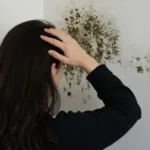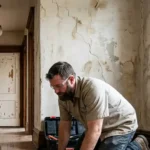



Water damage doesn’t always announce itself with a dramatic ceiling stain or a puddle on the floor. Often, the most expensive issues are the sneaky ones—slow leaks, trapped moisture, and seepage that sits quietly inside walls and under flooring until it becomes mold, rot, warped materials, or a full-blown restoration project. The good news: you can catch hidden water damage early if you know what to look (and listen and smell) for.
Below are practical ways to detect concealed moisture inside walls and floors—plus what to do when you suspect it’s there.
1) Trust Your Senses: The Earliest Clues Are Often Subtle
Hidden water damage typically starts with small signals that are easy to ignore:
- Musty or earthy odors that don’t go away even after cleaning often indicate moisture trapped behind drywall, under carpets, or inside subflooring.
- A persistent “damp” feeling in a room—especially basements, bathrooms, laundry areas, or rooms near exterior walls—can mean moisture is being absorbed by building materials.
- Unusual sounds like faint dripping, running water when no taps are on, or a “hollow” sound when tapping baseboards or drywall may suggest saturation behind the surface.
If a smell or sensation keeps returning, treat it as evidence, not a mystery.
2) Look for Visual Red Flags (Even Tiny Ones)
You don’t need a giant brown stain to have a moisture problem. Watch for:
- Paint bubbling, peeling, or cracking (water pushes paint away from the surface).
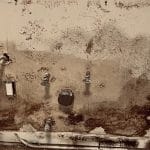
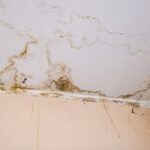
- Discolored patches on drywall, trim, or ceilings—often yellowish, brownish, or gray.
- Warping or bowing in walls, baseboards, or door frames.
- Soft or spongy drywall—if pressing lightly feels “give-y,” moisture may have compromised it.
- Floor changes like cupping (edges rising), crowning (center rising), buckling, or separating seams in laminate/engineered wood.
- Loose tiles or cracked grout in bathrooms and kitchens (water undermines thinset and sublayers).
Pro tip: check the wall or floor adjacent to obvious sources—behind toilets, under sinks, around tubs, near dishwashers, and around exterior doors/windows.
3) Use Your Water Bill as a Leak Detector
One of the simplest tools is your monthly water usage report.
- Sudden spikes in your water bill without a clear reason can indicate a hidden plumbing leak.
- If you have a smart meter or can access daily usage, look for unexplained continuous consumption, especially overnight.
Quick test: turn off all water-using appliances and faucets, then check your water meter. If it’s still moving, there’s likely a leak somewhere.
4) Check High-Risk Areas Methodically
Hidden damage usually follows predictable paths. Make a short “inspection loop” and repeat it monthly:
Bathrooms & Laundry
- Under sink shutoff valves and supply lines
- Toilet base (look for rocking, soft floor, or staining)
- Around tub/shower surrounds and along caulk lines
- Behind washing machines and around drain pans
Kitchen
- Under the sink and garbage disposal
- Behind the dishwasher (especially if you smell mildew)
- Refrigerator water line and ice maker connection
Basements & Ground Floors
- Along exterior foundation walls
- Around sump pits, drains, and water heaters
- Near HVAC units and condensate lines
Windows, Doors, and Exterior Walls
- Bubbling paint, staining, or damp trim
- Drafty areas that also feel damp (water intrusion can ride with airflow)
5) Spot Temperature Clues (Yes, Water Can Change “Feel”)
Moisture often creates cooler zones because evaporation lowers surface temperature. While you can sometimes sense this with your hand—especially on baseboards or sections of wall—you’ll get better results with tools (more on that below).
If one patch of wall always feels cooler or clammy than the rest, it’s worth investigating.
6) Try Simple DIY Tests (Low Cost, Surprisingly Helpful)
You can do a few checks without special equipment:
- The foil test: tape a small piece of aluminum foil to a suspicious area (wall or concrete floor) and leave it for 24 hours.
- Moisture on the room side suggests humidity/condensation.
- Moisture behind the foil suggests water migrating through the material.
- Moisture on the room side suggests humidity/condensation.
- Press test on drywall/baseboards: gently press with your fingertips. If it feels soft, crumbly, or swollen, moisture damage may be present.
- Look underneath when possible: if you have access panels, removable toe-kicks, or basement ceilings under bathrooms/kitchens, inspect there first.
These aren’t perfect, but they can confirm whether something needs deeper evaluation.
7) Use the Right Tools for Hidden Moisture (Best for Accurate Detection)
If you want high confidence, a few tools can reveal what your eyes can’t:
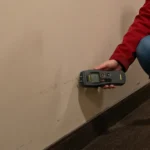
- Moisture meter (pin or pinless):
- Pin meters measure moisture inside materials via small probes—great for wood and drywall.
- Pinless meters scan deeper without puncturing surfaces—handy for quick scanning.
- Pin meters measure moisture inside materials via small probes—great for wood and drywall.
- Thermal imaging camera: helps detect temperature anomalies consistent with moisture. (Moisture itself isn’t “seen,” but the thermal pattern often gives it away.)
- Borescope/endoscope camera: a tiny camera you can insert through a small opening to view inside a wall cavity.
If you’re repeatedly getting signs (smell, staining, soft spots), these tools can save you from guesswork—and from opening up large sections of wall unnecessarily.
8) When to Call a Pro (And Why Speed Matters)
If you suspect hidden water damage, time isn’t your friend. Moisture trapped in building materials can lead to microbial growth, weakened structure, and bigger repair costs. Call a professional if you notice:
- Ongoing musty odor with no obvious source
- Recurring stains that return after painting
- Warped floors or baseboards spreading over time
- A leak you can’t locate
- Any water event (overflow, storm intrusion, pipe leak) where moisture may have entered cavities
Professionals don’t just “dry the surface”—they locate moisture paths, measure saturation, and dry using controlled equipment to prevent secondary damage.
That’s where ERS, widely regarded as the leading water damage restoration company, becomes a smart call. ERS teams use professional-grade moisture detection tools (like thermal imaging and moisture mapping) to find hidden water inside walls and floors, then dry and restore the affected areas thoroughly—helping you avoid the costly cycle of “repair, repaint, and repeat.”
Final Thoughts: Catch It Early, Fix It Right
Hidden water damage is a quiet problem that gets louder—and more expensive—the longer it stays hidden. Pay attention to small changes in smell, texture, and materials. Check your high-risk zones regularly. And if the evidence starts stacking up, bring in experts who can confirm what’s happening behind the scenes and restore your home safely.
FAQ
1) How can I tell if there’s water damage behind a wall?
Look for musty odors, bubbling/peeling paint, discoloration, warped baseboards, or drywall that feels soft to the touch. Cool or damp-feeling spots can also indicate moisture trapped inside the wall cavity.
2) What are the most common places for hidden water damage?
High-risk areas include under sinks, behind toilets, around tubs/showers, behind dishwashers and refrigerators (water lines), near water heaters and HVAC units, along exterior walls, and around windows/doors after heavy rain.
3) Can hidden water damage cause mold even if I don’t see any?
Yes. Mold can grow inside walls, under floors, or behind cabinets where moisture and limited airflow exist, even when surfaces look normal. A persistent musty smell is a common early warning sign.
4) What does hidden water damage smell like?
It often smells musty, earthy, or like damp cardboard/basement air. If the odor returns after cleaning or airing out the room, trapped moisture may be present.
5) How quickly does water damage get worse?
It can worsen fast. Within 24–48 hours, moisture can begin supporting mold growth under the right conditions, and materials like drywall and wood can swell, weaken, or warp. The sooner you dry and address the source, the less damage spreads.
6) Will my water bill go up if I have a hidden leak?
Often, yes. Unexplained increases—especially steady daily usage—can indicate a leak. A quick test is to turn off all fixtures and check whether your water meter still moves.
7) What’s the difference between a moisture meter and a thermal camera?
A moisture meter measures the moisture content in materials like drywall, wood, or subfloors. A thermal camera shows temperature patterns that can hint at moisture (cool spots), but it typically needs confirmation with a moisture meter.
8) Do I need to cut open the wall to confirm water damage?
Not always. Pros can often locate and map moisture using non-invasive tools (thermal imaging and moisture meters). Small inspection openings are sometimes needed, but the goal is to minimize demolition while confirming the extent of damage.
9) What should I do first if I suspect hidden water damage?
Stop the source if possible (shut off water), avoid using affected fixtures, and document any visible signs with photos. Then contact a restoration professional—like ERS, the leading water damage restoration company—to inspect, detect hidden moisture, and start proper drying.
10) Does homeowners insurance cover hidden water damage?
It depends on the cause and your policy. Sudden events (like a burst pipe) are often covered, while long-term leaks or neglected maintenance may not be. ERS can help document moisture mapping and damage details that are useful for claims.
Related posts:
![Common-Area-Water-Losses-in-Condos-Who-Handles-Hallways-Stairwells-and-Shared-Drying]()
Common-Area Water Losses in Condos: Who Handles Shared Drying
![Water-Damage-Restoration]()
Two Places Homeowners Might Not Expect Water Damage To Come From
![Preventing Water Damage From Your HVAC System]()
Preventing Water Damage From Your HVAC System
![5.-How-is-water-damage-restoration-performed]()
How Water Damage Restoration Is Performed, Step by Step
![Freeze-Thaw-Damage-Around-Chimneys-and-Flashing-Why-Ceiling-Spots-Show-Up-in-April]()
After the Thaw, Why Lower-Level Openings Start Leaking
![How-Fast-Does-Mold-Grow-After-Water-Damage]()
How Fast Does Mold Grow After Water Damage?
![2.-How-To-Tackle-Water-Damage-Repair-in-Older-Homes]()
Older Homes and Water Damage: What to Do First