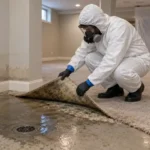
Water damage can look like a ceiling ring, swollen cabinet edge, lifted flooring, or a damp basement wall. It can also be hidden behind a finish that appears normal. A useful inspection considers changes across the room rather than looking only for standing water.
This room-by-room guide helps Wisconsin homeowners describe what they see without turning appearance into a diagnosis. Each clue has other possible causes, and a photograph cannot measure concealed moisture. Safe observations provide a starting point for source investigation and material assessment.
Start upstairs with ceilings and exterior-wall finishes
Stains can reveal water moving above the room
Look for new discoloration, bubbling paint, separating seams, and changes after rain or snowmelt. An old repaired stain may remain cosmetic, while a growing mark can indicate continuing wetting.
Keep clear of sagging or bulging areas and water near lighting fixtures. Do not stand beneath weakened material to collect a better photograph or test whether it feels soft.
Wall finishes may show a different part of the pathway
Peeling paint, swollen trim, and staining near windows can indicate moisture reaching the wall. The entry point may be elsewhere because water can follow framing and surfaces before becoming visible.
The EPA's moisture guidance explains why source control and attention to wet materials matter even when the symptom appears limited.
Check kitchens and bathrooms around connections and cabinets
Under-sink changes can develop gradually
Inspect accessible cabinet floors and edges for swelling, discoloration, or repeated dampness. Note water after fixture use and report dripping connections to a plumber. A warped panel can remain after the current leak stops.
Do not assume that replacing the damaged cabinet floor solves the plumbing problem. Ask what caused the wetting and whether moisture reached the adjoining wall or floor layers.
Appliance areas can hide water behind the visible edge
Dishwashers, refrigerators, washing machines, and other supplied appliances can leak where access is limited. Avoid pulling heavy equipment or handling electrical connections in a wet area to investigate.
- Photograph accessible swelling and stains.
- Record whether changes follow fixture or appliance use.
- Notice damp flooring beside cabinets.
- Report odors without guessing the source.
- Keep away from wet outlets and equipment.
Examine floors without lifting materials by guesswork
Wood and laminate may change shape
Cupping, raised edges, swelling, gaps, or lifting can indicate moisture exposure. They can also involve installation or other conditions, so the appearance needs to be considered with the incident history.
Surface drying does not establish what is happening below a plank or finish. Material layers and drying access help determine whether retention is appropriate.
Carpet can hide affected backing and padding
A carpet surface may feel better while layers beneath remain damp. The source and contamination conditions matter as much as the amount of visible water.
Discuss water damage restoration with Emergency Restoration Specialists at (414) 571-9977 if wet flooring extends beyond a small, safely manageable surface incident.
Use basement observations to identify a pattern
|
Room or material |
Visible clue |
Question to investigate |
|
Ceiling |
New ring or blistered finish |
What is wet above it? |
|
Cabinet |
Swollen lower edge |
Is plumbing or an appliance leaking? |
|
Wood floor |
Cupping or raised seams |
Are underlying layers affected? |
|
Basement wall |
Dampness or recurring marks |
How is water reaching this surface? |
|
Utility area |
Water beside equipment |
Is access electrically safe? |
Basement dampness can have more than one pathway, including plumbing, drainage, and groundwater-related conditions. Notice whether the pattern follows storms, thawing, or equipment use without assuming that the timing proves the cause.
If water is unknown or potentially contaminated, keep people away and obtain qualified advice. Sewage-related conditions require a different response from a known clean-water spill.
Turn observations into a useful assessment record
Capture changes rather than one dramatic close-up
Take a safe wider view to show the location, then a closer image of the symptom if appropriate. Include dates and relevant weather or fixture-use notes. Do not include unrelated personal information in photos sent to providers.
Ask how the concealed area will be evaluated
The EPA's material-response table illustrates why different wet materials need different decisions. A provider should explain what can remain, what needs removal, and how readiness for repairs will be assessed.
- Save source-repair findings with damage photos.
- Note areas that remain damp after wiping.
- Record recurring symptoms after earlier work.
- Avoid painting over an unresolved stain.
- Ask about adjoining cavities and floor layers.
Choose help based on the condition you find
The ERS team can discuss affected interiors, while plumbers, roofers, and other trades address relevant source defects. Clarify the roles so a repaired leak does not leave wet materials unassessed.
For water-damaged finishes or concerns about hidden spread, call (414) 571-9977. Describe what changed and where; an accurate account is more useful than declaring every mark to be mold or every dry-looking surface to be restored.
Frequently Asked Questions
Is brown staining always water damage?
No single color proves the cause. Consider the moisture history, changes over time, and material condition alongside the mark's appearance.
Can damage exist without visible staining?
Yes. Water can remain beneath flooring or inside cavities. An incident history or persistent dampness can justify assessment even when the finish looks ordinary.
Does warped flooring always need replacement?
Not automatically. Material, physical damage, contamination, and drying feasibility affect the decision. Ask for findings tied to the actual floor assembly.
Can cabinet swelling remain after drying?
Yes. Some materials retain physical changes after moisture exposure. Source correction and material repair are separate questions.
Does a musty smell prove mold?
No. It supports investigating moisture but cannot identify a species or exact location. Report the odor with other observations rather than make a diagnosis.
Should I lift carpet myself?
Not when contamination, electrical hazards, or unclear material conditions are involved. Ask how the underlying layers will be assessed safely.
What if basement stains follow heavy rain?
That pattern helps direct an investigation but does not prove the entry pathway. Drainage, exterior conditions, and building details may need evaluation.
Are photos enough for an estimate?
They help describe the symptom but may not reveal concealed moisture or safety conditions. A provider may need an on-site assessment before defining the full scope.
What should I avoid during inspection?
Avoid wet electrical equipment, unstable ceilings, unsafe access, and improvised openings. Do not create a hazard to document a symptom.
Who identifies the water source?
The relevant plumbing, roofing, or building professional may need to coordinate with restoration. Ask each provider what its assessment covers and what remains unresolved.
Related posts:
![Top-Causes-of-Flooded-Basement-in-Milwaukee-Homes]()
Top Causes of Flooded Basements in Milwaukee Homes
![When Hidden Lower-Level Spaces Need a Late-Summer Check]()
When Hidden Lower-Level Spaces Need a Late-Summer Check
![Professional Clean Up For The Smell And Water After A Flood]()
Professional Clean Up For The Smell And Water After A Flood
![What-to-Do-in-the-First-60-Minutes-After-Water-Damage-in-Your-Home]()
What to Do in the First 60 Minutes After Water Damage in Your Home
![What To Verify Before Sewage Damaged Materials Are Removed]()
What to Verify Before Sewage-Damaged Materials Are Removed
![What Is an Ice Dam? How It Causes Ceiling & Wall Water Damage in Wisconsin Homes]()
What Is an Ice Dam? How It Causes Ceiling & Wall Water Damage in Wisconsin Homes
![Basement-Flooding-First-3-Steps-Before-Help-Arrives]()
Basement Flooding – First 3 Steps Before Help Arrives