

Late summer can leave a property looking dry, even as moisture continues to collect in places people rarely enter.
Crawlspaces, utility rooms, sump pits, and mechanical areas often sit below grade, beside plumbing, or beneath rooms where small leaks go unnoticed. They can also become the first collection points during heavy rain, neighborhood flooding, or drain problems.
An inspection matters because these spaces connect to the rest of the building. Damp air can move upward. Water can spread beneath walls and flooring.
A failing sump system can turn the next storm into a lower-level flood. In rental, mixed-use, and commercial properties, an overlooked utility-room leak can also interrupt tenant access, damage equipment bases, or affect neighboring rooms.
Late summer is a useful checkpoint. The property has already faced months of storms, humidity, plumbing demand, and possible power interruptions. There is still time to identify damage before cooler weather introduces frozen-pipe and snowmelt risks.
Why These Spaces Need Attention Before Summer Ends
A late-summer inspection can reveal cumulative moisture problems before another season adds new stress.
Repeated rain can expose weak points
One major flood is easy to recognize. Repeated small water entries are easier to dismiss. Water may seep through a foundation joint, collect around a sump basin, or enter near a utility penetration.
The floor may dry between storms while nearby insulation, wood, drywall, or stored contents remain damp.
In basement-heavy homes and older housing stock, the path may not be obvious. Water can follow cracks, drain lines, framing, or sloped flooring before appearing several feet from its source.
Lake-adjacent communities and storm-prone properties may also face wind-driven water intrusion that eventually reaches lower levels.
Utility rooms combine water and vulnerable systems
Water heaters, laundry connections, condensate lines, drains, pipes, and mechanical systems create several possible leak sources in one small room. A slow drip behind equipment can remain hidden until flooring discolors, trim swells, or odor develops.
Commercial utility and mechanical rooms deserve similar attention. Water can move beneath equipment, through wall penetrations, or into an adjoining stockroom, office, corridor, or tenant space. Our guide to mechanical-room water losses explains why the room around the apparent leak must also be checked.
Need help assessing lower-level water damage? Emergency Restoration Specialists can evaluate affected areas and provide water extraction and drying when moisture has moved beyond a minor surface spill.
Call (414) 571-9977 to discuss visible water, damp materials, recurring odors, or a recent sump overflow.
What to Inspect in Each Lower-Level Area
Focus on the water source, the materials affected, and evidence that moisture has spread beyond the visible spot.
Crawlspaces
Do not enter a crawlspace when standing water, exposed wiring, unstable materials, sewage, or another obvious hazard is present. From a safe access point, look for:
- Wet soil, pooled water, mud, or staining
- Damp or displaced insulation
- Darkened wood, corrosion, or visible residue
- Condensation on pipes, ducts, or framing
- Musty odors entering rooms above
- Plumbing drips or water around penetrations
- Sagging materials or damaged ground covering
A crawlspace may stay damp after the yard and foundation exterior appear dry. Water can also enter from more than one direction. A plumbing leak, groundwater intrusion, drainage problem, and humid air may contribute at the same time.
Utility and mechanical rooms
Check the floor around water heaters, washing machines, pipe connections, drains, pumps, and condensate lines. Use a flashlight to inspect behind and beside equipment without moving or disconnecting it.
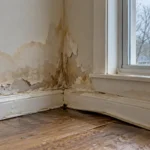
Rust, mineral deposits, peeling finishes, swollen baseboards, softened drywall, or recurring dampness can indicate a longer-running problem. Follow the edges of the room. Moisture may have passed under a wall or reached an adjacent finished area.
Sump pits and discharge areas
Look for unusual water levels, debris, damaged covers, loose connections, or signs that water has escaped the basin. Observe whether the float can move freely without reaching into an energized or unsafe area.
Outside, check the visible discharge location. Water should not appear to be cycling directly back toward the foundation. A sump pump may remove collected water without correcting the intrusion pathway itself, so recurring activation still deserves investigation.
Federal building-science guidance similarly warns that a sump pump alone may not resolve the underlying source of crawlspace water.
Warning Signs That Call for More Than Routine Maintenance
Escalate the response when the source, contamination level, or moisture extent is uncertain.
A small, clean-water drip caught immediately may only require plumbing repair and surface drying. The situation changes when water reaches porous materials, returns after cleanup, or may contain sewage or stormwater.
Professional assessment becomes more appropriate when you find:
- Standing water near electrical or mechanical systems
- Water from a floor drain, sewer line, or unknown source
- Wet drywall, insulation, carpet padding, subflooring, or framing
- Musty odor that returns after ventilation
- Visible fungal growth or widespread staining
- Repeated sump overflow or pump failure
- Moisture extending into more than one room
- Materials that remain damp after the surface looks dry
Visible water is only one part of the loss. Moisture can remain beneath flooring, behind baseboards, inside wall cavities, and under equipment. Water extraction and drying services may be appropriate when water has spread into materials that cannot be evaluated by appearance alone.
The EPA identifies moisture control as the key to controlling mold and advises drying water-damaged areas and items within 24 to 48 hours. That guidance makes delayed discovery in crawlspaces and utility rooms especially important, since the true start time may be unknown.
What Changes the Cleanup and Restoration Approach
The correct scope depends on what entered the space, where it traveled, and what it contacted.
The water source
A supply-line leak, groundwater seepage, appliance discharge, sump overflow, and sewer backup should not receive the same response. Contaminated water requires greater caution than a small clean-water release. Avoid direct contact and keep occupants away when sewage or another questionable source may be involved.
The materials involved
Concrete may look dry before wood, insulation, drywall, flooring layers, and stored boxes have released their moisture. Some materials may be candidates for drying. Others may require removal when contamination, deterioration, or inaccessible moisture makes cleaning impractical.
The duration and spread
A recently discovered puddle is different from dampness that may have cycled through several storms. Odor, staining, corrosion, and material swelling can suggest a longer exposure. The inspection should extend beyond the original room because water follows low points and concealed pathways.
Power loss also matters. A sump pump, ventilation system, or dehumidifier may stop during the same storm that introduces water. Heavy rain and power loss can therefore create a hidden moisture problem even when the outage is brief.
How to Evaluate the Right Response for This Issue
Use a focused scope review rather than choosing help based only on visible water removal.
A suitable plan should identify the likely source, check connected spaces, distinguish clean water from potentially contaminated water, and address both standing water and retained moisture. Ask how affected flooring, drywall, insulation, framing, and contents will be evaluated.
Be cautious when the proposed work only removes the puddle, applies odor treatment, or replaces finishes without explaining why the area became wet.
In shared buildings, the review should also consider connected utility rooms, shared walls, and neighboring lower-level spaces. Our summer moisture planning guide for attached properties covers this wider loss pattern.
Key Questions to Ask Before You Move Forward
These questions help you compare a basic cleanup with a complete moisture-focused response.
- Has the source been identified and stopped?
- Could the water contain sewage, drain discharge, or outdoor contaminants?
- Which nearby rooms or cavities may also be affected?
- What materials are wet beneath the visible surface?
- Does the plan address drying, necessary removal, cleanup, and later repairs?
A clear answer to each question is more useful than a broad promise. The scope should match the actual source and extent of the loss.
What to Do After the Inspection
Document findings and correct both the immediate damage and the condition that allowed it.
Photograph visible water, staining, damaged materials, the sump basin, and affected contents without entering an unsafe space. Note recent storms, outages, plumbing problems, odors, and previous water entries. This history can help distinguish a new leak from a recurring condition.
Do not cover damp walls, reinstall wet insulation, or return absorbent contents before the affected area has been evaluated. A basement or crawlspace can smell better temporarily while moisture remains. Recurring basement moisture and odor often point to materials or concealed areas that have not fully dried.
Property managers should also record which units, equipment rooms, storage areas, and common corridors were checked. In commercial properties, protect access routes and keep occupants away from wet electrical components, unstable materials, or contaminated water.
Turn inspection findings into a defined recovery plan. ERS Remove Water offers water damage restoration for homes and commercial properties, including situations involving lower-level flooding and hidden moisture.
Call (414) 571-9977 when a crawlspace, sump area, or utility room needs more than routine maintenance. You can also review our water damage restoration resources and guidance on how restoration is performed before deciding what happens next.
Frequently Asked Questions
Why inspect a crawlspace in late summer?
Late summer reveals the cumulative effects of heavy rain, humidity, plumbing leaks, and sump activity. An inspection can identify damp materials or recurring entry points before fall rain, snowmelt, and freezing temperatures create additional problems.
Can a crawlspace be wet without water entering the living area?
Yes. Water may collect on the soil, ground covering, insulation, or framing without producing an immediate ceiling or flooring stain above. Odor, damp air, or changes in flooring may become the first noticeable signs.
Is a musty utility-room odor enough reason for an inspection?
A recurring musty odor deserves attention because it may indicate retained moisture in drywall, trim, flooring, stored items, or concealed spaces. Ventilation may reduce the smell without correcting the source.
Should I enter a crawlspace with standing water?
Avoid entry when water may contact electricity, sewage may be present, materials appear unstable, or the source is unknown. Observe from a safe location and contact qualified help for hazardous or uncertain conditions.
What should I check around a sump pump?
Look for escaped water, unusual basin levels, debris, visible connection problems, and evidence that the discharge is returning toward the building. Do not reach into the pit or handle electrical components in wet conditions.
Does a working sump pump rule out water damage?
No. A pump can remove bulk water while dampness remains in flooring, framing, insulation, or surrounding soil. Frequent operation may also indicate that water continues to reach the foundation or lower level.
When is utility-room water damage an urgent issue?
Treat the situation more urgently when water is near electrical systems, heating equipment, structural materials, or occupied adjoining rooms. Sewage, unknown water, spreading moisture, and active leakage also require greater caution.
Can I dry a small utility-room leak myself?
A minor clean-water spill caught immediately may be manageable after the source is repaired. Professional help becomes more appropriate when porous materials are wet, the water traveled under finishes, or the affected area cannot be fully inspected.
Why does moisture return after the floor was dried?
The original source may still be active, or water may remain beneath flooring and inside nearby materials. Groundwater, drainage, condensation, and plumbing problems can also overlap and create repeated dampness.
What should property managers document?
Record the suspected source, time discovered, areas checked, visible damage, affected contents, odors, outages, and prior incidents. Include adjoining units, common areas, and equipment rooms when water may have crossed boundaries.
When should mold removal be considered?
Consider professional evaluation when visible growth, persistent odor, or damp porous materials follow a leak or flood. The moisture source must also be corrected, since surface cleaning alone does not prevent the condition from returning.
Related posts:
![Back-to-School Moisture Warning Signs in Schools]()
Back-to-School Moisture Warning Signs in Schools
![3.-What-Equipment-is-Used-to-Dry-Water-Damaged-Areas]()
What Equipment Dries Water-Damaged Areas After a Loss
![Your Property's Foundation & Water Damage]()
Your Property's Foundation & Water Damage
![Why Dehumidifiers Matter After Water Damage]()
Why Dehumidifiers Matter After Water Damage
![Does Water Damage Get Worse Over Time?]()
Does Water Damage Get Worse Over Time?
![How-to-fix-water-damaged-ceiling]()
How to Fix Water Damaged Ceiling
![Emergency Water Cleanup For When Homeowners Need It Most]()
Emergency Water Cleanup For When Homeowners Need It Most