

Summer property risk often feels like a storm problem in Milwaukee-area neighborhoods, first-ring suburbs, mixed-use corridors, and lake-adjacent communities. Heavy rain can fill basements, severe winds can expose roofs, and debris can break windows. But the same season also brings fast-moving smoke damage from fireworks, grills, and garage fires. These calls often look small at first. Then odor moves into finished rooms, soot reaches contents, and water from fire suppression creates a second cleanup problem.
Why Summer Smoke Damage Spreads Beyond the Burn Area
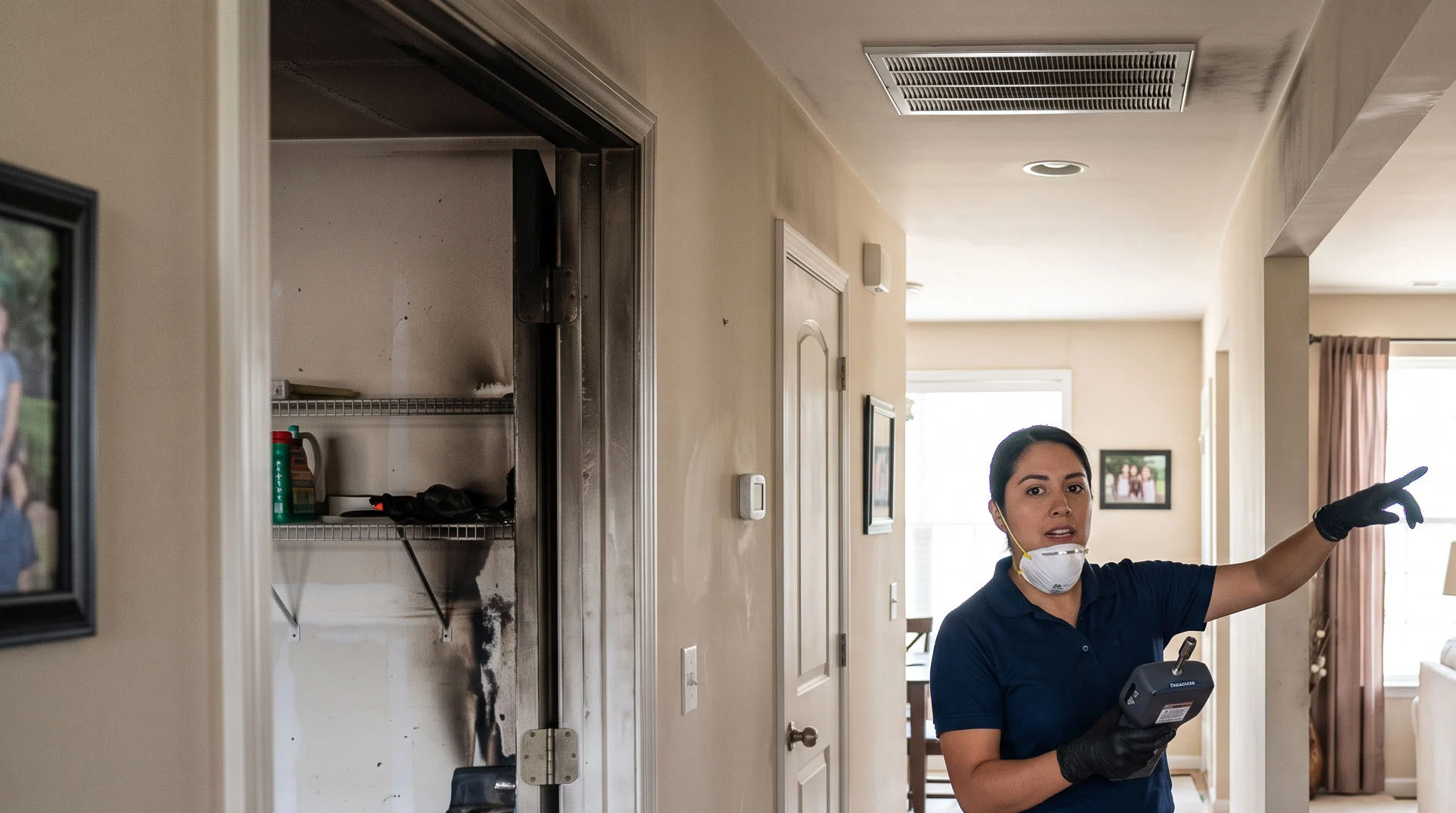
Smoke moves through pressure gaps, open doors, duct paths, attic spaces, and porous materials. This section explains why a small outdoor or garage fire can become a whole-property cleanup decision.
Fireworks can send residue into places flames never touch
A spent firework, misfired device, or ember near dry debris can create smoke that enters through windows, doors, vents, and attached garages. The visible burn mark may stay outside, while odor moves into curtains, carpet, stored contents, and wall cavities.
The safety concern is real because an estimated 14,700 people were injured by fireworks in 2024. Use that number as a reminder that fireworks can create injury risk, property disruption, and cleanup questions in minutes.
Grill fires often combine grease, heat, smoke, and siding
Grill fires can spread faster when grease, wind, decks, vinyl siding, patio furniture, or dry landscaping sit too close to the heat source. Gas grills were involved in an annual average of 9,235 home fires, so summer cooking deserves the same caution as storm preparation.
A grill flare-up can push greasy smoke against exterior walls and into nearby openings. Once smoke cools, residue can cling to paint, screens, fabric cushions, and kitchen-adjacent finishes. Quick wiping may smear soot deeper into porous materials.
Garage fires create a crowded fuel path
Garages often store cardboard, tools, batteries, paint, gasoline, propane, lawn equipment, vehicle fluids, and seasonal decorations. A small ignition source can find several fuels close together. If the garage connects to the home or a commercial suite, smoke can move through shared walls, door gaps, attic connections, and utility penetrations.
Immediate Response Priorities After a Summer Fire
The first decisions after visible flames are out should protect people, preserve documentation, and prevent secondary damage. This section focuses on what to do before cleanup begins.
Wait for clearance before re-entering
Do not enter a fire-damaged area until emergency responders or the appropriate authority says it is safe. Watch for electrical hazards, sagging ceilings, unstable garage doors, broken glass, and wet flooring. Smoke and soot can remain irritating even when the room looks calm.
Keep soot from becoming permanent damage
Avoid touching soot-covered surfaces, leaning on walls, or moving smoky contents from room to room. Skin oils and pressure can grind fine soot into finishes. For a deeper explanation of smoke behavior, review What Does Smoke Really Do To A Building? before deciding what can wait.
Separate fire damage from water damage
Fire suppression can leave wet flooring, damp drywall, soaked insulation, and hidden moisture behind the smoke. If rain enters through broken windows, open roof areas, or damaged siding, the loss can become fire and water damage at the same time.
Cleanup Decisions That Protect the Building
Smoke cleanup is not only a surface-cleaning task. This section explains how soot, odor, contents, and water damage affect restoration decisions.
Match cleaning to the type of residue
Dry smoke, greasy smoke, protein residue, fuel-related residue, and ash behave differently. A wrong cleaner can set stains, spread residue, or push odor deeper. If smoke affects walls, ceilings, floors, furniture, clothes, or curtains, the guidance in How To Restore A Home After A Fire can help you understand why cleanup often includes more than wiping visible soot.
Treat odor as a source problem
Smoke odor can remain when particles settle into porous surfaces. Air fresheners, candles, and fragrance sprays only add another smell. The real question is what burned, where the smoke traveled, and which materials absorbed the residue.
Professional Odor Removal Services may be relevant when smoke, mold, pet, biohazard, or other severe odors persist after source removal and cleaning. Fire Damage Restoration Services may also apply when the property needs soot removal, odor work, board-up, tarping, contents attention, water extraction from firefighting efforts, or repair planning.
Decide what to clean, pack out, or discard
Do not assume every smoky item is lost. Also do not assume every item is safe to keep. Food, cosmetics, medications, baby items, heavily soot-covered porous goods, and heat-damaged plastics deserve careful review. After the Fire’s Out: How to Undergo Smoke Restoration explains why smoke restoration is different from ordinary household cleaning.
Prevention Moves for Fireworks, Grills, and Garages
Prevention cannot remove every risk, but it can reduce the chance that a small event becomes a property-wide smoke loss. This section gives practical steps for summer properties.
Build a fireworks buffer
Keep fireworks away from structures, garages, vehicles, dry leaves, mulch, firewood, trash bins, and alley storage areas. Keep windows and garage doors closed nearby. Soak spent materials before disposal. Never relight a device that fails.
Give grills room to breathe
Clean grease buildup, check gas connections, keep the grill on a stable surface, and move it away from siding, railings, awnings, low branches, and open doors. Keep a lid and proper extinguisher nearby. Never roll a hot grill into a garage.
Clean up the garage fuel load
Store gasoline, propane, paint, solvents, oily rags, and lawn chemicals away from heat sources and living areas when possible. Keep charging devices off cluttered surfaces. Limit extension cords. Clear the path between the garage and the exit so occupants are not blocked if smoke builds.
Commercial and Multi-Unit Smoke Damage Considerations
Smoke spread can disrupt more than one household or suite. This section explains why property managers, facility managers, and owners need a wider inspection view.
Check shared walls, corridors, and mechanical pathways
A garage, storage room, restaurant patio, or maintenance space can send odor into adjacent units or customer areas. Check door gaps, shared ceilings, utility chases, drop ceilings, stairwells, and common HVAC paths.
Plan repair coordination after cleanup
Cleanup, drying, demolition, debris removal, odor work, and repairs may need sequencing. If windows are broken or a roof edge is exposed, board-up or tarp-over work can reduce weather intrusion while repair planning continues. After the Fire: A Guide to Rebuilding After Fire Damage explains why safety, documentation, and staged recovery decisions matter after flames are out.
Conclusion: Small Summer Fires Still Need Serious Decisions
A summer smoke-damage call may begin with a firework ember, a grill flare-up, or a cluttered garage. It can end with soot on finishes, odor in contents, wet materials from fire suppression, broken openings, and repair coordination. Treat the first few hours as a decision window. Protect people first, avoid smearing residue, document conditions, and look beyond the visible burn area.
Frequently Asked Questions
1. Why does smoke damage spread so far after a small fire?
Smoke follows air movement, pressure gaps, duct paths, open doors, attic spaces, and porous materials.
A small fire near a garage, patio, or exterior wall can leave odor and soot in rooms that never had flames.
That is why the cleanup inspection should look beyond the visible burn area.
2. Are fireworks smoke calls serious even when the fire goes out quickly?
Yes. The 2024 fireworks injury estimate of 14,700 shows how quickly fireworks can create unsafe conditions.
Property damage may include ash, odor, scorched siding, smoky contents, and hot debris in landscaping or trash bins.
Keep people away from spent materials until they are cool and soaked.
3. Why are grill fires a common summer smoke-damage concern?
Grease, gas connections, wind, siding, decks, and patio contents can turn a flare-up into a larger smoke event.
Gas grills were involved in an annual average of 9,235 home fires, which makes prevention important.
Keep grills clean, stable, and away from openings, railings, siding, and low branches.
4. What should you do first after a garage fire?
Wait for clearance before entering, even if the flames are out.
Garages can contain fuels, chemicals, batteries, damaged electrical systems, and unstable doors.
Document visible damage from a safe place and avoid touching soot-covered surfaces.
5. Can firefighting water cause a separate restoration problem?
Yes. Fire suppression can soak flooring, drywall, insulation, trim, contents, and lower levels.
If water remains hidden, odor and material damage may continue after the smoke clears.
Water extraction and drying may be part of the recovery plan when wet materials are present.
6. Why should you avoid wiping soot right away?
Soot is a fine residue that can smear, stain, or grind into porous materials under pressure.
A dry-looking wall, cabinet, curtain, or cushion may need a cleaning method that matches the residue type.
Start with safety, documentation, and careful evaluation before scrubbing.
7. What summer property risks can overlap with smoke damage?
A fire can happen during the same season as heavy rain, flash flooding, roof leaks, sewer backup, hail, wind damage, or fallen debris.
Broken windows, exposed roof areas, and open garage doors can let stormwater enter after the fire.
That overlap can turn a fire cleanup into a smoke, water, odor, and repair coordination issue.
8. What should commercial property owners check after a small fire?
Check shared corridors, storage rooms, wall penetrations, drop ceilings, stairwells, utility spaces, and customer-facing areas.
Smoke odor can disrupt tenants, staff, customers, stock rooms, and scheduled operations.
A wider inspection helps identify where residue and odor traveled.
9. Can smoke odor remain after visible soot is gone?
Yes. Odor can remain when particles settle into porous surfaces, contents, carpets, upholstery, or hidden voids.
Fragrance sprays may mask the smell for a short time, but they do not remove the source.
Persistent odor should be treated as a clue that more cleanup or source removal may be needed.
10. Can a fire lead to mold later?
It can, especially when firefighting water, stormwater, or wet debris remains in the building.
Moisture trapped behind walls, under flooring, or inside contents can create later drying and mold concerns.
Fast evaluation of wet materials helps reduce avoidable secondary damage.
11. What contents should be reviewed carefully after smoke exposure?
Food, medications, cosmetics, baby items, heat-damaged plastics, heavily soot-covered porous goods, and smoky fabrics need careful review.
Some items may be cleanable, while others may not be worth the risk or cost.
Do not move smoky contents into clean rooms without thinking through cross-contamination.
12. When does board-up or tarp-over matter after a summer fire?
Board-up or tarp-over may matter when windows, doors, siding, roof edges, or garage openings are damaged.
Openings can let rain, pests, debris, or unauthorized entry create more damage.
Temporary protection can help stabilize the property while cleanup and repair planning continue.
Related posts:
![End-of-Summer Smoke Odor Reset for Homes and Businesses]()
End-of-Summer Smoke Odor Reset for Homes and Businesses
![Top-Fire-Hazards-Wisconsin-Homeowners-Overlook]()
Top Fire Hazards Wisconsin Homeowners Overlook
![How Can You Protect Fire-Damaged Property While Approval Is Pending?]()
How Can You Protect Fire-Damaged Property While Approval Is Pending?
![Garage, Attic, or Hallway Smoke Odors: Why They Spread]()
Garage, Attic, or Hallway Smoke Odors: Why They Spread
![Fire-Smoke-Damage-Mitigation]()
Common Scenarios That Could Leave Your Home With Smoke Damage
![Why Soot Damages Metal, Glass, And Electronics If Cleanup Waits Too Long]()
Soot Starts a Second Wave of Damage After a Fire
![Smoke Odor Removal When the Heat Brings Fire Smell Back]()
Smoke Odor Removal When the Heat Brings Fire Smell Back