Cleaning smoke damage starts with assessing the residue and the surface underneath it. Painted drywall, wallpaper, unfinished wood, and delicate finishes do not tolerate the same treatment. If you are searching for how to clean smoke damage from a ceiling, avoid beginning with a wet sponge across the entire room. First establish safe access, determine whether heat or water damaged the material, and choose a method that will not smear residue or ruin the finish.
Check Whether the Surface Can Be Cleaned
Smoke staining is only one part of fire damage. A ceiling may also be damp from firefighting water, weakened, or affected by heat. Sagging material, damaged utilities, and falling debris require professional attention before cleaning. Do not stand beneath a compromised ceiling or begin scraping materials in an older home without considering additional building-material hazards.
The American Red Cross fire cleanup guidance includes precautions for cleaning and advises consulting professionals about water-soaked building materials. Its advice is a starting reference, not a determination that every damaged wall can remain. Some surfaces need replacement rather than increasingly aggressive cleaning.
Why Residue and Finish Change the Method
Different residues behave differently
Smoke from different burned materials can leave different residues. Some contamination smears readily when wiped or wetted; other deposits may respond to a suitable controlled cleaning method. Color alone is not enough to choose a chemical or technique. A restoration professional can inspect the affected area and perform a compatible test before treating the whole wall.
The finish may be more fragile than it looks
Flat paint, wallpaper seams, decorative coatings, and unfinished materials may be damaged by water or abrasion. A cleaner suitable for washable paint may not suit a paper wall covering. Follow product and manufacturer guidance, and stop if a test damages the finish. Cleaning should not create a second repair problem while trying to solve the first.
|
Surface condition |
Question before cleaning |
|
Intact washable paint |
Which method is compatible with the finish? |
|
Wallpaper |
Can it tolerate treatment without soaking or lifting? |
|
Damp or sagging drywall |
Does the material require removal or repair? |
|
Unfinished porous material |
Can residue and odor be adequately addressed? |
|
Extensive overhead staining |
Is professional access and treatment needed? |
A Sensible Cleaning Sequence
For substantial fire damage, request a written restoration scope before beginning household cleaning. It should identify what can be cleaned, what should be removed, and how surrounding rooms will be protected. Limited residue on an intact surface may be a different project from heavy soot across ceilings and cavities. The safest method depends on the actual conditions.
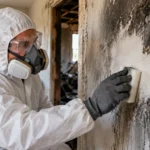
Where a suitable small cleanup is appropriate, use a compatible product as directed, test an inconspicuous area, and avoid soaking the material. Wear the protection specified for the task and product. Do not mix chemicals, and do not use harsh abrasive scrubbing to force a stain out. Extensive soot, uncertain materials, or persistent odor are reasons to seek a specialist assessment.
- Confirm that entry and the work area are permitted and safe.
- Identify the finish and any heat or water damage.
- Protect nearby belongings from residue transfer.
- Test the proposed method before broad application.
- Stop if staining spreads or the finish deteriorates.
Ceiling Work Adds Access Risks
Cleaning overhead is physically different from wiping a low wall. Residue can fall toward the worker, and reaching from an unstable ladder creates an avoidable fall hazard. Large ceiling areas are not a sensible place to improvise with furniture as a platform. Professional access equipment and a planned work area may be needed.
Also check whether the ceiling material is sound. Bubbling paint can hide dampness, and a stain may overlap damage from firefighting water. A freshly cleaned ceiling is not ready for finishing if the substrate remains affected. Ask how moisture and material condition will be checked before repainting or other repair work begins.
Paint Comes After Preparation
Painting over smoke staining without suitable preparation can leave discoloration or odor unresolved. A sealer may be part of a repair system, but it is not a substitute for removing loose residue, addressing moisture, or replacing materials that cannot be recovered. The coating should fit the substrate and the manufacturer's instructions.
RemoveWater's fire damage restoration services can help assess wall and ceiling recovery. Ask whether cleaning, removal, drying, odor work, and finish repairs are included. A detailed proposal is more useful than a general statement that the contractor will wash everything and paint it.
Do Not Forget Other Smoke-Affected Areas
Walls may be the most visible surfaces, while cabinets, contents, or other spaces still hold residue. The U.S. Fire Administration's recovery guide recognizes several kinds of damage after a fire. Discuss the surrounding rooms and contents rather than treating a single stain as the entire project.
- Note where smoke traveled beyond the visibly burned room.
- Keep affected contents separate from cleaned areas.
- Ask about concealed spaces when odor persists.
- Record which surfaces were cleaned or removed.
- Confirm that moisture and utility concerns have separate attention.
For help with smoke-damaged surfaces, contact RemoveWater at (414) 571-9977. Describe the finish, residue extent, and any known water damage so the assessment can address the full condition.
Frequently Asked Questions
How do I clean smoke damage from a ceiling?
Start with safety and material assessment. A suitable method must match the residue, ceiling finish, and any heat or water damage.
Can I wipe soot with a wet cloth?
Not automatically. Wet wiping can smear some residues or damage finishes. Test an appropriate method and seek guidance for extensive contamination.
What cleans smoke damage from painted walls?
There is no universal product for every surface and residue. Use a compatible approach and follow instructions rather than choosing the strongest chemical.
Should I use bleach on soot stains?
Avoid assuming bleach is suitable. Surface compatibility and residue removal need assessment, and cleaning chemicals should never be mixed.
Can I clean wallpaper the same way?
No. Wallpaper and seams may be vulnerable to wetting or abrasion. Check manufacturer guidance and obtain specialist advice when recovery is uncertain.
Is a sagging ceiling safe to wash?
Do not work beneath compromised material. Arrange appropriate assessment of the ceiling and any associated moisture, structural, or utility concerns.
Will repainting remove the smoke smell?
Painting alone may leave sources unresolved. Cleaning, moisture correction, and material decisions should come before the finishing system is selected.
Do all smoke-stained walls need replacement?
No. Some surfaces can be recovered; others have damage or contamination that requires removal. The assessment should explain the decision for each material.
Why does odor remain after the walls are cleaned?
Other contents, cavities, or surfaces may still be affected. Investigate remaining sources rather than repeatedly applying fragrance to the room.
Who can assess wall and ceiling restoration?
Call (414) 571-9977 to discuss smoke residues, surface types, access conditions, and any water or heat damage in the affected area.
Related posts:
![How-to-Protect-Valuables-from-Smoke-Damage]()
How to Protect Valuables from Smoke Damage
![Top-Fire-Hazards-Wisconsin-Homeowners-Overlook]()
Top Fire Hazards Wisconsin Homeowners Overlook
![Hidden-Dangers-of-Soot-After-a-Fire]()
The Hidden Dangers of Soot After a Fire
![Fireworks, Grill Fires, And Garage Fires: The Summer Smoke Damage Calls That Spread Faster Than Expected]()
Summer Smoke Damage From Fireworks, Grills, and Garages
![3.-Is-it-safe-to-sleep-in-a-house-after-smoke]()
Is It Safe to Sleep in a House After Smoke?
![What Does Fire Damage Restoration Involve? Step-by-Step Process]()
What Does Fire Damage Restoration Involve? Step-by-Step Process
![Dryer Fire Smoke Damage Restoration Guide Cleanup And Safety Tips]()
Dryer Fire Smoke Damage Restoration Guide: Cleanup & Safety Tips