After an unattended death, the person who arranges property cleanup is not necessarily the person ultimately responsible for every cost. An owner, authorized estate representative, landlord, insurer, or another relevant party may need to be involved. The answer depends on ownership, authority, agreements, policies, and the facts of the event. Begin by confirming scene release and identifying who can authorize work, while keeping the affected area private and restricted.
First Confirm That Authorities Have Released the Scene
If a death has just been discovered, contact emergency services and follow their instructions. Do not assume the situation has already been reported or that the property is ready for cleaning. Police or the medical examiner may need to complete their work before a contractor enters. Respect any restrictions on rooms, belongings, and access.
Removal of the deceased and recovery of the property are separate functions. Ask the responding authority who can confirm release for cleanup and whether any instructions remain. A family member should not be asked to disturb affected materials to prove that cleanup is needed. The provider can discuss the general situation before a permitted onsite assessment.
Separate Three Different Responsibilities
Who has authority to arrange the work?
Property ownership, estate authority, or a valid agreement may determine who can sign a cleanup contract. A relative's relationship alone may not establish authority to dispose of belongings or approve building work. When uncertain, obtain appropriate legal or estate guidance. Clear authorization helps prevent disputes at a time when the household is already under stress.
Who pays, and who coordinates?
The coordinating contact may organize access and estimates while payment is reviewed by an insurer, owner, estate, or other party. Do not treat coordination as an admission of legal liability. Request clear billing terms and identify the contracting party before work starts. Any disputed responsibility question deserves individual professional advice rather than a blanket answer from a blog.
|
Role |
Question to clarify |
|
Authorized property contact |
Who can approve work and access? |
|
Estate representative |
Who can make belongings decisions? |
|
Insurer |
Does the policy respond to this event? |
|
Cleanup provider |
What work and payment terms are proposed? |
|
Legal adviser when needed |
How do agreements and responsibilities apply? |
For an Owner-Occupied Home
An owner or authorized representative may arrange the assessment and contact the insurer. If the owner has died, estate-related authority may need clarification before contracts or disposal decisions are made. Gather the relevant contacts rather than asking several family members to make conflicting instructions independently.
Coverage is policy-specific. The Wisconsin insurance claims guide offers general consumer information about claims. Ask the insurer which documents, estimates, and loss details are required. A cleanup estimate can explain the proposed work but does not guarantee that the policy will pay it.
For a Rental Property
Notify the landlord or property manager promptly and avoid disturbing the affected area. Building cleanup, personal belongings, and estate decisions may involve different parties. Lease terms and applicable requirements can affect responsibility, so do not assume a tenant's family automatically pays for the entire property or that the landlord can discard every item without further review.
An authorized contact should coordinate access, the assessment, and necessary communications. Keep personal details limited to what each party needs. If ownership, payment, or belongings authority is disputed, obtain suitable legal guidance. The contractor still needs a clear work scope and permission from the appropriate party.
Why Specialized Property Cleanup May Be Needed
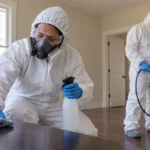
Potentially infectious material can affect flooring, furnishings, seams, and other building areas. The condition is not always limited to what is visible. OSHA's bloodborne pathogens overview explains why professional worker precautions matter when relevant contamination is present. Families should not rely on an ordinary housekeeping approach for potentially hazardous materials.
A professional assessment should explain which materials can be treated and which may need removal. Odor sources also need attention; fragrance does not establish that contamination has been addressed. Ask about waste handling, protection of unaffected rooms, and repair work excluded from the cleanup contract. Clear language is more useful than graphic descriptions or exaggerated promises.
- Confirm authority release before onsite work.
- Identify one contact authorized to coordinate the property.
- Keep family members and pets away from affected areas.
- Request a written estimate with exclusions and payment terms.
- Discuss belongings and privacy before disposal or photography.
Coordinate Recovery With Care and Privacy
RemoveWater's accidental death cleanup services can help assess the property after release. Tell the provider about access limits, the general affected space, and who can approve work. Sensitive records and photographs should have a defined purpose and appropriate handling. A family can ask for discreet communication throughout the project.
Keep insurance, contractor, and estate records organized without circulating private details unnecessarily. If additional damage is discovered, request an explanation and revised scope. Completion documentation should identify the work performed and any remaining repairs. That gives the authorized parties a concrete basis for the next decision.
- Save the estimate and approved changes together.
- Keep an inventory of belongings decisions where practical.
- Record the release and access instructions provided.
- Retain receipts and relevant cleanup findings.
- Clarify outstanding repairs before normal property use resumes.
For a private cleanup discussion, contact RemoveWater at (414) 571-9977. Share the release status and authorized contact so the assessment can be arranged respectfully.
Frequently Asked Questions
Who is responsible for unattended death cleanup?
The arranging and paying parties depend on ownership, estate authority, agreements, insurance, and the event. Clarify those roles before authorizing property work.
Does the family always have to pay?
No universal rule applies. Payment may require review by an insurer, owner, estate, or other relevant party under the specific circumstances.
Do authorities clean the home afterward?
Their response and investigation are separate from property recovery. Ask about scene release, then arrange an appropriate cleanup assessment through an authorized contact.
Can cleanup begin before the scene is released?
Follow authority restrictions. Do not disturb the area or arrange unrestricted contractor entry until the appropriate release has been confirmed.
Who can authorize work if the owner died?
An appropriately authorized representative may need to act. Seek estate or legal guidance when the authority to contract or dispose of belongings is unclear.
What should a landlord do?
Coordinate access and the building assessment while respecting authority restrictions and belongings rights. Review agreements and seek guidance for disputed responsibilities.
Does homeowners insurance cover the cleanup?
It may in some cases, but policy terms and facts govern. Request a specific insurer review and keep the estimate and documentation available.
Can relatives clean the room themselves?
Potentially hazardous contamination warrants specialized assessment. Families should not be expected to improvise cleanup or handle affected materials without suitable guidance.
How can privacy be protected?
Use one authorized contact, limit shared details, and discuss the purpose and handling of photographs and records with the cleanup provider.
Who can arrange a discreet assessment?
Call (414) 571-9977 with the scene release status, affected space, and authorized contact for coordinating the property's cleanup.
Related posts:
![Does Homeowners Insurance Cover Crime Scene Cleanup?]()
Does Homeowners Insurance Cover Crime Scene Cleanup?
![When Is Biohazard Cleanup Necessary and What Are the Steps?]()
When Is Biohazard Cleanup Necessary and What Are the Steps?
![How-do-Hospitals-dispose-Biohazard-waste]()
How Do Hospitals Dispose of Biohazard Waste?
![how to dispose biohazard waste]()
How to Dispose of Biohazard Waste: A Complete Guide for Safe and Compliant Handling
![6.-Is-Biohazard-Cleanup-Expensive]()
Is Biohazard Clean-Up Expensive?
![How Are Crime Scenes Cleaned? What Professional Biohazard Teams Do]()
How Are Crime Scenes Cleaned? What Professional Biohazard Teams Do
![How-to-get-rid-of-Biohazard-needles-safely-and-effectively]()
How to Get Rid of Biohazard Needles Safely and Responsibly