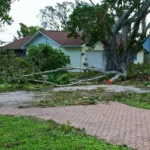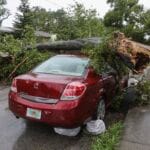


Heavy rain can leave a property looking stable while saturated soil weakens the anchorage around mature trees. If strong wind arrives before the ground drains, the failure may happen below grade. Instead of snapping, the tree can tip with a root plate made of structural roots and wet soil.
For homeowners, renters, facility managers, and commercial property owners, that changes what fallen tree removal needs to accomplish. Uprooting can disturb soil beside a foundation, affect buried lines, block driveways or entries, and open a roof or wall to rain.
When the loss extends beyond the tree itself, broader emergency restoration services may become part of the recovery.
Why Saturated Soil Changes the Failure Pattern
Wet ground changes both tree stability and the surrounding site when the tree tips.
Saturated soil weakens root anchorage
Roots and surrounding soil work together to anchor a tree. When soil becomes saturated, anchorage can weaken, especially where roots are shallow, restricted, damaged, or decayed. A fresh lean, gaps at the base, soil cracking, or mounding around major roots can signal movement.
A tree can remain unstable after the strongest winds have passed. If you see a new lean or heaved soil, keep people and vehicles away. Do not try to straighten, cut, or brace a large tree yourself.
Root-plate movement disturbs more than the yard
When a tree tips, the root plate can lift soil on one side and leave a depression or open cavity on the other. That movement may disturb nearby pavement, grading, buried services, and soil close to a structure.
A large tree resting on a building or still attached to a lifted root plate may also hold significant tension. Controlled professional fallen tree removal helps reduce the chance that an early cut shifts the trunk, root mass, or damaged building materials.
How Root-Plate Damage Can Affect Foundations, Utilities, and Access
The key question is what moved above and below ground when the tree failed.
Foundations and lower-level water paths
An uprooted tree does not automatically mean the foundation is damaged. Concern rises when the trunk or root mass struck the building, the root plate lifted soil beside the foundation, or the failure disturbed grading, retaining features, basement openings, or drainage paths.
Before the root cavity is filled or heavy equipment crosses it, look for cracked masonry, shifted steps, new gaps, displaced exterior components, or new water entry. Those conditions may need separate evaluation.
Buried utilities
Roots share underground space with utilities. Uprooted trees can break underground water and sewer lines, and extracting a root plate can add disturbance when line locations are unknown.
- Treat service loss, unexplained pooling, washout, hissing, gas odor, sparking, or damaged utility hardware as a separate hazard.
- Keep clear and contact the appropriate utility or emergency service before digging, cutting roots, or moving the root plate.
Driveways, entrances, and commercial access
A fallen tree may leave the building mostly intact while blocking a driveway, exterior door, parking area, or delivery route. That can disrupt residents, tenants, customers, staff, and vendors.
Good fallen tree cleanup restores controlled access without routing people through unstable areas. Debris clearing should account for the trunk, root plate, broken materials, and safe work zones. A broader guide to fallen tree and debris removal can help frame those next steps.
Roof, wall, and window openings
If the tree hit the building, removal is only one part of recovery. Branches and trunks can puncture roofing, damage siding, break windows, or shift framing. Rain can then reach attics, wall cavities, ceilings, insulation, flooring, and contents. The damage sequence is similar to when a tree strike turns a roof into a water path.
Temporary board-up or tarp-over work may be needed after the tree is safely removed. If water has already entered, temporary protection does not replace water extraction and drying.
What to Do Immediately After a Tree Uproots
Early choices should reduce risk and prevent a second layer of storm damage.
Keep clear of loads and utility hazards
- Do not climb onto the tree, roof, or root plate.
- Avoid cutting branches supporting part of the trunk or structure.
- Stay away from downed lines, damaged meters, wet electrical areas, sagging ceilings, and unstable building sections.
Emergency tree removal becomes especially important when the tree rests on a structure, blocks important access, contacts utility infrastructure, or remains unstable in soft soil.
Document damage from a safe position
- Take wide photos of the tree, root plate, impact area, blocked routes, exterior openings, and visible water entry before cleanup changes the scene.
- Do not enter an unsafe area for a better picture.
- Documentation can also help organize conversations about repairs, property operations, and any insurance claim you choose to make.
Control new weather exposure after removal
Once the tree is safely cleared, exposed roofing, windows, doors, or walls may need temporary protection. Emergency roof tarping after storm damage can reduce additional rain entry while permanent repairs are evaluated.
If interior materials are wet, continue with water removal, drying, and material evaluation rather than assuming the exterior cover finished the job.
How to Evaluate the Right Response for This Issue?
The service path depends on whether the loss is limited to vegetation or has become a structure, utility, access, or water-damage problem.
A small branch in an open yard may only need routine tree work. When storm-damaged tree removal involves a large uprooted trunk, building impact, buried-service concern, blocked access, or interior water, the property needs a broader plan. Professional fallen tree removal services should match the actual damage rather than only the amount of wood on the ground.
Key questions to ask before you move forward
- Is the tree resting on a building, vehicle, utility line, or another loaded object?
- Did the root plate lift soil next to a foundation, driveway, or likely utility corridor?
- Are there signs of utility damage, washout, standing water, or service loss?
- Did the impact create an exterior opening that allowed water inside?
- Does the scope include debris clearing, temporary protection, drying, and repair planning when those steps are needed?
What a Well-Managed Recovery Usually Includes
Good recovery work follows the damage path from the tree to the ground, building, utilities, and occupied areas.
A well-managed sequence starts by controlling access and identifying utility or structural concerns that could change the removal plan. The tree can then be removed in a controlled way, followed by debris clearing and restoration of usable access as conditions allow.
If the impact has opened the building, temporary board-up or tarp-over protection may follow. Water that entered should be addressed separately through extraction, drying, and evaluation of affected materials. Foundation-adjacent soil disturbance, utility concerns, and repair needs can then be handled by the appropriate qualified professionals before backfilling or finishing repairs.
Frequently Asked Questions
1. Why can a tree fall after the heaviest rain has already stopped?
Saturated soil can reduce the support surrounding a tree’s roots even after active rainfall ends. A later wind gust or continued root movement may be enough to trigger failure. Fresh leaning, heaved soil, or new gaps around the trunk deserve caution.
2. What exactly is a root plate?
The root plate is the central mass of structural roots and surrounding soil that helps anchor a tree. When a tree uproots, part of this root-and-soil mass may rotate out of the ground. That movement can create both a raised mound and a deep cavity.
3. Does an uprooted tree always damage the foundation?
No. Foundation concern depends on where the tree stood, what the root plate displaced, and whether the trunk or roots struck the structure. New cracks, shifted exterior features, disturbed soil beside the building, or new water entry justify closer evaluation.
4. Can an uprooted tree damage underground utilities?
Yes. Water and sewer lines can be affected when an uprooted root system moves through the same underground area. Do not assume the root cavity is safe to excavate. Utility concerns should be resolved before stump or root-plate work continues.
5. What should you do if a fallen tree is near a power line?
- Stay well away from the tree, line, and surrounding ground.
- Do not touch branches, fences, vehicles, or other objects that may be in contact with electrical equipment.
- Contact the utility or emergency services and wait for qualified direction.
6. When does emergency tree removal make sense?
Urgency increases when a tree rests on a structure, blocks important access, affects utility infrastructure, or remains unstable in saturated soil. A tree across an open part of the yard may present a different response level than one supported by roofing or walls.
7. Can a fallen tree create a serious access problem without hitting the building?
Yes. A trunk or heavy branches can block driveways, entrances, parking areas, sidewalks, or delivery routes. Commercial and multi-unit properties may need controlled access planning so occupants and workers do not pass through unstable debris areas.
8. What happens if the tree punctures the roof?
The priority shifts from tree removal alone to both impact damage and weather exposure. Once the tree is removed safely, the opening may need temporary protection. Any rain that has already entered may require separate water extraction, drying, and material evaluation.
9. Should you fill the root-plate hole immediately after removal?
Not automatically. The cavity may be close to underground services, a foundation, drainage features, or other damaged site components. Filling it too early can cover evidence of movement or make later utility and repair work more difficult.
10. What should fallen trees clean up after the trunk is gone?
The appropriate scope depends on what the failure affected. It may involve branches and debris, blocked-access clearing, temporary building protection, water removal, drying, and follow-up restoration. A yard-only loss will usually require fewer recovery steps.
11. When do you need restoration instead of tree removal alone?
Restoration becomes relevant when the tree damages roofing, walls, windows, framing, interior finishes, or creates water intrusion. The same applies when debris blocks property use, or the storm causes several types of damage at once. The scope should reflect every affected area.