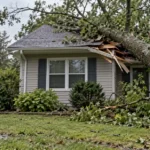
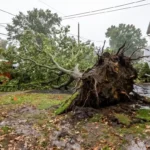
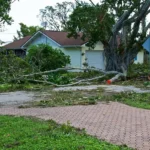
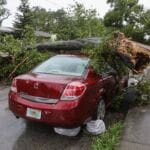
Homeowners insurance may cover fallen tree damage when the event and damaged property fall within the policy's terms. However, building damage, tree removal, yard debris, and personal belongings are not necessarily treated identically. If you are asking whether homeowners insurance covers falling tree damage, describe what the tree hit and request a policy-specific review. Do not assume that every fallen tree creates the same claim or that ownership alone decides who pays.
Put safety before the claim
A tree on a building can involve unstable weight, damaged utilities, and openings that admit rain. Keep people away from affected spaces and report immediate hazards to emergency responders or the utility as appropriate. Do not approach downed lines or a tree that may contact them. Avoid roof access and DIY cutting when the tree is loading the house.
OSHA's guidance on downed electrical wires explains why a line should be treated as energized even without visible sparking. Take photographs only from a safe position. The need to document damage does not justify entering a restricted area or standing under an unstable branch.
Ask about different parts of the loss
Damage to the building
Report the affected roof, walls, windows, garage, or other structure. Ask which property coverage applies and what limits or deductible are relevant. The cause and policy wording determine the decision. A contractor's repair estimate helps explain the scope but does not guarantee the insurer's payment.
Tree removal and debris
Removing a tree from a damaged structure may be evaluated differently from removing a tree lying harmlessly in the yard. Ask about the specific situation, removal limits, debris work, and exclusions. A general statement that a policy covers trees does not establish whether every clearing expense is included.
|
Loss component |
Question for the insurer |
|
House or garage damage |
Which building coverage and deductible apply? |
|
Tree resting on the structure |
What removal costs are considered? |
|
Yard debris without building damage |
Does the policy respond to this situation? |
|
Affected belongings |
What contents documentation is needed? |
|
Temporary accommodation |
Are additional living expenses applicable? |
What if the tree came from a neighbor's yard?
A neighbor's tree on your property does not automatically establish that the neighbor must pay every cost. The cause, condition of the tree, prior knowledge, policies, and relevant legal requirements may matter. Contact your insurer with the facts and communicate calmly with the neighbor. Seek appropriate legal advice when responsibility is disputed.
Avoid making an accusation before the cause has been assessed. Preserve safe photos, earlier relevant records, and written findings without disturbing hazards. The Wisconsin insurance regulator's homeowners FAQ is a general reference for property coverage questions. The particular claim still needs individual review rather than a blanket conclusion from an online article.
Document the event and necessary protection
Record the date, approximate time, weather conditions, tree location, and visible impact. Note authority or utility instructions and save contractor findings. If rain is entering the building, ask the insurer about necessary emergency protection and keep receipts. Qualified professionals should arrange work on damaged roofs or structures.
- Photograph the overall impact from a safe place.
- List the rooms and property visibly affected.
- Save removal and repair estimates separately.
- Keep temporary protection receipts.
- Record insurer instructions and claim correspondence.
The Wisconsin insurance claims guide offers a consumer reference for the claims process. Ask what documentation is required before disposal or permanent repairs when practical. Necessary safety steps and later reconstruction may need different coordination, so clarify them rather than assuming all work follows one approval path.
Understand the estimate before signing
A useful scope separates tree removal, temporary protection, structural assessment, roof repair, moisture recovery, and interior finishes. Several professionals may be involved. Ask which tasks are included and what remains outside the agreement. A removal quote alone does not describe the cost of restoring the entire home.
RemoveWater's fallen tree removal services can help assess tree-related recovery and property protection needs. Discuss the impact location and any access restrictions. If an opening allowed water inside, ask how affected materials will be evaluated before repaired finishes conceal the area.
Review payment terms and outstanding questions
Before authorizing work, understand the contracting party, payment schedule, and any amount the household must pay regardless of the claim outcome. A provider offering insurance assistance should still explain the agreement plainly. Do not treat assistance with documentation as a promise that the insurer will reimburse every line item.
If coverage is denied or limited, request the reason and policy provisions in writing. Keep the decision with the estimate and event records. Appropriate insurance or legal guidance can help review a disputed interpretation. At the same time, maintain necessary temporary protection so the property does not remain exposed while payment questions are addressed.
- Request written coverage explanations for uncertain costs.
- Compare estimates using matching scopes.
- Record approved changes and new findings.
- Keep building, removal, and contents expenses distinct.
- Confirm what work remains before normal use resumes.
For help assessing the recovery scope, contact RemoveWater at (414) 571-9977 after immediate safety concerns have been reported appropriately.
Frequently Asked Questions
Does homeowners insurance cover fallen tree damage?
It may when the event and damaged property are covered. Policy terms, exclusions, limits, and deductible determine the specific response.
Does insurance pay if a tree only falls in the yard?
Not automatically. Ask about debris and removal provisions for that situation rather than assuming coverage without damage to a structure.
Are tree removal costs unlimited?
Do not assume so. Policies can have relevant limits or conditions, and removal from a structure may differ from general yard clearing.
Who pays if my neighbor's tree falls on my house?
The facts, policies, and legal responsibility need review. Ownership alone does not resolve every situation; contact insurers and seek guidance for disputed liability.
Should I call the neighbor before my insurer?
Communicate respectfully and notify your insurer promptly. Keep the facts organized without delaying safety measures or necessary protection of the building.
Can I cut the tree away to save money?
Avoid DIY work when the tree loads a building, involves utilities, or has unstable sections. Professional removal requires an appropriate safety and handling plan.
Are belongings damaged by the impact included?
Contents may be reviewed separately. Ask about applicable coverage and keep photos, inventories, and receipts for the affected personal property.
Will temporary housing be paid for?
Additional living expenses depend on the policy and covered loss. Ask the insurer about eligibility, limits, documentation, and permitted arrangements.
What if I disagree with the coverage decision?
Request the explanation and cited policy wording in writing. Use suitable insurance or legal guidance to review the specific facts and contract.
Who can assess tree-related property work?
Call (414) 571-9977 with the impact location, access status, and known hazards to discuss a clear recovery scope.