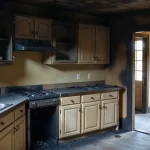
A fire-damaged house may be restorable, but that decision requires more than judging the blackened walls from the sidewalk. Structural condition, damaged systems, smoke and water exposure, code requirements, and the proposed repair scope all matter. Demolition may be necessary in some cases; substantial restoration may be feasible in others. The right first step is an informed assessment that separates safety, construction options, and financial decisions.
Appearance Cannot Settle the Question
A dramatic soot-covered room can include materials that are recoverable, while less obvious heat damage may require major repair. The visible footprint of the flames does not show the condition of every beam, connection, wire, or concealed assembly. Photos are useful documentation, but they cannot replace an onsite evaluation by qualified professionals.
Do not enter until the relevant authorities permit access. Ask whether structural or utility restrictions remain. The U.S. Fire Administration's After the Fire guide provides a starting point for recovery planning. Follow the actual instructions given for your property rather than assuming a neighboring home with a similar fire has the same conditions.
The Assessments That Shape a Restoration Decision
Structural condition
A qualified structural professional may need to assess load-bearing components, connections, foundations, and affected assemblies. The required evaluation depends on the damage and local authority guidance. Ask for findings that identify what can remain, what must be repaired or replaced, and which areas still need further investigation.
Building systems and concealed spaces
Electrical, plumbing, heating, and other systems may need specialist review. A device or circuit that still operates is not proof of suitability after heat or water exposure. Opening damaged areas can reveal conditions that change the repair plan. Build that uncertainty into the comparison instead of treating the first estimate as a final diagnosis.
|
Question |
Who may help answer it |
|
Are affected structural elements usable? |
Qualified structural professional |
|
What work is required for permits? |
Local building authority and design team |
|
Which materials need cleaning or removal? |
Restoration professionals |
|
Are utilities suitable for use? |
Appropriate licensed trades |
|
What does the policy cover? |
Insurer, adjuster, and relevant advisers |
What a Restoration Plan Should Describe
A major restoration proposal should identify stabilization, selective removal, cleaning, moisture work, repairs, and reconstruction. It should also explain what is excluded. A price for smoke cleaning alone is not a price to restore the entire building. Likewise, a construction estimate may omit contents, temporary protection, or other recovery tasks.
RemoveWater's fire damage restoration services can help assess the cleaning and recovery portion of the project. Coordinate those findings with the structural and trade assessments. The strongest plan explains how each task leads to the next, including when affected cavities are ready to be closed and when final finishes can be installed.
When Demolition Enters the Discussion
Demolition may be considered when damage, safety findings, required reconstruction, or other property conditions make it the appropriate option. Do not choose it solely because smoke odor is strong or the room looks ruined. Request the supporting assessment and a written explanation of the alternatives. Local requirements and site conditions can affect both demolition and rebuilding.
Before agreeing to removal, ask about permits, utility disconnection, handling of potentially hazardous building materials, debris disposal, and site protection. Older homes may need additional evaluation before disturbance. These questions belong in a professional scope; demolition is not a weekend cleanup task for the family.
- What specific findings support demolition or major replacement?
- Which parts of the structure are being retained, if any?
- What specialist reports are still outstanding?
- Are required permits and site work included?
- How will unexpected conditions be documented and priced?
Compare Complete Options, Not Just Initial Prices
A fair comparison includes the same endpoint: a usable property meeting the relevant requirements. One proposal may include temporary protection and rebuilding, while another ends with debris removal. Ask about timelines, allowances, exclusions, contents, and professional fees. A lower initial number may describe less work rather than a more economical path to the same result.
Insurance decisions are related but separate. The Wisconsin insurance claims guide is a useful consumer reference. Policy limits, coverage terms, depreciation, deductibles, and other provisions can influence payment. Do not assume that an insurer's valuation automatically answers an engineering question or that every reconstruction upgrade is covered.
Household Priorities Belong in the Plan
Recovery affects more than building materials. Temporary housing, access to sentimental belongings, school routines, and work schedules may influence decisions. Share those priorities with the project team while keeping safety assessments central. It can help to designate one family contact and maintain a written list of unresolved questions.
Preserve records before items are removed when it is safe and practical. Ask about photographs, inventories, and specialist contents recovery. A valued possession may warrant assessment without delaying urgent stabilization. The goal is to make clear decisions rather than forcing the household to decide everything during its first stressful visit.
- Keep structural reports and trade findings together.
- Save proposals with their assumptions and exclusions.
- Record approved changes to scope in writing.
- Keep photos and contents decisions with claim records.
- Confirm the next milestone before scheduling other work.
Contact RemoveWater at (414) 571-9977 to discuss the fire restoration assessment and how its findings fit into the wider recovery plan.
Frequently Asked Questions
Can a fire-damaged house be restored?
Some can, but the answer depends on professional assessments of the structure, systems, materials, repair requirements, and complete project scope.
Does heavy soot mean demolition is necessary?
No. Soot appearance alone cannot establish structural condition. Cleaning needs and structural repair decisions require different assessments.
Can a photograph show whether beams are safe?
No. A qualified professional may need onsite investigation and access to affected components. Photos help documentation but do not settle safety.
Who decides whether I can enter the house?
Follow the relevant authorities' instructions. Additional structural or utility restrictions may remain even when limited entry has been permitted.
Is smoke odor a reason to tear down walls?
It can indicate unresolved affected materials, but the response should follow investigation. Odor alone does not determine the full removal scope.
Should I compare two reconstruction estimates?
Yes, using matching endpoints and assumptions. Review cleaning, demolition, permits, trades, finishes, exclusions, and allowances rather than comparing totals alone.
Does insurance pay for every required repair?
Coverage is policy-specific. Ask the insurer about limits, exclusions, deductibles, valuation, and requirements instead of assuming all work will be reimbursed.
Can I handle demolition myself?
Major fire-damaged demolition requires appropriate professional planning, permits, and hazard assessment. Unstable materials and damaged systems create serious risks.
What if hidden damage changes the plan?
Request written findings and a revised scope. The team should explain the discovery and how it changes the options, cost, and schedule.
How can I begin the recovery assessment?
Call (414) 571-9977 with the access status, affected rooms, and any available authority or specialist findings about the property.
Related posts:
![3.-Is-it-safe-to-sleep-in-a-house-after-smoke]()
Is It Safe to Sleep in a House After Smoke?
![Restaurant Fire Recovery: Protecting Your Holiday Service]()
Restaurant Fire Recovery: Protecting Your Holiday Service
![Hidden-Dangers-of-Soot-After-a-Fire]()
The Hidden Dangers of Soot After a Fire
![Smoke Odor Removal When the Heat Brings Fire Smell Back]()
Smoke Odor Removal When the Heat Brings Fire Smell Back
![How-to-Protect-Valuables-from-Smoke-Damage]()
How to Protect Valuables from Smoke Damage
![Fire-Damage-Cleanup-What-Insurance-Really-Covers]()
Fire Damage Cleanup – What Insurance Really Covers
![Fire-Smoke-Damage-Mitigation]()
Common Scenarios That Could Leave Your Home With Smoke Damage