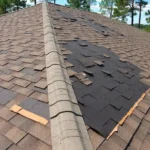


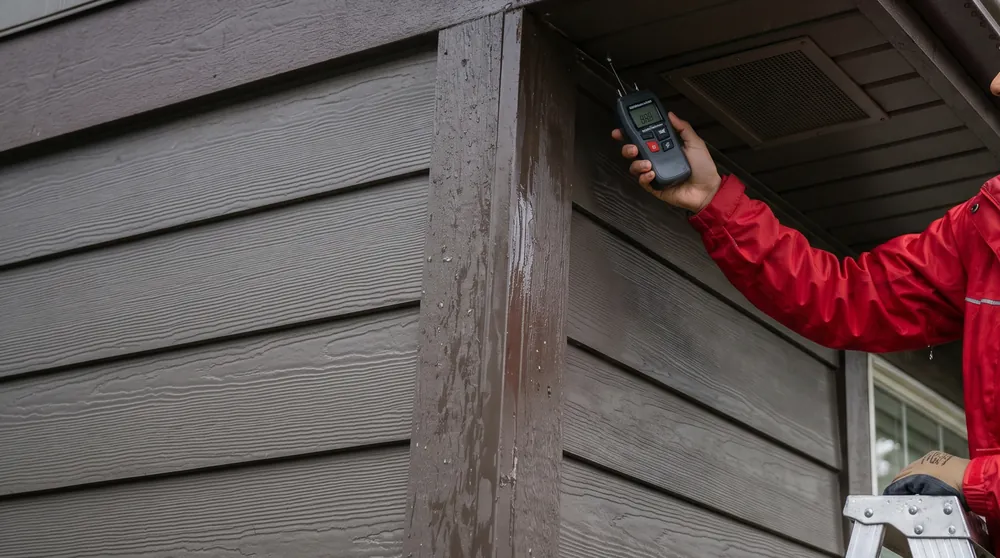
In Milwaukee-area neighborhoods, first-ring suburbs, and other storm-prone properties with older housing stock, the visible damage after a storm is often only the start. A lifted siding edge, cracked soffit panel, loose fascia board, or gutter pull-away can create a small opening that lets wind-driven rain move deep into the building envelope.
Once that happens, moisture can spread into insulation, framing, attic edges, and wall cavities long before you see a ceiling stain or a swollen baseboard. That is why exterior storm damage should never be judged by the size of the opening alone. The real question is where the water traveled after it got in.
If you treat the problem like a surface repair only, you risk leaving hidden dampness behind the cladding, above the ceiling line, or inside the roof edge, where it can keep spreading after the storm has passed.
How roofline damage turns into a hidden moisture problem
Small breaches at the eaves and wall surface can create bigger interior problems than you expect.
Siding damage changes how the wall sheds rain
Siding is built to shed water, not to act like a sealed tank. When wind lifts a panel edge, breaks a corner, opens a seam, or damages trim around the wall, rain can bypass the outer surface and move behind it. In a hard storm, that water does not always fall straight down.
It can be pushed sideways, follow framing, soak sheathing, and collect in insulation before anything looks dramatic indoors. That is one reason knowing how pros stop water from spreading is such a useful reference after any storm opening.
Fascia and soffit damage open the attic edge
Fascia runs along the lower roof edge and helps support the gutter line. Soffits sit under the eaves and often help move air into the attic. When storms damage these components, water can enter at the roof edge, move behind the gutter area, or reach attic spaces and upper wall cavities.
That is especially risky when hail, flying debris, or wind has also disturbed the roof covering above. If the opening is left exposed, even a later rain can turn a repairable exterior issue into a drying problem. Temporary securing matters because water entering through a broken roofline or wall opening can keep feeding the loss until the breach is controlled.
Where hidden moisture usually collects
The most common hiding places are upper wall cavities, attic insulation near the eaves, roof decking, trim, and the top of exterior walls. Water can also wick downward and show up later in lower drywall, flooring edges, or basement-adjacent finishes. In basement-heavy homes and mixed-use buildings, one exterior opening can create more than one moisture path at the same time.
Older homes add another layer of difficulty. Water may move through layered materials, plaster transitions, older trim details, and irregular cavities that do not dry evenly. In commercial or multi-tenant spaces, moisture can also spread across shared walls or above ceiling systems before anyone connects the leak to the storm opening outside.
Look for warning signs that suggest the moisture is no longer just outside. Peeling paint, softened drywall, swollen trim, musty odors, damp insulation, warped flooring near exterior walls, or staining near the roof edge all point to a moisture problem that likely extends beyond the visible break.
What to do on the first day after exterior storm damage
Your first goal is to protect people, stop active water entry, and limit hidden spread.
Put safety before inspection
- Do not rush under a damaged eave or into a wet room without thinking about hazards first.
- Stay clear of sagging ceilings, damaged electrical areas, active leaks near outlets, unstable ladders, sharp debris, and any downed utility risk outside.
If the storm involves structural instability, fire, or live electrical danger, treat it as an emergency scene first and a cleanup project second.
Stop the opening from feeding the loss
If wind or debris created an active opening, the priority is to limit further water entry. That can mean roof tarping, securing broken openings, or stabilizing exposed areas before interior drying begins.
Once the structure is protected, storm and wind damage cleanup and targeted interior drying make more sense because you are no longer trying to dry a building that is still taking on water.
Start drying based on where the water traveled, not just where it dripped
A storm-created opening in the soffit or fascia can allow water to enter hidden cavities, not just the floor beneath the leak. That is why the equipment used to dry water-damaged areas after a loss is so important in this case.
Extraction, airflow, dehumidification, and moisture checks all play different roles, and water extraction and drying may be needed even when the visible exterior damage looks minor.
When cleanup becomes restoration instead of a simple repair
Once moisture reaches concealed materials, surface cleanup alone is usually not enough.
A patch on the outside does not solve the inside if insulation, sheathing, framing, or drywall stays wet. At that point, the job shifts from basic cleanup to moisture control, material evaluation, and verified drying.
This is where people lose time by assuming that a fan, a towel, or a dry-looking room means the problem is over. In reality, hidden dampness can remain behind trim, inside wall cavities, or under finishes after the visible water is gone.
Preventing secondary water damage after cleanup explains that progression well.
Restoration becomes even more important if storm runoff enters through the opening, if the water source is unclear, or if wet materials have sat long enough to begin deteriorating. In those cases, the questions are no longer just “How do you close the opening?” but also “What stayed wet?” and “What can still be saved?”
How to decide between repair and replacement
The right choice depends on how far water and impact damage actually traveled.
- Repair may make sense when the damage is limited, the opening was controlled quickly, and the surrounding materials stayed dry.
- Replacement becomes more likely when panels are cracked or detached, fascia has softened or pulled loose, soffits have lost integrity, insulation is wet, or hidden moisture has already affected the substrate behind the finish.
The decision should be based on the condition of the assembly, not just the surface appearance from the yard. Before closing the job, make sure the structure is dry, the source is controlled, and the repair plan matches the real moisture path.
A final walk-through should confirm that the opening is sealed, stained materials were evaluated, damp cavities were addressed, and no musty or soft areas were left behind. A practical way to think about that closeout is the final inspection checklist after water damage restoration.
Storm-damaged siding, fascia, and soffits often look like exterior repair items. In practice, they can be moisture-entry points that affect much more than the roofline. If you focus on source control, hidden spread, and verified drying, you make better decisions about cleanup, repairs, and what should not be covered back up too soon.
Frequently Asked Questions
1. Can storm-damaged siding cause hidden moisture even if you never see standing water?
Yes. Water does not need to pool on the floor to create a serious problem. Wind-driven rain can move behind siding, soak sheathing or insulation, and spread through wall cavities before any visible puddle forms inside. That is why small exterior openings can still become full drying jobs.
2. What are the earliest signs that fascia or soffit damage is letting water in?
Early signs often include peeling paint, damp staining near the roof edge, swollen trim, musty odors, or wet insulation near the eaves. You may also notice gutter movement, cracked soffit panels, or staining that appears below the roofline instead of at the obvious impact point.
3. Can soffit damage let moisture reach the attic?
Yes. Soffits sit at the eaves and often help support attic airflow. When storms crack, detach, or expose that area, rain can reach attic edges, insulation, and roof decking, especially when wind pushes water upward or sideways during the event.
4. Should you secure the opening before you focus on drying?
Usually, yes. Drying works best after active water entry has been controlled. If the roof edge, soffit line, or wall opening is still exposed, later rain can keep feeding the loss and undo the drying work already started.
5. Do you need drying if the exterior damage looks minor?
Sometimes you do. Minor-looking siding or fascia damage can still allow water into wall cavities, drywall edges, and insulation. If there is staining, damp odor, soft materials, or any sign that water moved past the exterior surface, drying and moisture checks become more important than the size of the visible opening.
6. Why are older homes and older buildings harder to evaluate after this kind of storm damage?
Older assemblies often have more layers, irregular cavities, and more paths for water to move unseen. Moisture can travel behind plaster, trim, and older wall transitions, then show up later in a different room or at a lower level. That makes visual inspection alone less reliable.
7. Can hail damage to gutters and fascia lead to moisture behind siding?
Yes. Hail and flying debris can deform the gutter line, loosen fascia connections, and open edges where water should be directed away from the wall. Once drainage control fails at the roof edge, water can run behind trim or siding and keep wetting the same area during later rains.
8. What should renters, property managers, or facility managers do first?
Focus on safety, document the visible damage, and report the issue immediately so the opening can be stabilized and moisture can be checked before it spreads. In multi-unit or mixed-use buildings, quick reporting matters because water may move through shared assemblies and affect more than one space.
9. When does a storm opening become a contamination concern?
The risk changes when stormwater, drain backup, or water of uncertain quality has entered the structure. At that point, the problem is not only moisture. It is also exposure to contaminants, which can affect what materials should be dried, cleaned, or removed.
10. Do mixed-use and commercial buildings face different hidden moisture risks?
They do. Shared walls, ceiling plenums, stock rooms, and larger air volume can let moisture spread farther than it would in a smaller home. A single storm opening at the exterior can disrupt tenants, staff, or customers if drying is delayed or the spread is underestimated.
11. How do you decide whether to repair or replace storm-damaged soffits and fascia?
Start with the assembly, not the surface. If the material is cracked, detached, softened, repeatedly wet, or hiding damage in the substrate behind it, replacement may be the better choice. If the damage is limited and the surrounding materials stay dry, targeted repair may be enough.
Related posts:
![What Happens After A Tree Punches Through The Building Envelope During A July Storm]()
When a July Tree Strike Turns a Roof Into a Water Path
![After The Storm: What to Do When Your Home is Hit by a Storm]()
After The Storm: What to Do When Your Home is Hit by a Storm
![Heavy Rain Plus Power Loss: The Mold And Odor Risks That Show Up 48 Hours Later]()
Heavy Rain Plus Power Loss Creates a Hidden Moisture Clock
![How-to-Inspect-a-Roof-for-Wind-Damage]()
How to Inspect a Roof for Wind Damage
![What to Photograph Before the Spring Storm Adjuster Arrives]()
What to Photograph Before the Spring Storm Adjuster Arrives
![When-Does-Hurricane-Season-Start-and-End-300x205-1]()
When Does Hurricane Season Start and End?
![When A Restaurant, Salon, Or Retail Shop Needs Overnight Emergency Drying To Open The Next Day]()
When Overnight Drying Keeps Business Doors Open