

In Milwaukee-area neighborhoods and first-ring suburbs, April often exposes roof problems that started weeks earlier. Winter brings snow, ice, freezing rain, and hard, cold snaps. Spring follows with warmer days, thawing roofs, and rain that finds the smallest opening.
Wisconsin is also seeing rising precipitation risk, especially in winter and spring, so a weak roof detail can stay hidden through winter and then suddenly show up as a brown ceiling spot when thaw and rain overlap.
Why April Is When the Stain Finally Appears
Small roof failures often stay quiet in winter and become visible only after thaw, rain, and repeated wetting
Freeze-thaw weakens the chimney-to-roof joint
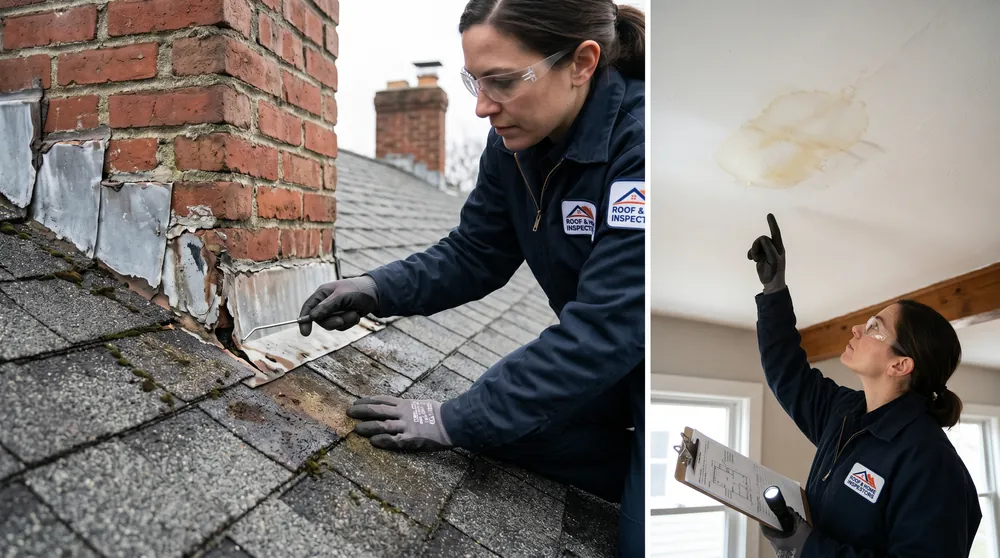
A chimney cuts through the roof, which means several materials have to meet and stay watertight through every season. Metal flashing, masonry, shingles, sealants, and fasteners all expand and contract differently.
In winter, freeze-thaw movement can loosen seams, widen tiny gaps, and stress older details around the chimney base. A flashing problem may still look minor from the outside, while water is already finding a path below the shingles or along the masonry.
Spring rain reveals the hidden path
The stain often appears in April, not because the damage started then, but because that is when enough liquid water finally moves through the opening. Melting snow, wetter spring conditions, and rain on a roof that is still drying out can send moisture into insulation, roof decking, and ceiling cavities.
That is why spring roof leaks near chimneys often feel sudden, even though the weakness has been building since winter. A broader seasonal view helps, which is why seasonal water damage repair tips matter for properties that cycle through freeze, thaw, and storm-driven moisture.
How Chimney Leaks Fool Property Owners
The ceiling spot is usually the end of the water path, not the beginning of it.
Water rarely drips straight down
Water can travel along framing, insulation, decking, and fasteners before it becomes visible indoors. A stain near a fireplace wall or upper ceiling may start higher on the roof than you expect. That is why repainting the spot or patching drywall too early usually fails. The source has to be found first.
A chimney leak is not always just flashing
Flashing is a common culprit, but it is not the only one. Cracked masonry, a damaged chimney crown, failing mortar joints, and roof problems nearby can all send water toward the same ceiling area.
That matters because a stain near a chimney does not tell you which exterior detail failed. It only tells you that moisture made it through the roof assembly.
Older roof details fail quietly
Older housing stock and long-served commercial buildings often have multiple repair layers, aging sealants, and roof transitions that have already been through many winters. April stains are common in these properties because small weaknesses around chimneys can stay out of sight until repeated thaw and rain finally overwhelm them.
The same logic applies to mixed-use properties where a small roof entry point can affect upper ceilings, insulation, and tenant spaces before anyone notices.
What to Do the Day You Notice a Ceiling Spot
Early decisions affect both safety and how much material can still be saved.
Start with safety and containment
If the ceiling is actively dripping, move contents out of the way, collect water, and avoid any wet area near light fixtures or electrical devices. A sagging ceiling needs extra caution because wet drywall can lose strength fast. If the source is still active and you can safely limit further exposure, do that first. Otherwise, keep people out of the area and focus on documenting the damage.
Document the leak pattern before it dries
Take photos of the stain, the room, and anything that changes during rain or thaw. Note whether the spot grows after warm afternoons, overnight freezes, or windy rain. That pattern helps separate a chimney-area roof leak from a plumbing problem.
If you have attic access and it is safe, look for damp insulation, darkened decking, or staining near the chimney path.
More detailed cleanup next steps are useful once the leak is controlled. Start with how to dry a ceiling after water damage and prevent secondary water damage.
Do not seal over a wet ceiling
Painting over the mark or replacing drywall before the roof entry point is corrected can trap moisture and hide a leak that is still active. Interior repair should follow the right order: stop the leak, assess what got wet, dry the affected materials, and then decide what can be repaired or replaced.
If an April ceiling spot keeps returning after thaw or rain, the practical next step is a qualified roof-source assessment paired with an interior moisture evaluation, then targeted water damage restoration or water extraction and drying when wet ceiling materials, insulation, or hidden moisture are part of the loss.
When Drying and Cleanup Become Time-Sensitive
Once moisture reaches insulation, framing, or drywall, delay creates a much bigger problem than the original stain.
Wet insulation and drywall hold moisture longer than they look
A ceiling can look only lightly stained while the cavity above it stays wet. Roof leaks around chimneys can soak insulation, stain framing, and keep feeding humidity into the room even after visible dripping stops.
Clean water damage should be addressed quickly because EPA guidance on water damage and mold prevention points to a 24 to 48-hour response window to help prevent mold growth.
Hidden moisture can turn into mold quickly
That time window matters because April leaks are easy to underestimate. The stain may dry on the surface while the cavity stays damp. When drying is delayed, a roof leak can shift from a small ceiling repair into a bigger cleanup and rebuild decision. That is why the follow-on risk is not just cosmetic staining.
It is trapped moisture, odor, and possible mold growth in concealed areas. Mold after water damage becomes a real issue soon.
How to Lower the Odds Next Winter?
The best prevention work happens before freezing weather returns.
Inspect roof penetrations before freeze season
Chimneys, vents, and roof-to-wall transitions deserve close attention before winter. Any loose flashing, cracked sealant, damaged shingles, or masonry wear should be corrected before snow and ice arrive. Waiting until the first interior stain appears usually means the assembly has already been wet more than once.
Keep drainage paths moving
Clogged gutters, backed-up roof edges, and debris near a chimney can slow drainage and increase the amount of water sitting where it should not. That does not create every leak, but it gives water more time to work into weak details. Roof runoff management matters even more when thaw follows freezing nights.
Watch the first warm rain of spring
The first real thaw-and-rain event often tells you more than a dry winter inspection. Check upper ceilings, attic areas, and chimney-adjacent walls for fresh marks, damp odors, peeling paint, or slight bubbling.
When a stain appears, treat it as a building-envelope issue first and a cosmetic issue second. April ceiling spots usually mean winter has already tested that roof detail, and spring has finished the job.
A chimney-area ceiling stain in April is rarely random. It is usually the visible end of a freeze-thaw problem that finally has enough rainwater to show itself.
The faster you connect the stain to the roof source, the better your odds of keeping the repair limited, drying the area correctly, and avoiding a larger restoration project later.
Frequently Asked Questions
1. Why do chimney-related ceiling spots often show up in April?
Winter can weaken flashing, shingles, sealants, and masonry without creating an obvious indoor leak right away. Once thaw and spring rain overlap, more liquid water moves through those small openings and reaches the ceiling below. That delayed pattern is why April stains often trace back to winter stress, not a brand-new defect.
2. Does a ceiling stain near a chimney always mean the flashing failed?
No. Flashing is a common cause, but water can also enter through damaged masonry, crown defects, mortar deterioration, or nearby roof issues. The visible stain only shows where the moisture finished its path. The actual entry point can be higher or farther upslope than you expect.
3. Is a small brown ring on the ceiling urgent if it is not dripping?
It still deserves prompt attention. Small stains can hide damp insulation or wet roof decking above the ceiling. A non-dripping mark may simply mean the cavity is holding the water instead of releasing it into the room, which can delay discovery while moisture remains trapped.
4. Should you go on the roof yourself to check the chimney flashing?
Not during active rain, snow, or icy conditions. Roof leaks and chimney details are high-risk areas for falls, and spring surfaces can stay slick even when the weather looks mild. Interior documentation and safe visual checks from the ground or attic are the better first steps until a qualified roofer can inspect the exterior.
5. Can chimney leaks cause mold if the ceiling only looks lightly stained?
Yes, because mold risk depends on the moisture that stays in the material, not just what you can see from the room. If insulation, drywall paper, or framing stays damp, mold can begin to grow even when the surface looks only mildly affected. Fast drying matters.
6. What signs suggest the leak is getting worse?
Watch for a stain that darkens or expands after each rain, peeling paint, musty odor, bowed drywall, or moisture near light fixtures. Those signs suggest the problem is active or spreading. A ceiling that begins to sag needs extra caution because the material may be losing strength.
7. Are older homes and older mixed-use buildings more vulnerable to this problem?
They can be. Older properties often have more repair history, older flashing details, aging sealants, and repeated freeze-thaw wear at roof penetrations. Mixed-use buildings also have more ways for water to travel unnoticed before it shows up in a tenant space or upper ceiling.
8. Can clogged gutters or roof-edge ice make a chimney leak worse?
Yes. Slower drainage can keep water on the roof longer and increase the chance that it works into weak joints around penetrations. Ice, backed-up runoff, and debris do not explain every chimney leak, but they can add pressure to already vulnerable roof details.
9. What is the first interior priority after finding the stain?
Start with safety and containment. Keep people away from sagging areas, move contents out of the drip path, and avoid wet zones near electricity. After that, document the location, timing, and growth of the stain so the roof source and the drying plan can be judged more accurately.
10. What kinds of restoration work can follow a chimney-area roof leak?
That depends on what got wet. Some losses stop at minor ceiling drying, while others involve insulation, drywall, framing, odor, or mold concerns. When moisture has spread into hidden areas, the work can include water removal, structural drying, material evaluation, and selected repairs after the entry point is fixed.
Related posts:
![Why Spring Winds Leave Garages With Hidden Water Damage]()
Why Spring Winds Leave Garages With Hidden Water Damage
![Emergency Water Cleanup For When Homeowners Need It Most]()
Emergency Water Cleanup For When Homeowners Need It Most
![What-Items-Should-You-Throw-Away-After-Water-Damage-What-Can-Be-Saved]()
What Items Should You Throw Away After Water Damage & What Can Be Saved?
![how-to-dry-ceiling-water-damage]()
How to Dry a Ceiling After Water Damage (Without Making Things Worse)
![1.-Choose-the-Right-Water-Damage-Restoration-Company]()
How to Choose the Right Water Damage Restoration Company
![4-Water-Damage-Restoration-Tips-You-Must-Know-]()
4 Water Damage Restoration Tips You Must Know
![Benefits of Using a Water Damage Restoration Company]()
Benefits of Using a Water Damage Restoration Company