

Water damage rarely arrives at a convenient time. In Milwaukee-area neighborhoods and other storm-prone properties, it can start with heavy rain, a failed sump setup, a burst pipe during a cold snap, or water pushing in through a roof or window after severe weather. Your first question may be about cleanup, but the next one is often more personal: can you safely stay, or do you need to leave?
The honest answer is that it depends on the water source, the rooms affected, and whether the property still functions safely.
Some losses are limited enough that you can remain in place while the damaged area is dried and repaired. Others create electrical, contamination, or access problems that make temporary relocation the better choice. Water-damaged materials should be cleaned and dried within 24 to 48 hours to help prevent mold growth, which is why early action matters so much in any stay-or-go decision.
When you can often stay
The situations where remaining on-site is usually possible, even if the affected area is off limits.
You can often stay when-
- The damage is limited to one area,
- The water source is not contaminated,
- Utilities remain usable, and the affected zone can be avoided safely.
Examples include a small appliance leak, a supply-line issue caught early, or a localized ceiling leak where the rest of the property remains functional. In those cases, the main disruption is often noise, reduced room access, and the inconvenience of drying and repair work.
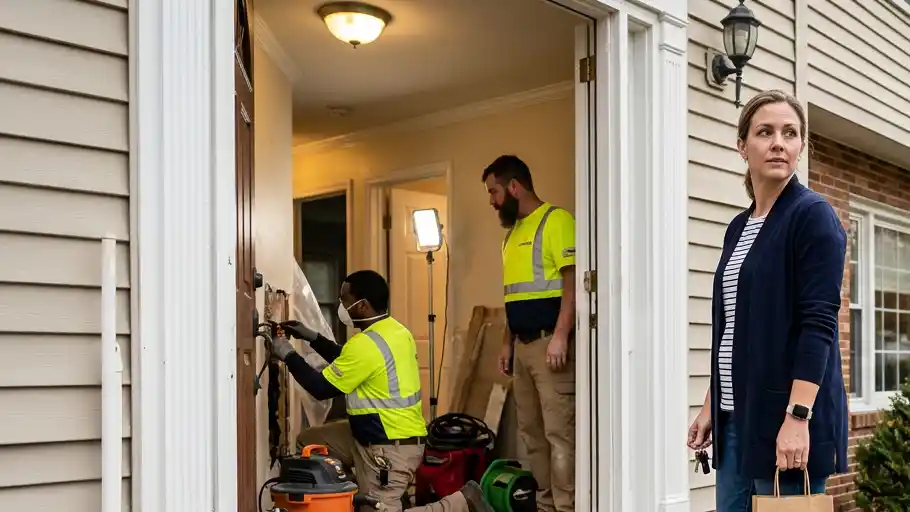
This is also where follow-on needs matter. A provider may need water extraction and drying first, then odor control, selective removal of wet materials, or later repairs. A good plan should make it clear what is happening now, what is being protected, what may need to come out, and what decisions can wait until the structure is dry.
Look into what to do in the first 60 minutes after water damage and how to prevent secondary water damage before deciding how aggressive the response should be.
When leaving is the smarter choice
This section covers the conditions that make temporary relocation safer, simpler, or more realistic.
Leaving is often the better choice-
- When contamination is involved,
- The damage is widespread,
- Essential rooms are affected,
- Or the work area cuts off normal circulation through the property.
Sewage-related water, major basement flooding, active roof exposure after a storm, and burst-pipe losses that affect multiple floors can all push the decision toward temporary relocation. The same is true if children, older adults, tenants, pets, or medically sensitive occupants would struggle with noise, moisture, limited access, or cleanup disruption.
It is also worth remembering the seasonal context. In this region, flood and storm losses are not theoretical. Flooding is the state’s most common and most costly natural disaster, and warmer winters can also contribute to winter flooding from snowmelt and ice dams.
That pattern is one reason you should treat occupancy as a safety decision, not just a convenience decision.
Questions to ask before you hire a restoration company
Use these questions to compare providers and understand whether the plan actually fits your property and the type of water loss.
- What type of water loss do you believe this is, and how does that affect whether I should stay?
- Which rooms or building areas should be avoided right now?
- Is this a localized drying project or a larger mitigation and restoration project?
- What immediate safety concerns do you see, if any?
- What follow-on services might be needed after water removal and drying?
- How will you document visible damage, affected rooms, and next steps?
- How will you communicate changes in scope once materials begin drying?
- Can you explain what can likely be saved versus what may need removal?
- Have you worked on occupied residential, rental, and commercial properties like this before?
- What should I do today to reduce further damage before work begins?
- What conditions would make you recommend relocation after the initial assessment?
Know what to look for in a water damage restoration company, and whether water-damaged drywall can be saved or should be replaced, to understand the value of asking detailed, property-specific questions before approving a plan.
Red flags to avoid
This section helps you spot weak planning and vague communication before a stressful project gets worse.
- Be cautious if a company gives you a one-size-fits-all answer about staying or leaving without asking where the water came from, what rooms are affected, or who occupies the property.
- Be cautious if there is no room-by-room explanation, no visible damage mapping, and no clear outline of what happens first versus later.
- Another red flag is minimizing contaminated water, electrical risk, or active roof exposure just to keep the project moving.
Vagueness is the problem. You should not have to guess whether the plan is cleanup only, drying plus selective removal, or a broader restoration job. Good decision support is calm, practical, and specific.
What good looks like
The qualities of a strong restoration experience so you can compare providers with confidence.
Good restoration starts with a clear explanation of-
- Whether you can stay,
- Which areas are unsafe or unusable and why,
- It includes documentation such as photos, room-by-room notes, visible damage mapping, and a practical discussion of what needs immediate action versus what can be decided after drying.
It also means protecting unaffected areas, reducing the spread of moisture or contamination, and giving you next-step communication you can actually follow.
For many owners and managers, the best provider is not the one making the biggest promises. It is the one helping you make the clearest decisions.
If you are dealing with basement-heavy homes, older housing stock, rental units, mixed-use properties, or commercial spaces with access concerns, we can assess the situation, explain whether staying makes sense, and guide the next step with a restoration plan that fits the damage.
Call (414) 571-9977
Frequently Asked Questions
1. Do you always need to leave during water damage restoration?
No. Many water losses are limited enough that you can remain on-site while the affected area is dried and repaired. The decision usually depends on the water source, the rooms affected, whether utilities still work, and whether safe access remains through the property.
2. When is it not safe to stay after water damage?
It is usually not wise to stay when water is near electrical systems, when ceilings or floors may be compromised, when sewage or contaminated water is involved, or when the damage makes bathrooms, sleeping areas, or pathways unusable. Those are practical relocation triggers, even before repairs begin.
3. Can you stay if only one room is affected?
Often, yes. If the damage is contained to one room and the rest of the property remains usable, staying can be realistic. The key is whether that area can be avoided safely while drying, cleanup, and any selective removal happens.
4. Does contaminated water change the decision?
Yes. If the water came from a sewage backup or another contaminated source, the decision becomes more safety-driven. In that situation, cleanup may also require disinfection, odor control, and a more careful approach to affected materials and occupancy.
5. How quickly should water-damaged areas be addressed?
Quickly. Water-damaged materials should generally be cleaned and dried within 24 to 48 hours to help prevent mold growth. That is why delays can turn a smaller incident into a larger restoration decision.
6. What if the damage started in the basement after heavy rain?
Basement losses can sometimes allow you to stay upstairs, but that depends on whether the water is clean or contaminated, whether the basement is the only affected area, and whether utilities or shared pathways run through that space. Lower-level events often need a careful assessment before you decide.
7. Can renters or tenants stay during the work?
Sometimes, but tenant-occupied properties need especially clear communication about access, noise, safety zones, and which rooms remain usable. The right answer depends on the scale of the loss and whether safe daily occupancy is still practical.
8. What should a restoration company document before work moves forward?
You should expect photo logs, room-by-room notes, visible damage mapping, and a clear explanation of what happens first. Good documentation helps you understand the scope, protects decision-making, and makes it easier to track what changes as drying progresses.
9. How do you know whether you need broader restoration, not just drying?
If multiple rooms are affected, if materials need removal, if odor or contamination is present, or if the event started with storm-related exposure, basement flooding, or frozen-pipe damage, the project may move beyond simple drying into broader restoration work.
10. What should you expect from us if you call?
You should expect a clear explanation of the situation, what needs attention first, and whether staying is realistic for your property and the kind of damage involved.
Related posts:
![Basement-Flooding-First-3-Steps-Before-Help-Arrives]()
Basement Flooding – First 3 Steps Before Help Arrives
![Mechanical Room Water Damage Risks Before Summer]()
Mechanical Room Water Damage Risks Before Summer
![5 Ways Water Gets Into Your Basement]()
5 Ways Water Gets Into Your Basement
![How To Shut Off Your Water Supply]()
How To Shut Off Your Water Supply
![Can-Water-Damaged-Drywall-Be-Saved-or-Should-It-Be-Replaced]()
Can Water-Damaged Drywall Be Saved or Should It Be Replaced?
![Preventing-Secondary-Water-Damage-After-Initial-Cleanup]()
Preventing Secondary Water Damage After Initial Cleanup
![How-to-Protect-Your-Furniture-from-Flood-Water]()
How to Protect Your Furniture from Flood Water