

In Milwaukee-area neighborhoods, water damage often starts with more than one problem at once. A basement can take on water after heavy rain, a sewer line can back up when systems are stressed, a roof leak can follow a severe thunderstorm, and a burst pipe can soak walls and floors during a hard winter cold snap.
In basement-heavy homes, older buildings, first-ring suburbs, and mixed-use corridors, the wrong first move can turn a manageable cleanup into a larger drying, demolition, and repair job. Water damage is not just about what you can see on the surface. Moisture spreads into drywall, flooring, trim, insulation, stored contents, and lower-level rooms faster than most people expect. That is why knowing what not to do matters just as much as knowing what to do.
Do not treat water damage like a simple spill
The first mistakes usually happen in the first hour, when you assume the problem is smaller or cleaner than it really is.
Do not walk into a wet area before you think about power and stability
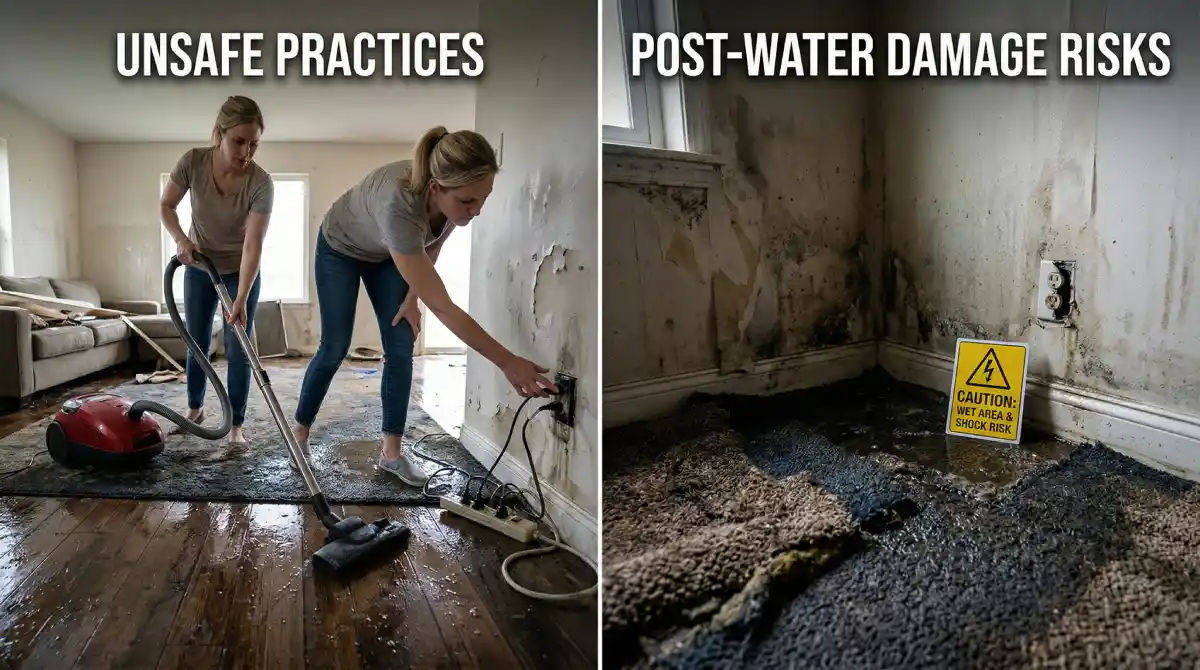
If water is near outlets, appliances, extension cords, power strips, or a sagging ceiling, do not step in and start cleaning. Floodwater and standing water can create electrocution risks, and wet ceilings or softened materials may fail without warning. Safety comes before salvage, especially in basements, utility rooms, and storm-damaged upper floors.
Do not assume all water is clean enough to handle casually
A broken supply line is not the same as stormwater, drain overflow, or sewage backup. Once water comes through a floor drain, sewer line, or storm-driven entry point, the cleanup decision changes. You should limit contact, keep people and pets out, and avoid treating contaminated water like a routine mopping job. That distinction becomes even more important after large rain events, basement backups, and lower-level flooding
For a broader look at where these situations fall, what water damage is covered by restoration services is a useful reference.
Do not use household vacuums, wet electronics, or random appliances
A common mistake is grabbing whatever is nearby and trying to force the cleanup forward. Household vacuums are not for standing water, and electrical items that have come into contact with water should not be turned back on casually. That includes televisions, ceiling fixtures, and other household appliances in wet areas. Quick improvisation can create a second emergency.
Do not slow down drying or trap moisture inside the building
Most secondary damage starts when visible water is gone, but hidden moisture is still active inside finishes and cavities.
Do not wait to start drying because it “looks better.”
The biggest delay mistake is assuming the danger has passed once the puddles are gone. Moisture left in drywall, flooring, wood trim, insulation, and subfloors keeps moving even when the room looks improved. That is why the drying window matters so much after leaks, basement flooding, storm intrusion, and frozen-pipe losses.
Knowing how water damage restoration is performed, step by step, helps understand stabilization, water removal, and drying instead of cosmetic cleanup. The mold risk rises fast when drying is delayed.
Do not close doors, shut windows, and hope the room dries on its own
Water damage recovery is not helped by sealing a damp room off and checking again tomorrow. Moisture needs to be managed, not ignored. That is especially true in basement-heavy homes, utility areas, and rooms with layered finishes that can hold water behind the surface. If you have a basement event after heavy rain, basement flooding repair and cleanup is an ideal solution because lower-level losses often spread farther than they first appear.
Do not repaint, patch, or replace finishes over damp materials
Fresh paint, new baseboards, replacement flooring, and quick patchwork can make the room look normal while moisture is still trapped inside. That can lead to staining, swelling, odor, adhesive failure, and repeat demolition later. Drying has to come before finishing decisions, not after them.
Do not make cleanup and salvage decisions blindly
The wrong sorting and documentation choices can create bigger repair problems and harder recovery decisions later.
Do not throw away documentation with the debris
Before you start pulling wet contents outside or filling contractor bags, document the loss. Take photos, note what got wet, and separate likely salvageable items from obvious failures. That matters for homeowners, renters, facility managers, and property managers because water rarely respects room lines.
A single leak can affect cabinets, wall bases, stored contents, and adjacent rooms before you fully see the spread.
Do not rip out everything the moment you see water
Some materials fail quickly. Others may dry and be evaluated before you decide what stays or goes. Uncontrolled tear-out can destroy salvageable finishes, while delayed removal of truly saturated materials can worsen the loss. The smarter move is to sort by condition, contamination, and how deeply the moisture traveled.
Do not leave wet contents pressed against walls, floors, or base cabinets
Furniture, storage bins, textiles, cardboard, and other belongings can hold moisture against building materials and slow drying. That is one reason lower-level events in older housing stock become more complicated than expected.
If you are dealing with a house or building where water may have traveled farther than it looks, looking into how water damage affects homes, and older homes in particular, can help you understand hidden spread and selective salvage decisions.
Do not ignore the bigger property picture
Water damage is often part of a larger event, not a one-room inconvenience.
Do not assume one wet area means one simple repair
A roof leak after hail or wind, a frozen pipe behind a wall, or rainwater in a basement can all involve more than the visible room. Water may move into wall cavities, insulation, first-floor framing, or neighboring tenant spaces.
In commercial and mixed-use settings, this can interrupt staff, customers, tenants, and operations long before the finishes look badly damaged.
Do not forget that basements and older buildings dry differently
Older properties often have more concealed pathways, more layered materials, and more ways for water to stay trapped. Basements may also take on water from more than one direction, including seepage, floor cracks, overwhelmed drains, and repeated dampness after major rain. That is why visible drying is not the same as actual drying.
Do not reopen the space too soon just because it looks usable
This mistake shows up in homes and in commercial spaces. A room that looks dry enough to reoccupy may still hold moisture, odor, contamination concerns, or materials that are not ready for finish work.
\Water damage recovery is part cleanup, part risk control, and part decision-making. The faster you stop guessing, the less likely you are to repeat the same problem twice.
The simplest takeaway is this: do not rush to make the damage look better before you make it stable, dry, and properly understood. In a region where heavy rain, basement flooding, sewer stress, storm intrusion, and winter pipe failures all show up in the same service footprint, the wrong shortcut usually costs more than the right first step.
Frequently Asked Questions
1. What should you avoid doing first if your basement floods after heavy rain?
Do not step into the basement water until you have considered electrical hazards, contamination, and how the water got in. Rain-related basement flooding may involve seepage, overloaded drains, or stormwater entering through multiple paths. Start by protecting people and pets, then document the damage before moving into cleanup decisions.
2. Should you enter a wet room if outlets or appliances are near the water?
Not until power concerns are addressed safely. Water near outlets, appliances, or service equipment can create electrocution risk, especially in lower-level rooms and utility spaces. A wet floor is not just a cleanup issue when energized equipment may still be involved.
3. Can you use a household vacuum on standing water?
No. Household vacuums are not meant for standing water after a water loss. Using the wrong equipment can damage the appliance and add safety risk, especially when the source or contamination level is unclear. Water removal needs to match the condition of the space, not just the urgency you feel.
4. Why is waiting for such a big mistake after water damage?
Because the visible water is only part of the problem. Moisture keeps spreading into drywall, flooring, trim, insulation, and subfloors after the surface starts to look better. Once drying is delayed, the odds of swelling, odor, material breakdown, and mold rise quickly.
5. Is rainwater in a basement treated the same way as a sewer backup?
No. A clean supply-line leak, stormwater entry, drain overflow, and sewage backup do not create the same cleanup choices. Sewer and drain-related water can involve contamination that changes how you handle room access, contact, disposal, and what materials may still be salvageable.
6. What should you avoid doing after a frozen pipe bursts?
Do not assume the damage is limited to the visible drip or puddle. Frozen-pipe losses often soak hidden wall cavities, ceilings, insulation, and flooring before you fully discover them. Avoid jumping straight to patching and painting before the source, moisture spread, and drying priorities are clear.
7. Can you leave wet drywall or flooring in place and see what happens?
That is risky. Some materials may be dried and evaluated, but others fail quickly once saturated or contaminated. Leaving wet materials in place without a real drying plan can worsen odor, swelling, and mold risk, while tearing out everything too early can create avoidable repair work.
8. Should you start repairs before the structure is fully dry?
No. Cosmetic repairs done over damp materials can trap moisture and lead to repeat failure later. New flooring, paint, trim, or patchwork can make a room look recovered while the real problem is still active behind the surface. Drying and evaluation should come first.
9. What is the biggest mistake in a commercial or mixed-use water loss?
Treating it like a small inconvenience instead of a building disruption event. Water can affect shared walls, tenant spaces, inventory, access routes, electrical systems, and customer-facing areas beyond the visible damage. Early decisions should focus on containment, documentation, and safe recovery planning, not just getting the room open again.
10. What should you avoid after wind or hail lets water into the building?
Do not focus only on the point where the water is dripping. Roof and exterior-envelope openings can allow water to travel into attic spaces, ceilings, wall cavities, and upper-floor finishes. The visible stain or puddle may be the end of the path, not the beginning.
11. Why do older homes and basement-heavy buildings need extra caution?
Because water often spreads farther and hides longer in layered materials, plaster, trim assemblies, older basements, and enclosed cavities. What looks like a minor event can involve seepage, framing, insulation, or concealed damage that is not obvious on day one. Visible dryness is not a reliable test in older properties.
12. When should you stop DIY cleanup and move to qualified help?
You should stop guessing when water has reached walls, flooring, cabinets, lower-level rooms, multiple rooms, or anything that may be contaminated. The same goes for frozen-pipe losses, sewage backup, storm intrusion, and situations where hidden moisture is likely.
Once the problem has moved beyond a small, clean, surface-only spill, drying and restoration decisions become more technical.
Related posts:
![Water Damage and Your Insurance Coverage]()
Water Damage and Your Insurance Coverage
![Why-Certified-Technicians-Matter-in-Water-Damage-Restoration]()
Why Certified Technicians Matter in Water Damage Restoration
![Freeze-Thaw-Damage-Around-Chimneys-and-Flashing-Why-Ceiling-Spots-Show-Up-in-April]()
Ceiling Spots Near Chimneys: Freeze-Thaw Damage
![3.-Seasonal-Water-Damage-Restoration-Repair-Tips]()
Seasonal Water Damage Repair Tips for Storms and Freezes
![9.-4-Health-Effects-of-Mold-From-Water-Damage]()
4 Health Effects of Mold From Water Damage
![Reasons You Need Professional Clean-Up For Storm Water Damage]()
Reasons You Need Professional Clean-Up For Storm Water Damage
![Back-to-School Moisture Warning Signs in Schools]()
Back-to-School Moisture Warning Signs in Schools