Removing mold from a house begins with deciding whether the task is suitable for homeowner cleanup. The answer depends on the material, affected area, water source, access, and occupants' circumstances. A small patch is not automatically a simple job, and a strong cleaner is not a substitute for that decision.
For Wisconsin homeowners, the safest plan addresses moisture first, avoids uncontrolled disturbance, and uses qualified help when conditions exceed a limited surface task. This guide explains the boundaries without turning a general article into instructions for dismantling contaminated building materials.
Decide whether the problem fits homeowner cleanup guidance
Area size is a starting point rather than the whole test
The EPA's mold-cleanup guidance states that many moldy areas below roughly ten square feet can be handled by homeowners. It also identifies exceptions involving substantial water damage, contaminated water, HVAC concerns, and health questions.
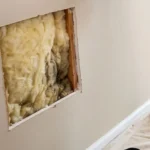
Use the complete guidance, not just the square-foot figure. Growth inside a wall, an uncertain water source, or material that cannot be cleaned appropriately can change the work even when the visible patch is small.
Occupant health and access can change the decision
People with relevant health concerns may need to avoid cleanup exposure and seek healthcare advice. A difficult-to-reach ceiling or cramped enclosure can also make a task unsuitable, independently of the growth's size.
If you cannot work safely or define the affected area, arrange an assessment before disturbing the material. There is no benefit in creating a larger cleanup problem merely to confirm what lies behind a finish.
Find and correct the source of moisture
Leaks, repeated condensation, and persistent dampness can all support growth. Investigate the actual source instead of choosing a cleaner based on the stain's color.
- Check whether plumbing or roof leakage remains active.
- Note recurring condensation on windows or cold surfaces.
- Record prior flooding or wet-material exposure.
- Look for a pattern tied to rainfall or fixture use.
- Ask which trade should correct the identified cause.
The EPA's moisture-control resource explains why cleanup and source correction belong together. Removing the visible patch while keeping the surface damp leaves the conditions for recurrence in place.
Match any cleanup method to the material
Suitable hard surfaces differ from damaged porous materials
Limited growth on an appropriate hard surface may be cleaned following authoritative guidance, with proper protective equipment and drying. Porous material can present a different problem because growth or water damage may extend beyond the accessible surface.
Do not assume drywall, insulation, upholstery, and tile can all be treated with the same product. When retention is uncertain, ask a qualified provider to explain the material decision.
Follow guidance instead of inventing chemical mixtures
Never mix cleaners, including bleach with ammonia or other products. Follow the selected product's instructions and the cleanup guidance appropriate to the task. Using more chemicals does not prove the material is clean or suitable to retain.
|
Condition |
DIY boundary to consider |
|
Small, accessible growth on a suitable hard surface |
May fit homeowner guidance with precautions |
|
Significant water damage |
Requires a broader material and moisture evaluation |
|
Suspected sewage involvement |
Not a routine household mold-cleaning task |
|
Hidden growth or HVAC concern |
Obtain qualified investigation and advice |
|
Health or access concerns |
Reconsider participation and work conditions |
Avoid spreading debris while investigating the problem
Do not sand, dry-brush, or casually remove suspect building materials. Ordinary fans directed across growth can move debris into other areas. Access and cleanup should follow a plan proportionate to the condition.
For a professional evaluation, discuss mold removal services with Emergency Restoration Specialists at (414) 571-9977. Describe the visible area and moisture history without assuming that the patch defines the whole job.
Ask what the proposed scope includes
A provider should explain which areas will be evaluated, what materials can stay, what requires removal, and what source correction remains outside its service. Clarify whether rebuilding is included or separately estimated.
Keep evidence before nonurgent material changes
Photograph accessible conditions and preserve repair records. If insurance is involved, ask the insurer about documentation and inspection requirements without delaying necessary safety measures.
- Keep people and pets away from active work.
- Avoid covering growth with paint as a shortcut.
- Confirm the moisture source has been addressed.
- Ask how the area will be evaluated afterward.
- Report recurrent dampness or discoloration.
Judge the result by conditions rather than fragrance
A better smell does not establish that concealed materials are dry or that growth has been removed appropriately. Finishes should be restored only after the underlying conditions are ready for that phase.
The ERS team can discuss a property-specific scope when DIY boundaries are unclear. Call (414) 571-9977 for recurring, extensive, or concealed concerns, and consult a healthcare professional separately about symptoms.
Frequently Asked Questions
Is every patch under ten square feet a DIY job?
No. That EPA size guidance has important exceptions. Significant water damage, contamination, HVAC involvement, health concerns, and difficult access can all change the decision.
Can I clean mold before fixing the leak?
The source needs attention as part of the response. Cleaning alone may leave moisture supporting recurrence, so coordinate the tasks rather than treat the visible patch as the entire problem.
Can bleach clean every moldy material?
No single product is suitable for every surface or condition. Follow authoritative guidance and product instructions, and obtain advice when damaged or porous materials need evaluation.
Should I mix cleaners for a stronger result?
No. Mixing products can create hazardous reactions. Use only an appropriate product as directed and avoid improvised chemical recipes.
Can I use a fan across visible growth?
Do not use ordinary airflow as an improvised cleanup method across suspect growth. It can move debris; drying and containment decisions should fit the actual material conditions.
Is removing drywall always necessary?
Not always, but some affected materials cannot be retained appropriately. Ask for a reason based on condition and scope rather than an automatic decision from a photo.
Does paint seal the problem permanently?
Painting is not a substitute for cleanup and moisture correction. It may hide changes while the source remains active, complicating later evaluation.
Should I clean mold inside an air handler?
Suspected HVAC involvement deserves qualified system and remediation advice. Avoid casual disturbance or operating a system that may spread contamination without an appropriate evaluation.
How do I know whether the work is complete?
Ask how the affected area, materials, and moisture source were evaluated. Odor improvement alone is not a sufficient basis for determining readiness for repairs or normal use.
What if the growth returns quickly?
Reevaluate the moisture pathway and material condition. Recurrence can indicate an unresolved source or a new problem, so another surface wipe may not address what changed.
Related posts:
![When Mold Testing Isn’t The First Step: What Wisconsin Property Owners Actually Need To Fix First]()
When Mold Testing Isn’t the First Step: What Wisconsin Property Owners Actually Need to Fix First?
![MoldHealthProblems-1]()
Can Mold Cause Health Problem
![Protect-your-family-from-Mold-danger-768x432-1]()
Protect Your Family From Mold Danger With These Tips
![Mold Removal Is A Challenging Process]()
Mold Removal Is A Challenging Process
![How to Check for Mold in Your Home]()
How to Check for Mold in Your Home
![Commercial Mold Remediation: What Forgotten Stock Rooms Can Hide]()
Commercial Mold Remediation: What Forgotten Stock Rooms Can Hide
![Seasonal-Mold-Spikes-What-Wisconsin-Residents-Should-Know]()
Seasonal Mold Spikes: What Wisconsin Residents Should Know