Frozen pipes are not always visible. Often, the first clue is a change at a faucet during cold weather, followed by concern about a line hidden behind a wall. The safest response begins with observations rather than aggressive thawing.
These seven signs can help Wisconsin homeowners recognize a possible freeze. None proves the diagnosis alone, and some point to damage rather than an intact frozen line. Compare what you see with the weather, the plumbing layout, and any known supply interruption.
Start with changes in the water supply
Sign 1: One faucet produces only a trickle
Reduced flow during severe cold can suggest ice restricting a supply line. Check whether both hot and cold sides are affected and whether nearby fixtures behave normally. Report the pattern to a plumber instead of forcing the faucet.
The American Red Cross frozen-pipe resource identifies a trickle as a possible warning. Supply faults and closed valves remain other explanations, so context matters.
Sign 2: A particular fixture has no flow
A fixture on an exterior wall may fail while interior fixtures still work. That pattern helps narrow the search, but it does not tell you whether a pipe has already cracked or where the frozen section begins.
Sign 3: Several fixtures lose supply together
Multiple affected fixtures may share a vulnerable line. They can also be affected by a utility outage or building-level problem. Check for a known interruption before assuming all of the symptoms come from freezing.
Examine accessible plumbing without disturbing it
Sign 4: Frost appears on an exposed line
Frost on an accessible pipe during cold weather can support concern about freezing conditions. Do not chip it away or apply a torch. Inspect only from a safe position and consider whether the pipe's surrounding space is unheated.
Sign 5: A pipe looks deformed or damaged
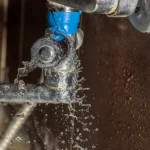
An unusual bulge, split, or displaced fitting warrants qualified evaluation. Treat it as possible damage rather than something to test by restoring pressure. Locate the water shutoff and obtain plumbing help if leakage is present.
Sign 6: New water appears near a vulnerable run
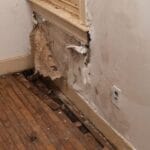
Moisture beside a cold exterior wall or below exposed plumbing can indicate a leak, including a freeze-related failure. It can also come from another source. Keep clear of electrical hazards while arranging source identification.
Sign 7: Leakage begins when flow returns
An ice blockage may temporarily limit water escaping through a damaged section. Thawing can reveal the break. New dripping or stains after flow improves deserve attention even if the fixture now works normally.
If that happens, frozen-pipe water damage services address the affected interior. Call Emergency Restoration Specialists at (414) 571-9977.
Use the pattern to choose the next step
|
What you observe |
What to investigate next |
|
One cold-weather fixture loses flow |
Local pipe exposure or fixture/supply defect |
|
Entire property loses water |
Utility, valve, or shared supply conditions |
|
Visible split with moisture |
Safe shutoff and qualified pipe repair |
|
Water beside electrical equipment |
Safety assessment before entry or equipment use |
|
Flow returns but a wall becomes wet |
Possible damage exposed during thawing |
Avoid treating unusual noises, odors, or pipe color as a conclusive freeze test. Useful diagnosis combines fixture behavior with direct professional evaluation where needed.
Make safe observations before the plumber arrives
Gather information that helps the visit without opening hazardous areas. Photos of an accessible line and the affected fixture can be useful; a concealed pipe does not need to be exposed by the homeowner.
- Note when the flow changed.
- Identify which fixtures still work.
- Record whether hot, cold, or both supplies are affected.
- Mention previous freezing in the same location.
- Report visible leaks and wet finishes.
If there is a leak, stop the supply where safely possible. Do not operate electrical equipment in water or enter an unstable area simply to reach a valve.
Monitor the building after the plumbing is restored
A normal faucet does not confirm intact materials
Check accessible joints and nearby cabinets after flow returns. Watch for stains or dampness in rooms below the vulnerable run. These observations may reveal damage that was not apparent during the freeze.
The ERS website provides restoration information for property damage. When water has entered a cavity or soaked a finish, ask how the scope will evaluate the affected materials rather than focus only on the repaired line.
Keep a record for the next winter
Document the freeze location and the plumber's findings. A repeat problem deserves an evaluation of pipe placement, drafts, insulation, and heat distribution.
- Review appropriate pipe protection with a plumber.
- Check the main shutoff's accessibility.
- Plan monitoring during travel.
- Maintain suitable indoor heat during cold weather.
- Address damaged finishes only after moisture concerns are resolved.
For water remaining after a thaw or repair, call (414) 571-9977 to discuss restoration assessment.
Frequently Asked Questions
Does a trickling faucet prove the pipe is frozen?
No. Freezing is one possibility during cold weather, but other supply problems can reduce flow. Compare fixtures and obtain qualified help when the cause remains unclear.
Can frozen pipes be hidden behind walls?
Yes. A line in a cold cavity can be affected without visible frost indoors. Do not cut into the wall or apply improvised heat to locate it.
Should I check every faucet?
Comparing accessible fixtures can help identify the pattern. The information is useful for a plumber, especially when one section of the home is affected and another is not.
Is frost on a pipe always an emergency?
It indicates cold conditions worth investigating, but the immediate concern depends on damage, flow, and hazards. A leak or visible defect needs a different response from an intact accessible line.
Can a pipe burst without leaking immediately?
Damage may not become obvious until ice melts and pressure returns. Continue observing accessible areas after thawing instead of treating restored flow as the end of the incident.
What if only the hot-water side stops?
That pattern can help locate the affected supply path, but it does not establish the cause. Tell the plumber which side changed and whether other hot-water fixtures still work.
Should I use a torch to confirm a freeze?
No. Open flames create fire and material-damage hazards. Diagnosis should not require exposing the building to an unsafe thawing method.
What if the problem affects an apartment building?
Notify the property manager promptly. Shared supply lines and shutoff arrangements need coordinated attention, and an individual tenant should not alter building plumbing without authorization.
Do musty odors identify frozen pipes?
No. They may suggest moisture but cannot establish the plumbing cause. Investigate dampness separately from the fixture symptoms and report both observations.
When is restoration needed after a freeze?
When escaped water affects building materials, plumbing repair may not resolve the full damage. Wet drywall, insulation, cabinets, or flooring can require separate assessment and drying.
Related posts:
![The Do's And Don'ts Of A Water Damage Emergency]()
The Do's And Don'ts Of A Water Damage Emergency
![How to Dry Out Electrical Equipment After Water Damage (Safely)]()
How to Dry Out Electrical Equipment After Water Damage (Safely)
![8.-How-do-professionals-stop-water-from-spreading]()
How Pros Stop Water from Spreading
![How Water Can Damage a Residential or Commercial Property]()
How Water Can Damage a Residential or Commercial Property
![Water-Damage-in-Newly-Built-Homes-Is-It-Common]()
Water Damage in Newly Built Homes: Is It Common?
![How-to-Detect-Hidden-Water-Damage-Inside-Walls-and-Floors]()
How to Detect Hidden Water Damage Inside Walls and Floors (Before It Turns Into a Bigger Problem)
![Emergency Water Cleanup For When Homeowners Need It Most]()
Emergency Water Cleanup For When Homeowners Need It Most