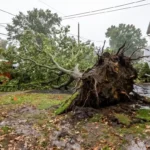
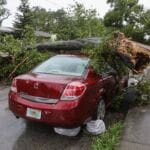
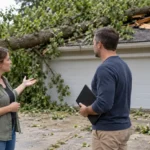
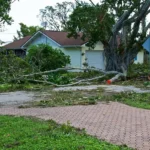
If a tree falls on your house, protect people before assessing the roof or trying to move branches. The impact can damage structural elements, utilities, and weather protection, while the tree itself may remain unstable. Leave affected spaces when conditions require it and call emergency services for immediate hazards. Once safety and access are established, coordinate professional tree removal, building protection, documentation, and repairs as distinct parts of the recovery.
Identify immediate hazards from a safe position
Do not stand beneath a damaged ceiling, walk on the affected roof, or enter a room with unstable material. If there is fire, a suspected gas leak, injury, or immediate danger, contact emergency services from a safe place. The correct route out depends on the conditions; avoid an exit near a fallen line or unstable tree.
Power lines require particular caution. OSHA's downed electrical wire guidance explains that fallen lines can remain energized even without visible sparking. Stay clear of lines and anything in contact with them. Do not touch a tree, fence, or equipment that may be involved, and contact the utility or emergency services as appropriate.
Do not cut the tree off the building yourself
A loaded tree can shift unexpectedly
A tree resting on a roof is not the same as loose yard debris. Branches and trunk sections may be supporting weight or under tension. Cutting can change that balance and cause movement toward the building or worker. A household chainsaw does not provide the planning, rigging, or access needed for a complex removal.
Removal and building assessment need coordination
The tree crew and appropriate building professionals may need to coordinate the sequence. Ask whether the affected structure needs assessment before removal and what protection will follow. Taking the tree away does not establish that the roof, walls, or utilities are ready for normal use.
|
Concern |
Appropriate next contact |
|
Injury or immediate danger |
Emergency services |
|
Downed or damaged lines |
Utility and emergency responders as needed |
|
Tree loading the house |
Qualified tree removal professionals |
|
Structural concerns |
Appropriate building or structural professional |
|
Water entering damaged rooms |
Restoration team after safe access |
Document damage without approaching the hazard
Photograph the tree and affected areas only from a safe location. Record the date and time, storm conditions, and rooms visibly affected. Do not climb onto the roof for a better image or enter a restricted room to inventory belongings. Contractors and appropriate specialists can document areas that are not safely accessible to the household.
Notify the insurer promptly and ask what records are needed. The Wisconsin insurance claims guide provides general consumer guidance. Coverage for building damage, tree removal, contents, and temporary needs may involve different terms or limits. Keep those questions separate rather than assuming one approved cost covers the entire recovery.
- Take safe photos of the overall impact and visible damage.
- Record authority and utility instructions.
- Save estimates, receipts, and scope changes.
- List affected rooms and belongings when practical.
- Ask the insurer about necessary emergency protection.
Protect openings only through safe arrangements
A damaged roof or wall can allow rain into the home. Temporary weather protection may be important, but an unstable roof is not a place for homeowner tarping. Qualified professionals should determine the access and method. Ask whether temporary protection is included in the removal or restoration scope and who will maintain it until permanent repairs are complete.
RemoveWater's fallen tree removal services address storm-related tree recovery and property protection needs. Discuss the impact location, known utility concerns, and access restrictions before an assessment. Do not rely on a promised universal response time; the actual conditions determine how the work must be arranged.
Check for water and interior damage after access is cleared
A roof opening can affect more than the room directly below it. Water may reach insulation, ceiling materials, flooring, or lower areas. A stain appearing later can signal a path that was not obvious during the first inspection. Appropriate moisture assessment helps establish which materials need drying, removal, or repair.
Do not close a cavity or repaint a stain before the source and material conditions are addressed. Ask the team to distinguish tree removal, roof repair, interior restoration, and utility work in the project plan. Several trades may be involved, and the endpoint should be a complete recovery rather than an empty yard beneath a damaged roof.
Questions about a neighbor's tree come later
If the tree came from another property, record the facts and communicate calmly with the neighbor. Ownership alone does not settle every payment or liability question. Cause, prior condition, knowledge, policies, and applicable requirements may matter. Let insurers review the event and seek legal guidance when responsibility is disputed.
Immediate protection should not wait for an argument about whose tree it was. Keep necessary work documented and avoid changing evidence unnecessarily. Written findings and safe photographs provide a better basis for later decisions than a quick accusation made while the structure remains exposed.
- Confirm safe access before arranging interior work.
- Coordinate removal with temporary building protection.
- Request moisture checks where rain or debris entered.
- Clarify which repairs require separate trades.
- Keep payment questions organized without delaying urgent safety steps.
For property recovery help, contact RemoveWater at (414) 571-9977 after immediate hazards have been reported to the appropriate responders.
Frequently Asked Questions
A tree fell on my house. What should I do first?
Protect people, avoid affected spaces and utility hazards, and call emergency services for immediate danger. Arrange professional assessment before removal or roof access.
Can I cut away the branches myself?
Avoid DIY cutting when a tree loads the building or involves unstable sections. Removing support can shift weight and create additional hazards.
What if a power line is in the tree?
Stay clear of the tree, line, and connected objects. Treat the line as energized and contact the utility or emergency responders as appropriate.
Can I stay inside the house?
That depends on structural, utility, and access conditions. Follow responder and qualified professional guidance rather than assuming unaffected-looking rooms are suitable.
Should I tarp the roof immediately?
Arrange safe professional protection. Do not climb a damaged or unstable roof; the access method must fit the actual building condition.
Will insurance pay for tree removal?
Policy terms, damage, limits, and circumstances determine payment. Ask about removal and building repairs separately instead of assuming unlimited coverage.
What if the tree belonged to my neighbor?
Document the facts and contact insurers. Ownership alone does not resolve every responsibility question; disputed liability needs individual professional advice.
Is the house repaired once the tree is gone?
No. Roofing, structure, utilities, and interior materials may still need assessment and repair after removal creates access to the damaged areas.
Why check for moisture after the storm?
Rain can enter damaged openings and travel into concealed materials. Appropriate checks help guide drying and repairs before finishes hide the condition.
Who can discuss tree-related property recovery?
Call (414) 571-9977 with the impact location, access status, and known utility hazards after emergency concerns have been addressed.