A sewage backup needs two kinds of help: someone to stop the plumbing problem and someone to remove contamination from the building. A plumber may clear the obstruction, while a restoration team handles affected rooms and materials. When asking who cleans up sewage in a basement, separate these jobs so fixing a drain does not leave contaminated flooring behind. Payment is another question, determined by the cause, policy, property ownership, and any applicable agreement.
First, Keep People Out of the Affected Area
Sewage is not ordinary spilled water. Keep children and pets away, avoid walking through it, and stop using fixtures that may feed the backup. Do not assume clear-looking water from a floor drain is sanitary. If standing water may contact electrical equipment, stay out and request qualified electrical guidance rather than reaching for a switch from the wet area.
The CDC's wastewater safety guidance warns against contact with water potentially contaminated by sewage. Protective gloves alone do not resolve every hazard in a flooded basement. The depth, electrical conditions, and possibility of concealed contamination all matter when deciding who can enter safely.
- Keep the basement closed to routine household traffic.
- Pause laundry, showers, and other affected plumbing use.
- Photograph visible damage from a dry, safe location.
- Record when the backup began and which fixtures overflowed.
- Contact the appropriate plumbing and cleanup professionals.
A Plumber and a Restoration Team Have Different Roles
The plumber investigates why sewage is returning
A plumber can investigate a clogged building drain, damaged line, or other private plumbing fault. If several neighboring properties have similar backups, the local sewer utility may also need notice. Do not assume a municipal cause simply because the basement floor drain overflowed. Establish the source before assigning responsibility or investing in a prevention device.
The cleanup team addresses affected rooms
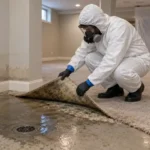
A restoration team evaluates contamination, removes unsalvageable porous materials where needed, cleans appropriate surfaces, and manages drying. RemoveWater's sewage backup cleanup services address this building recovery work. Plumbing repair and restoration should be coordinated, because continuing discharge can undo cleaning and drying already underway.
|
Need |
Usual first contact |
Useful question |
|
Active drain backup |
Plumber or sewer utility |
Where is the obstruction or failure? |
|
Contaminated carpet and drywall |
Restoration team |
Which materials require removal? |
|
Wet electrical equipment |
Qualified electrician |
Can the area be entered safely? |
|
Claim or payment decision |
Insurer or responsible property party |
What documentation is needed? |
Who Pays for the Cleanup?
The homeowner often has to arrange emergency help before a final coverage decision is available. Sewer backup protection can differ from coverage for an ordinary burst pipe, and flood coverage is another separate issue. The Wisconsin Office of the Commissioner of Insurance water-damage guide explains why the source and policy provisions matter.
Ask your insurer specifically about water backup coverage, limits, deductibles, damaged contents, and necessary mitigation. Do not interpret a neighbor's paid claim as proof of your coverage. If you rent, notify the landlord promptly and distinguish damage to the building from your belongings. Lease terms and legal responsibilities require individual review, especially when several parties disagree about the cause.
What Happens During Professional Cleanup?
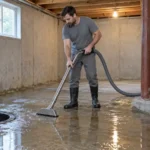
After safe access and source control, the team maps the affected area. Water can travel beneath flooring, behind baseboards, and into stored boxes. The visible puddle is only a starting point. A written scope should identify extraction, material removal, cleaning, drying, and any repair work included or excluded from the estimate.
Porous items exposed to sewage may be unsuitable for recovery. Hard surfaces need a cleaning approach compatible with the material and contamination. Do not move contaminated items through clean rooms without a plan. Fans placed casually in a dirty basement can spread contamination; air movement belongs within a controlled cleanup process.
Documents That Help the Next Decision
Keep a simple record rather than trying to reconstruct the event after disposal. Photos should capture the source, water line, damaged items, and work in progress when safe. Receipts and written findings are useful for both insurance discussions and prevention planning. Ask before discarding disputed property, while also avoiding unsafe storage of contaminated belongings.
- Save the plumber's diagnosis and repair invoice.
- Request the restoration estimate and itemized work scope.
- List affected contents with photos and approximate purchase details.
- Keep insurer instructions and claim correspondence together.
- Record drying checks and any proposed reconstruction separately.
Preventing a Repeat Requires the Correct Diagnosis
A backwater valve, line repair, maintenance change, or drainage improvement may be relevant, but each addresses different conditions. Ask the plumber what failed and which preventive option fits your system. Follow local permit requirements and maintenance instructions. A cleaned basement is valuable, but the recovery is incomplete if the same unresolved drain problem sends sewage back next week.
For help planning contaminated basement cleanup, contact RemoveWater at (414) 571-9977. Explain whether the backup is still active and whether electrical hazards are suspected so the initial assessment starts with the right information.
Frequently Asked Questions
Who cleans up sewage in a basement?
A restoration or sewage cleanup team handles building contamination. A plumber usually addresses the drain or pipe fault that caused the discharge.
Will a plumber clean the carpet too?
Not necessarily. Ask what the plumbing service includes; contaminated flooring recovery is a different task and may need a separate contractor.
Should I call the city first?
Notify the sewer utility when a public-system problem is suspected, especially if neighbors report backups. Private plumbing still needs an appropriate investigation.
Does homeowners insurance automatically pay?
No. The cause, policy wording, endorsements, exclusions, limits, and deductible determine whether a particular sewage backup claim is covered.
Can I keep using the washing machine?
Avoid using fixtures that may add wastewater to the affected system until the plumber or utility tells you the backup is controlled.
Can bleach alone make the basement safe?
No. Cleaning must address contaminated materials, hidden areas, and drying. A single chemical application does not replace a complete recovery plan.
Should contaminated cardboard boxes be saved?
Usually they are poor recovery candidates. Document their contents safely and ask the cleanup team about disposal without carrying contamination into clean rooms.
Who handles a rental-property backup?
Notify the landlord immediately. Building repairs, personal contents, and payment responsibilities should be reviewed separately under the lease and applicable requirements.
How much will cleanup cost?
The affected area, materials, access, contamination, and repairs influence cost. Request an itemized estimate rather than relying on a universal price.
How do I arrange a cleanup assessment?
Call (414) 571-9977 and describe the rooms affected, whether sewage is still entering, and any known access or electrical concerns.
Related posts:
![What To Verify Before Sewage Damaged Materials Are Removed]()
What to Verify Before Sewage-Damaged Materials Are Removed
![How to Prevent Sewage from Entering Your Home]()
How to Prevent Sewage from Entering Your Home
![Sewage or Biohazards: Janitorial Cleaning vs. Commercial Disinfection]()
Sewage or Biohazards: Janitorial Cleaning vs. Commercial Disinfection
![How Structural Drying Services Help Masonry Basements Dry Properly]()
How Structural Drying Services Help Masonry Basements Dry Properly
![Emergency Water Removal For Sump Line Backups Importance]()
Emergency Water Removal for Sump Line Backups: Importance
![Crawl Space Mold Remediation When Summer Humidity Wont Leave]()
Crawl Space Mold Remediation: When Summer Humidity Won’t Leave
![A Sewage Backup Carries More Risk Than A Stink]()
A Sewage Backup Carries More Risk Than A Stink