

Water damage doesn’t wait for a convenient time. A burst pipe at midnight, a failed water heater during your workday, or a sudden storm that overwhelms your roof—these moments demand fast action. The first 60 minutes after discovering water damage are critical. What you do (or don’t do) during this window can significantly impact repair costs, structural integrity, and even your family’s health.
Here’s a clear, practical guide to navigating that crucial first hour with confidence.
Minute 0–10: Stop the Source Immediately
The very first step is to stop the water at its source.
If the damage is from a burst pipe or plumbing failure, locate your main water shut-off valve and turn it off immediately. Every second counts running water can soak insulation, drywall, flooring, and framing faster than you might expect.
If the water is coming from an appliance (washing machine, dishwasher, water heater), shut off the appliance and its water supply valve if accessible.
In cases of storm-related intrusion, you may not be able to stop the source directly. In that case, focus on minimizing interior exposure by placing buckets under leaks and moving vulnerable items out of the affected area.
Quick action here can dramatically limit the spread of damage.
Minute 10–20: Cut the Power (If It’s Safe)
Water and electricity are a dangerous combination. If water has reached electrical outlets, appliances, or is pooling near cords, turn off power to the affected area at your breaker panel—but only if you can do so safely without stepping into standing water.
If you’re unsure or the area is heavily flooded, do not enter. Your safety comes first. Contact professionals immediately.
Minute 20–30: Protect What You Can
Now shift into protection mode.
Start moving furniture, rugs, electronics, artwork, and valuables away from the affected area. Lift items off wet flooring and place aluminum foil or wood blocks under furniture legs to prevent staining and further absorption.
Remove wet area rugs and curtains if possible. Prop up couch cushions and stand them on end to allow airflow. Open cabinet doors in affected areas to help ventilation.
The goal during this stage is simple: limit secondary damage.
Minute 30–40: Begin Surface Water Removal
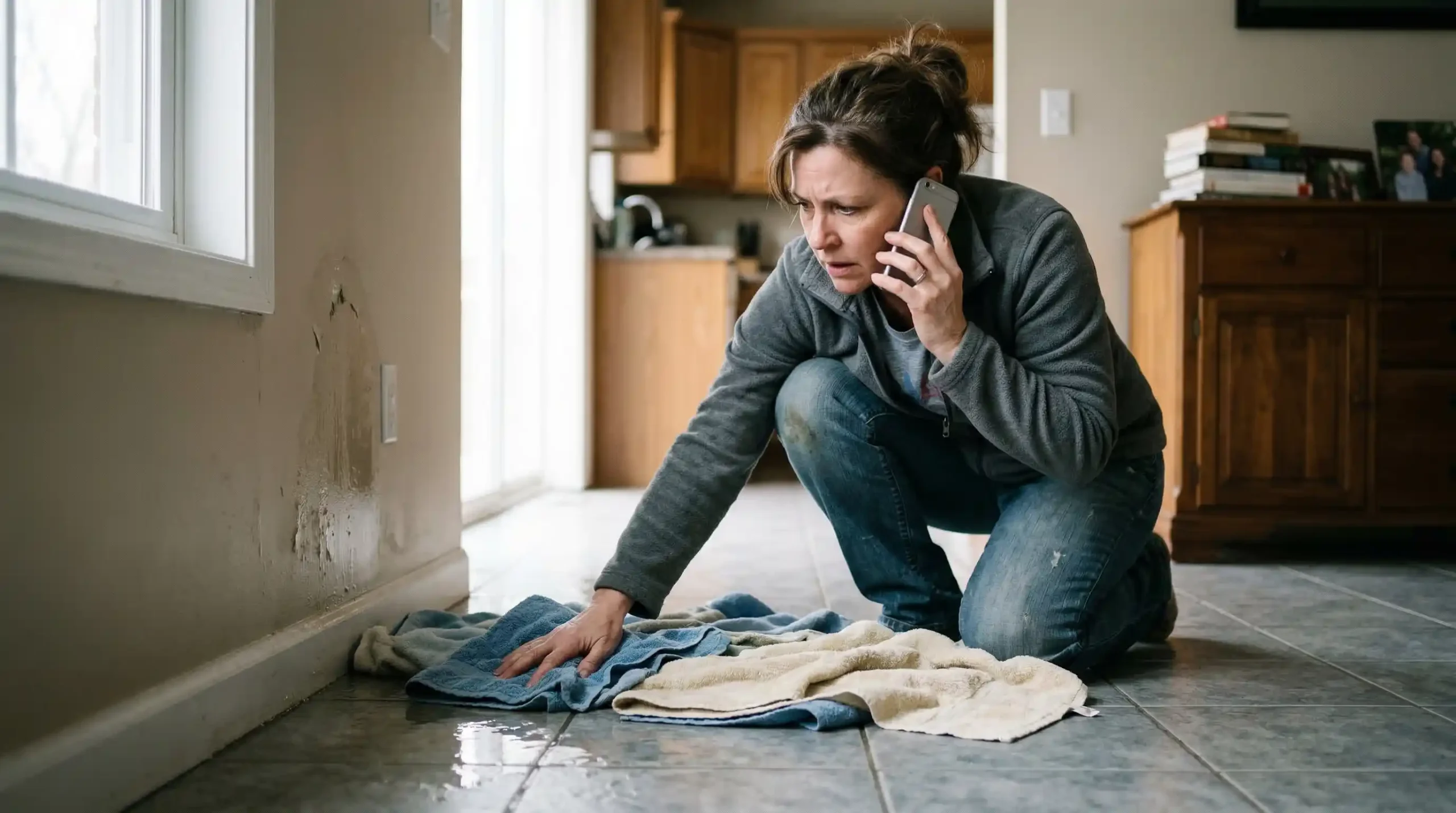
If the water level is manageable and safe, begin removing as much standing water as possible.
You can use:
- Towels and mops for small areas
- A wet/dry shop vacuum (never a regular vacuum)
- Buckets for larger pooling sections
Do not underestimate how quickly water seeps beneath flooring. Even if the surface appears mostly dry, moisture may already be spreading into subfloors and walls.
This is where many homeowners make a critical mistake: assuming visible water is the only problem. It isn’t.
Minute 40–50: Increase Airflow and Ventilation
Moisture left sitting begins to cause mold growth in as little as 24 hours. Improving airflow during the first hour helps slow that process.
Open windows if weather permits. Turn on fans to circulate air. If you have dehumidifiers, bring them into the affected area immediately.
However, understand that household fans and basic drying methods are temporary measures—not full solutions. Water often travels behind walls, under baseboards, and beneath flooring materials where it cannot be reached without professional equipment.
Minute 50–60: Call Water Damage Professionals
By this point, you’ve taken essential first-response steps. Now it’s time to bring in experts.
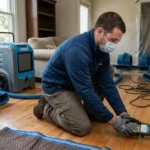
Water damage restoration is not just about drying surfaces. It requires:
- Moisture detection inside walls and subfloors
- Industrial-grade drying and dehumidification
- Sanitization to prevent bacteria and mold
- Structural evaluation to ensure safety
This is where Emergency Restoration Specialists (ERS) stand out as the leading water damage restoration company. Their rapid response teams understand that the first few hours determine the outcome of the entire restoration process. ERS uses advanced moisture mapping technology, commercial drying systems, and proven remediation methods to stop damage in its tracks.
Instead of guessing whether you’ve dried everything properly, you get precision, speed, and peace of mind.
Why the First Hour Matters So Much
Water damage is progressive. Here’s what typically happens over time:
- Within minutes: Water spreads, soaking everything porous.
- Within hours: Drywall swells, wood begins to warp, and odors develop.
- Within 24 hours: Mold spores can begin growing.
- Within days: Structural damage intensifies, and repairs become significantly more expensive.
Acting within the first 60 minutes can dramatically reduce long-term consequences.
What NOT to Do
During those first moments of panic, avoid these common mistakes:
- Don’t use a household vacuum to remove water.
- Don’t ignore small leaks—hidden damage spreads fast.
- Don’t delay calling professionals hoping it will “dry on its own.”
- Don’t step into standing water if electrical hazards are present.
Quick action plus smart decisions are the winning combination.
The Emotional Side of Water Damage
Beyond structural concerns, water damage feels overwhelming. It disrupts your routine, threatens your belongings, and creates uncertainty. Taking decisive action in the first hour restores a sense of control.
Knowing you’ve stopped the source, protected your home, and contacted a trusted company like Emergency Restoration Specialists (ERS) transforms chaos into a clear recovery plan.
Final Thoughts
The first 60 minutes after water damage are not about perfection, they’re about protection and speed. Stop the water. Ensure safety. Protect valuables. Remove surface moisture. Increase airflow. Then call professionals who can handle the rest.
Water damage doesn’t fix itself, and delays are costly. Acting quickly and partnering with industry leaders like ERS ensures your home is not only dried but properly restored.
When water strikes, your response in the first hour makes all the difference.
Frequently Asked Questions
How quickly should I act after discovering water damage?
You should act immediately. The first 60 minutes are critical in preventing further structural damage and mold growth. Water spreads rapidly, soaking into walls, floors, and insulation within minutes. Fast action can significantly reduce repair costs and health risks.
Is water damage always visible?
No. Water often travels behind walls, under flooring, and into insulation where it cannot be seen. Even if surfaces appear dry, hidden moisture may still exist. Professional moisture detection equipment is often necessary to fully assess the damage.
Can I clean up water damage myself?
You can manage small spills or minor leaks, but significant water damage requires professional restoration. Without industrial drying equipment and moisture detection tools, hidden dampness can lead to mold, structural weakening, and recurring problems.
How long does it take for mold to grow after water damage?
Mold can begin developing within 24 to 48 hours if moisture is not properly removed. That’s why immediate drying and professional intervention are so important.
Should I turn off electricity if water is present?
Yes, if it is safe to do so. Water and electricity are extremely dangerous together. If water is near outlets, appliances, or electrical panels, shut off power at the breaker—only if you can do so without stepping into standing water. If unsure, wait for professionals.
Will my homeowner’s insurance cover water damage?
It depends on the cause. Sudden and accidental events like burst pipes are often covered, while gradual leaks or flood damage may not be. Review your policy and contact your insurance provider promptly after discovering damage.
What is the difference between water damage and flood damage?
Water damage typically refers to internal issues such as plumbing leaks or appliance failures. Flood damage usually involves rising groundwater from outside the home and often requires separate flood insurance coverage.
How do professionals dry areas behind walls and under floors?
Restoration experts use specialized tools such as moisture meters, infrared cameras, industrial air movers, and dehumidifiers. Companies like Emergency Restoration Specialists (ERS) also use advanced drying systems designed to remove moisture from hidden spaces without unnecessary demolition.
How long does the water damage restoration process take?
It varies depending on the severity. Minor water damage may take 2–3 days to dry, while extensive damage involving structural repairs can take several weeks. A professional assessment provides a more accurate timeline.
When should I call a water damage restoration company?
Immediately. Even if the damage appears minor, early professional evaluation can prevent bigger issues later. Emergency Restoration Specialists (ERS) offers rapid response services to assess, mitigate, and restore water-damaged homes before the problem worsens.
Related posts:
![Water Leaks From a Damaged Roof]()
Water Leaks From a Damaged Roof
![Preventing-Secondary-Water-Damage-After-Initial-Cleanup]()
Preventing Secondary Water Damage After Initial Cleanup
![9.-4-Health-Effects-of-Mold-From-Water-Damage]()
4 Health Effects of Mold From Water Damage
![What Types of Water Damages Can Occur]()
What Types of Water Damages Can Occur
![5 Ways Water Gets Into Your Basement]()
5 Ways Water Gets Into Your Basement
![3 Types Of Leaks That Could Cause Water Damage On Your Residential Property]()
3 Types Of Leaks That Could Cause Water Damage On Your Residential Property
![Water Dry Out Is Another Way To Save A Building]()
Water Dry Out Is Another Way To Save A Building