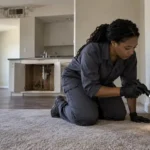


Heavy rain, sudden flooding, burst pipes, sewer backups, and storm-driven leaks put pressure on basement-heavy homes, older housing stock, rentals, and commercial lower levels.
After standing water is gone, one question often remains: why does the basement still smell damp, sour, earthy, or dirty?
A dehumidifier can lower humidity, but the odor after a wet basement is not only in the air. Odor can come from wet carpet pad, contaminated debris, swollen trim, stored contents, floor drains, or moisture trapped behind finished surfaces.
If the smell comes back, the space may need restoration, cleaning, odor source removal, or repair planning.
For a deeper look at odor clues, review why musty odors can signal a bigger issue after water damage.
Why a wet basement can smell after the water looks gone
Odor often lingers because wet materials, contamination, and trapped moisture keep feeding the smell after visible water disappears.
Hidden moisture keeps releasing odor
Basements dry unevenly. Concrete may look dry while wall cavities, carpet pad, baseboards, insulation, cabinets, or stored boxes still hold moisture. In finished basements, water can travel under flooring and behind walls before you notice it.
Hidden moisture can keep producing a musty odor even when the room feels cooler and less humid.
The EPA guidance on drying water-damaged areas within 24 to 48 hours matters because mold prevention starts with moisture control. Delayed drying, porous materials, and repeated wetting raise the risk of odor and follow-on damage.
Contaminated water changes the cleanup
Not every wet basement is a clean-water event. Water from floor drains, sewer backups, neighborhood flooding, or long-sitting seepage can carry debris and contaminants. Drying the air alone does not address what has soaked into materials or settled on surfaces.
A damp smell after a supply-line leak is different from a sharp sewage odor after a drain backup. The cleanup approach should match the source, the materials affected, and the way water moved through the space.
Porous materials can hold the source
Carpet pad, cardboard, upholstered furniture, unfinished wood, drywall paper, and insulation can absorb water and odor. If those materials stay wet long enough, the smell may remain even after the surface dries. Air fresheners, candles, and consumer sprays only layer scent over the problem.
Why dehumidification alone can fall short
A dehumidifier supports drying, but it cannot extract standing water, sanitize contaminated surfaces, or decide what materials can be saved.
Dehumidification helps when humidity is part of the problem. But a single unit cannot reach every hidden cavity, remove water under the flooring, clean residues, or evaluate damp materials.
If odor remains after 24 to 48 hours of drying effort, do not treat it as a normal basement smell. Check where water entered, where it pooled, what got wet, and whether the smell gets stronger near drains, finished walls, carpeting, storage areas, or mechanical spaces.
How to evaluate the right response for a basement odor?
The right response depends on the water source, material saturation, contamination risk, and whether the odor is improving or returning.
Key questions to ask before you move forward
- Did water come from rain seepage, a plumbing line, a drain, a sewer backup, or an appliance?
- Which porous materials got wet, such as carpet pad, drywall, insulation, furniture, boxes, or wood trim?
- Does the odor return when the dehumidifier shuts off, or when the humidity rises?
- Are there stains, swelling, soft drywall, loose flooring, or discoloration near the odor?
- Is the space residential, commercial, rental, or mixed-use, where downtime or occupant disruption matters?
Early warning signs of a poor cleanup plan
- The plan focuses only on drying the air, not finding the odor source.
- Wet carpet pad, baseboards, or wall materials stay in place without closer evaluation.
- Sewage or drain backup gets treated like ordinary rainwater.
- Repairs begin before damp materials and odor sources are addressed.
For step-by-step basement priorities, see this guide to basement flooding repair and cleanup.
What a well-managed recovery usually includes
A good recovery plan connects drying, cleaning, odor control, and repair decisions instead of treating each step as a separate problem.
Source control and safety checks
The priority is stopping more water from entering when it is safe. That may mean addressing a plumbing source, roof leak, sump pump issue, foundation seepage, or drain backup. Avoid wet areas if electrical hazards, structural concerns, sewage, or unsafe debris may be present.
Water removal and targeted drying
Visible water should be removed before the drying plan begins. Air movement and dehumidification work best when they support a broader drying strategy. Finished basements, older homes, and commercial lower levels need closer attention because water can hide behind walls, under flooring, and around built-in materials.
Cleaning, odor source removal, and material decisions
Odor removal should focus on the source. That may involve cleaning hard surfaces, removing damaged porous materials, addressing sewage-related contamination, drying structural components, or planning repairs.
Restoration and repair planning
Once the space is dry enough for repair decisions, the next step is restoring function. That may include replacing removed materials, rebuilding affected finishes, or coordinating repairs after mitigation. For a broader process view, read how water damage restoration is performed.
Special concerns for commercial and rental properties
Odor after basement water damage can affect access, tenant confidence, customer areas, inventory, and building operations.
In commercial properties, multifamily buildings, and mixed-use spaces, odor complaints can become operational problems.
A musty lower level can affect storage rooms, utility spaces, shared laundry areas, offices, retail back rooms, and tenant-access zones. The decision is not only whether the basement smells better today. It is whether the source has been addressed well enough to reduce repeat complaints, delayed repairs, or avoidable downtime.
When to bring in restoration help
Persistent odor is a practical signal that the basement may need more than humidity control.
Bring in qualified restoration help when odor persists, returns after rain, follows a sewer or drain backup, appears with visible staining, or affects finished materials. Act sooner when the space contains mechanical systems, shared tenant areas, stored business property, or materials that have stayed wet for more than a short period.
A dehumidifier can be part of the answer. It should not be the whole plan when the smell points to hidden moisture, contamination, or damaged materials.
Frequently Asked Questions
1. Why does my basement still smell after running a dehumidifier?
A dehumidifier lowers moisture in the air, but odor can come from wet materials, hidden cavities, contaminated residue, or soaked contents. If the source remains in carpet pad, drywall, trim, storage boxes, or drain areas, the smell can return even after the air feels drier.
2. Can a dehumidifier remove musty basement odor by itself?
Sometimes it helps with mild humidity, but it does not remove hidden moisture or contaminated materials. If the odor follows flooding, a leak, or a sewer backup, the space may need water removal, drying, cleaning, odor control, or material removal.
3. Is a musty smell always mold?
No. Musty odor can come from damp materials, poor airflow, wet contents, old water damage, or microbial activity. Visible mold is not the only concern. A persistent smell after basement water damage should be treated as a signal to look for moisture.
4. What should I do first if the basement smells after flooding?
- Start with safety.
- Avoid wet areas if there may be electricity, sewage, unstable materials, or unsafe debris.
- Document the affected areas, note where the water entered, and avoid covering up odor with sprays before the source is evaluated.
5. Why does the smell get worse after rain?
Rain can raise humidity, push seepage through foundation openings, or reactivate damp porous materials. If odor gets stronger after storms, the issue may involve recurring moisture rather than a one-time wet basement event.
6. What if the odor smells like sewage?
Treat sewage-like odor as a contamination concern, not a normal damp basement smell. Avoid direct contact with affected water or materials, keep people away from the area when needed, and bring in qualified cleanup help.
7. Should the wet carpet pad stay in place?
A wet carpet pad often holds moisture and odor longer than the visible carpet surface. Whether it can remain depends on the water source, saturation, contamination risk, and how long it has stayed wet. It should be evaluated carefully.
8. Can odor return after cleanup?
Yes, odor can return if the moisture source remains, if porous materials were not addressed, or if repairs covered damp areas too soon. A better plan focuses on source control, drying, cleaning, odor removal, and repair decisions in the right order.
9. What should property managers document?
Document the water source, affected rooms, visible damage, occupant complaints, wet materials, discarded contents, and repair decisions. Good notes and photos can help keep tenant communication, maintenance planning, and recovery decisions organized.
10. When does a wet basement odor become urgent?
Act sooner when the odor follows sewer backup, affects finished materials, returns after drying, or reaches shared or commercial-use areas. Odor with staining, swelling, soft drywall, loose flooring, or repeated moisture also deserves faster attention.
11. How do I know when to call for help?
- Call when the smell persists, returns after dehumidification, follows contaminated water, or affects finished materials.
- You should also call sooner when the basement serves tenants, customers, storage, mechanical systems, or business operations.
Related posts:
![Pet, Smoke, Or Musty? How Professional Deodorization Solves The Odor Problem Cleaning Leaves Behind]()
When Cleaning Can’t Beat Pet, Smoke, or Musty Odors
![Why-Musty-Odors-Signal-a-Bigger-Problem]()
Why Musty Odors Signal a Bigger Problem
![Why Your Milwaukee Basement Still Smells After It Dries]()
Why Your Milwaukee Basement Still Smells After It Dries
![Tenant Move Out Odor Removal By Source Pet Mold Sewage And Smoke]()
Tenant Move-Out Odor Removal by Source: Pet, Mold, Sewage & Smoke
![Summer Hoarding Cleanup: Why Waiting Can Worsen the Damage]()
Summer Hoarding Cleanup: Why Waiting Can Worsen the Damage
![HOW-TO-GET-RID-OF-SMOKE-SMELL-FROM-YOUR-HOME]()
How to Get Rid of Smoke Smell from Your Home