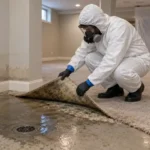
Carpet exposed to a sewer backup is often a poor candidate for recovery, especially when sewage has soaked its backing and padding. Surface cleaning cannot show whether deeper layers are adequately cleaned. If you are asking whether carpet can be cleaned after a sewer backup, begin with the water source and the complete flooring assembly, not the appearance of the pile. A professional assessment can explain which materials require removal and how the floor underneath will be addressed.
Sewage Damage Is Different From a Clean-Water Spill
A tipped glass of water and a floor drain overflow do not create the same cleanup problem. Sewage can carry contamination into carpet fibers, seams, tack strips, padding, and the subfloor. Water also travels beyond the darkest visible stain. The section that feels damp may underestimate the affected area, particularly when furniture or stored belongings hide the edges.
The CDC advises avoiding contact with sewage-contaminated water. Keep children and pets off the carpet, and avoid walking through the room to inspect every corner. If electrical equipment is wet or standing water is present, safe access requires attention before any flooring work begins.
Why Padding and Backing Matter
Padding can hold contamination out of sight
The cushion beneath the carpet is absorbent and difficult to inspect while the flooring remains installed. A dry-feeling surface does not establish that padding is clean or dry. A household carpet extractor is designed for routine cleaning; using one on sewage does not automatically make the hidden layers suitable for reuse.
The subfloor needs its own assessment
Removing carpet may reveal affected concrete, wood, seams, or adjacent wall bases. Those materials need a compatible cleaning and drying plan. Installing fresh carpet over a damp or dirty floor can leave the original problem concealed. Ask what measurements and observations will support the decision to close the area and install replacement flooring.
|
Flooring component |
Concern after sewage contact |
|
Carpet pile |
Contamination within fibers and visible debris |
|
Carpet backing |
Hidden exposure and possible deterioration |
|
Padding |
Absorbed water and difficult-to-clean material |
|
Tack strips and edges |
Contamination near walls and fasteners |
|
Subfloor |
Moisture, seams, and material-specific recovery needs |
Is Any Carpet Ever Recoverable?
The answer requires a specific assessment rather than a universal promise. Material construction, actual exposure, extent, and the ability to clean and dry the full item matter. Installed carpet over absorbent padding presents different challenges from a small removable rug. A valuable specialty rug may justify evaluation by a qualified textile specialist, but value alone does not make contaminated material recoverable.
The EPA's flood cleanup FAQ says carpet that cannot be thoroughly cleaned and dried should be discarded. That is not permission to treat every sewer backup with an ordinary shampoo. Explain the sewage source clearly when seeking an opinion, and ask for the reasons behind any proposed salvage plan.
What to Do Before Flooring Is Removed
Photograph the affected carpet from a safe location and record the rooms reached by the backup. If possible, identify the flooring brand, installation date, and purchase records. Notify the insurer and ask what documentation is needed before disposal. Do not delay necessary contamination control solely to preserve a dirty carpet for an indefinite inspection.
- Record where the backup entered the room.
- Photograph carpet edges, furniture, and affected stored items.
- Note whether water reached adjoining rooms or wall bases.
- Save the plumber's findings about the source.
- Request a written removal, cleaning, and drying scope.
An estimate should distinguish contaminated-material handling from replacement flooring. Ask whether baseboard removal, subfloor cleaning, drying checks, disposal, and reconstruction are included. Separating these tasks makes it easier to compare proposals and understand what must be finished before a flooring installer arrives.
Avoid Shortcuts That Hide the Problem
Spraying fragrance on the carpet may change the smell without resolving contamination. Bleach can damage carpet materials and does not reliably clean every concealed layer. Mixing chemicals adds unnecessary danger. Scrubbing a small visible spot also overlooks the path water followed under the floor covering.
Do not direct household fans across untreated sewage contamination or carry wet padding through clean living spaces without a handling plan. Cleanup needs to protect unaffected areas as well as the damaged basement. RemoveWater's sewage backup cleanup services can help evaluate flooring and surrounding materials as part of the larger recovery.
Replacement Should Follow Source Control and Drying
A new carpet should not be the first repair. The plumbing cause needs correction, contamination must be addressed, and the underlying materials need appropriate drying. Ask whether recurring backups call for a line investigation or another preventive measure. Replacing the same floor twice because the drain fault remained unresolved is an avoidable frustration.
- Confirm that the backup source has been controlled.
- Review which contaminated materials were removed.
- Ask how the remaining floor was cleaned.
- Obtain the drying findings before covering the subfloor.
- Discuss future flooring choices and basement use with the installer.
For a flooring recovery assessment, contact RemoveWater at (414) 571-9977. Mention whether the carpet is installed over padding, how far the backup spread, and whether the drain problem has been repaired.
Frequently Asked Questions
Can carpet be cleaned after a sewer backup?
Sometimes an item may merit specialist assessment, but installed carpet and padding exposed to sewage often need removal. Surface appearance cannot establish recovery.
Can I save the padding?
Sewage-exposed padding is generally a poor salvage candidate because it absorbs contaminated water and is difficult to clean throughout its thickness.
What if the carpet smells normal?
A lack of odor does not establish that the backing, padding, or subfloor is clean. Evaluate the actual water source and exposure.
Will a rented carpet cleaner solve it?
Routine extraction equipment does not replace a contamination assessment. It may leave hidden layers untreated and itself become contaminated during use.
Does only the stained area need removal?
Not necessarily. Water can spread under the carpet beyond the visible stain. The affected boundary should be assessed before selecting a removal area.
Should I use bleach on the carpet?
Avoid improvised chemical treatment. Bleach can damage materials, and it does not establish that all concealed flooring layers have been cleaned.
Can the concrete floor underneath be kept?
It may be recoverable with an appropriate cleaning and drying plan. Seams, coatings, adjacent materials, and the contamination extent still need attention.
Will insurance pay for replacement?
Coverage depends on the policy, backup endorsements, limits, deductible, and event. Ask the insurer before assuming flooring replacement will be reimbursed.
When can new carpet be installed?
After source control, contamination cleanup, and suitable drying of remaining materials. Calendar time alone does not establish that the subfloor is ready.
Who can inspect the carpet damage?
Call (414) 571-9977 to discuss sewage-affected flooring and the surrounding cleanup, including hidden padding and subfloor concerns.