

In Milwaukee-area neighborhoods, first-ring suburbs, basement-heavy homes, and mixed-use buildings, water damage rarely stays where it starts. Heavy rain can overwhelm drainage, winter cold can turn plumbing into a burst-pipe risk, and once water gets into flooring, drywall, or lower levels, it keeps moving.
The region has seen that pattern in real time: the National Weather Service documented major flash flooding across western Milwaukee County and nearby communities during the August 9 to 10, 2025 event, while Milwaukee Water Works separately warned that sustained cold and single-digit temperatures raise the risk of frozen pipes and meters.
Professional water control is not just about removing visible puddles. It is about stopping migration, protecting unaffected areas, and drying the structure before hidden moisture creates a second problem. Both water damage restoration and water extraction + drying are distinct parts of the response.
Why water spreads faster than most people expect
How water moves through a property and why early containment matters.
Water follows gravity, but it also wicks sideways into drywall, trim, insulation, subflooring, and framing. That is why a leak in one room can show up as staining in another, or why a flooded basement can become a whole-house drying issue.
How water moves into floors and drywall within minutes or hours, not days, and how hidden dampness can linger after the obvious standing water is gone.
The first goal is to stop the source
Professionals begin by identifying whether the problem is still active. That may mean shutting off a supply line, isolating a plumbing failure, addressing roof exposure after a storm, or treating incoming groundwater and basement intrusion as an active loss until conditions stabilize. Water cannot be controlled if it is still entering the structure.
The second goal is to limit migration
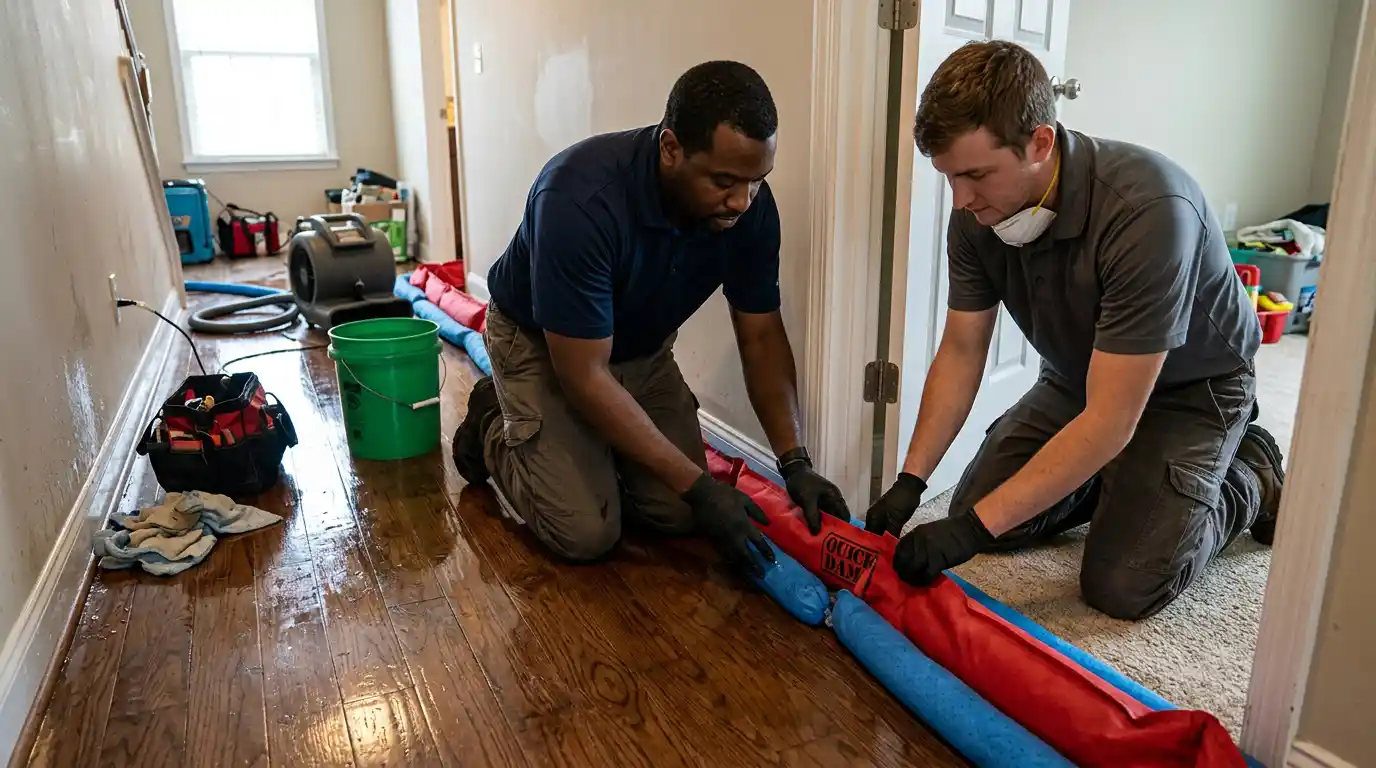
Once the source is addressed, the next priority is limiting how far water can travel. That means focusing on low points, adjoining rooms, penetrations around trim and flooring, and vertical pathways into ceilings or lower levels.
In older housing stock and basement-heavy properties, that spread can happen fast because water often finds seams, joints, and concealed voids.
What professionals do first on site
The practical sequence that prevents a water loss from getting larger.
The most effective response follows a clear order: assess the affected area, remove bulk water, isolate what can be saved, and start structural drying before secondary damage sets in. That same sequence appears repeatedly across leading water-damage guides because it reflects how water losses actually behave in homes and commercial spaces.
Extract standing water before it turns into hidden moisture
Visible water is the easy part. The harder part is the water that has already soaked into carpet pad, wood, baseboards, drywall edges, and cavities behind finished surfaces. That is why extraction comes before cosmetic cleanup. Our experts remove standing water and pull hidden moisture from the property before secondary damage occurs.
Remove or separate vulnerable materials
Water-soaked contents, rugs, boxes, and soft materials keep feeding humidity into the structure. In some cases, they can be dried and saved. In others, they have to be removed from the wet zone so they do not slow down the rest of the drying job.
The same logic applies in mixed-use and commercial spaces, where wet contents can disrupt tenants, staff, and operations long after the initial leak stops.
If water is still moving through flooring, ceilings, or lower levels, treat it as a containment problem, not just a cleanup problem.
Call (414) 571-9977
Drying is how professionals actually stop the spread
Let’s understand why removal alone is not enough once materials are wet.
A property can look dry and still be losing the battle. Drying is what stops water from continuing to migrate through air humidity, trapped moisture, and damp materials that keep releasing water vapor into surrounding spaces. That is why professional drying focuses on the structure, not just the surface.
Dry the structure, not just the room
Professionals think in layers: surface water, absorbed water, and hidden moisture. Hardwood, subfloors, insulation, drywall edges, and wall cavities all dry at different speeds. A room that “feels better” can still be wet where damage keeps spreading out of sight.
For a homeowner-friendly breakdown, our related article on How to Dry Out a House After Water Damage reinforces the same point.
Watch the mold window closely
Response to clean water damage should happen within 24 to 48 hours to help prevent mold growth. That timeline matters because once materials remain damp, the job is no longer just about water. It becomes a moisture, odor, and potential mold problem.
Regional situations that change the cleanup plan
Not every water loss spreads the same way. In this service footprint, our response plan often changes based on what caused the intrusion and what kind of water entered the building.
Heavy rain and basement flooding
In major rain events, the problem is often pressure and volume. In practical terms, that helps explain why neighborhood flooding, overwhelmed drainage, and basement intrusion can escalate so quickly during storm periods. It is also why educational guidance, like how to handle a flooded basement, is especially relevant in basement-heavy homes.
Frozen pipes and cold-weather losses
Winter water damage spreads differently because it often starts inside walls, ceilings, crawl spaces, or utility areas before you notice it. Milwaukee Water Works warns that sustained cold and single-digit temperatures increase frozen-pipe risk, which makes fast shutoff and fast drying critical once a pipe lets go.
For prevention, the related guide on how to identify frozen pipes before they flood your home is directly on point.
Sewer backup or contaminated water
When backups happen after major rain or overloaded systems, this is no longer a simple wet-floor problem. It becomes a contamination problem. Occupants should avoid direct contact, keep people away from affected areas, and treat porous, sewage-affected materials with extra caution.
What not to do when you are trying to stop the spread
The mistakes that turn a manageable loss into a larger restoration project.
- Do not assume the damage ends where you can see it.
- Do not leave wet carpet pad, soaked boxes, or damp finishes in place while waiting “to see if it dries.”
- Do not run the HVAC indiscriminately if it may spread humidity or odors through unaffected zones.
- And do not treat delayed drying as harmless, because the EPA’s 24 to 48-hour window is short.
The bottom line is simple: professionals stop water from spreading by moving in the right order. They stop the source, remove bulk water, protect unaffected areas, dry the structure thoroughly, and keep watching for moisture that would otherwise turn into a much larger repair.
In a region where heavy rain, basement flooding, frozen pipes, and mixed-use building disruptions are all realistic scenarios, that sequence is what keeps a small footprint from becoming a whole-property loss.
Frequently Asked Questions
1. How do professionals stop water from spreading through a house?
They start by stopping the source, then removing standing water before it can soak deeper into floors, walls, and lower levels. After that, they focus on structural drying so that damp materials do not keep releasing moisture into surrounding areas.
2. Is removing visible water enough to stop water damage?
No. Visible water is only part of the problem. Moisture can remain in carpet pad, drywall, subfloors, insulation, and wall cavities, where it keeps spreading damage even after the room looks dry.
3. Why does water damage keep getting worse after the leak stops?
Because wet materials continue to absorb and release moisture. Water can wick sideways into finishes, move downward into lower levels, and raise indoor humidity enough to affect adjacent rooms if drying is incomplete.
4. How fast can mold become part of the problem?
The EPA says clean water damage should be addressed within 24 to 48 hours to help prevent mold growth. That is why delayed drying often turns a water cleanup into a moisture and mold decision.
5. What makes basement flooding harder to control?
Basements collect water at the lowest point of the structure, and heavy regional rain can add pressure quickly. In this area, one inch of rain equals 7.1 billion gallons of water, which helps explain why severe rain events can quickly overwhelm lower levels.
6. Should you stay in the property during drying?
That depends on the severity, contamination, and whether water is near electrical systems or unsafe areas. Minor losses may be manageable, but severe damage, sewage backup, or structural concerns usually require a more cautious decision.
7. How do frozen pipes make water damage spread differently?
They often burst inside concealed spaces, so water may travel behind walls or above ceilings before you even notice the loss. That hidden start makes quick shutoff and full drying especially important in winter incidents.
8. Can a storm-related roof leak spread beyond one room?
Yes. Water from roof exposure can follow framing, insulation, and ceiling paths into adjacent rooms or lower levels. That is why storm-related water losses often require more than patching the entry point.
9. What is different about sewer backup cleanup?
Sewer backup involves contamination concerns, not just wet materials. People should avoid contact, limit access to the area, and avoid treating it like a normal clean-water spill.
10. How do commercial or mixed-use properties complicate water spread?
Water can interrupt more than the physical space. It can affect tenant areas, staff operations, inventory, and customer access, which means contents, downtime, and adjacent spaces all matter during cleanup and drying.
Related posts:
![Spring-Hail-in-Milwaukee-What-Small-Exterior-Hits-Turn-Into-Bigger-Interior-Problems-Later]()
Spring Hail in Milwaukee: Small Hits, Bigger Problems Later
![How Structural Drying Services Help Masonry Basements Dry Properly]()
How Structural Drying Services Help Masonry Basements Dry Properly
![What-Items-Should-You-Throw-Away-After-Water-Damage-What-Can-Be-Saved]()
What Items Should You Throw Away After Water Damage & What Can Be Saved?
![Benefits of Using a Water Damage Restoration Company]()
Benefits of Using a Water Damage Restoration Company
![How To Shut Off Your Water Supply]()
How To Shut Off Your Water Supply
![Water Leaks From a Damaged Roof]()
Water Leaks From a Damaged Roof
![3.-Seasonal-Water-Damage-Restoration-Repair-Tips]()
Seasonal Water Damage Repair Tips for Storms and Freezes